Two things must be distinguished. External lightning protection – the capture system on the roof – is not a new requirement for most single-family homes just because a solar system is added; it is primarily required where the building is subject to lightning protection requirements anyway or is exposed. Internal protection against overvoltage, on the other hand, is part of a professional electrical installation for every system – it protects the inverter and household appliances from voltage peaks and is therefore the practically more relevant part. (As of: July 2026)
Key points in brief
- External lightning protection (capture system) and internal overvoltage protection are two different things.
- A solar system usually does not trigger a new requirement for external lightning protection on a single-family home.
- Overvoltage protection, on the other hand, is part of a serious electrical installation for every system.
- Stricter rules apply to exposed locations and buildings already subject to lightning protection requirements.
- The relevant standards set the authoritative guidelines; the assessment is up to the specialist company.
External lightning protection or overvoltage protection – what is the difference?
This distinction is the key to the whole topic, because in everyday life both are called «lightning protection» and mean completely different things.
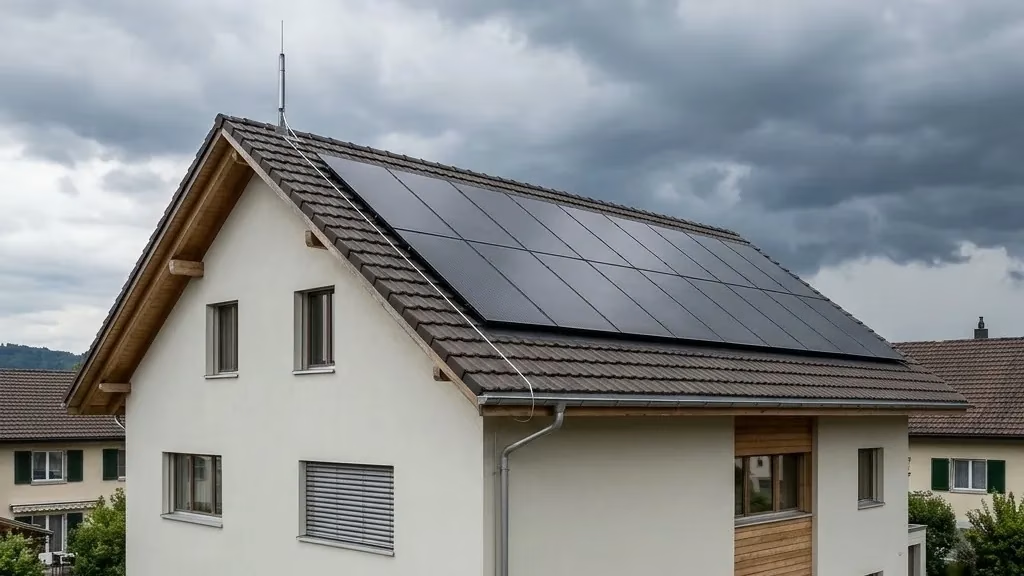
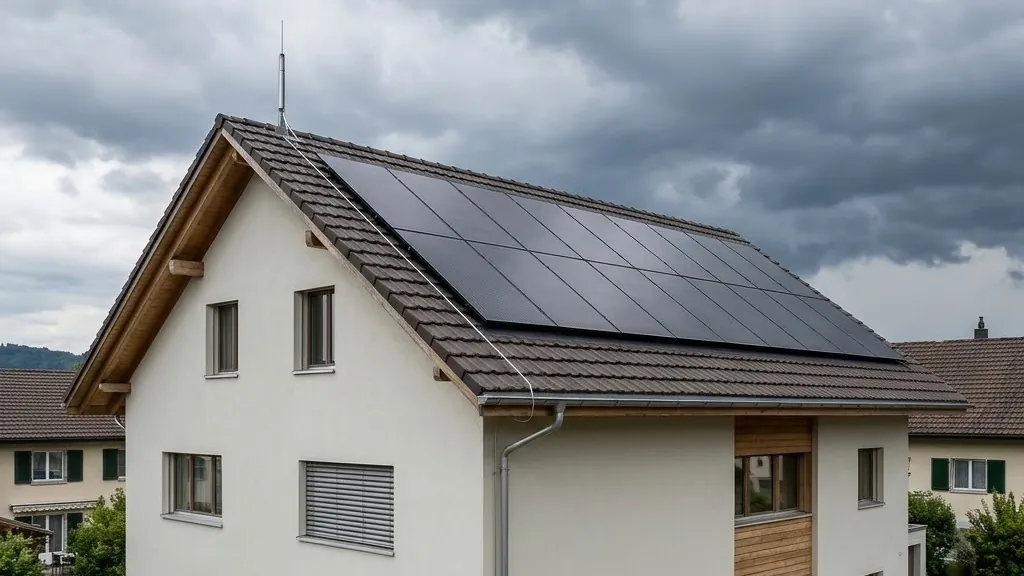
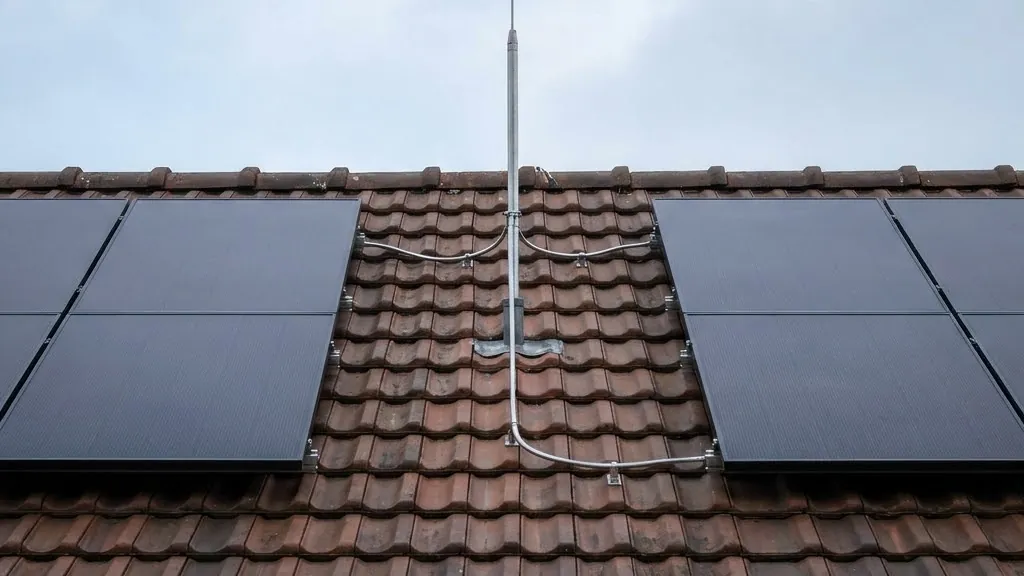
External lightning protection is what you imagine visually: a capture system on the roof that intercepts a direct lightning strike and guides it down to the ground in a controlled manner via down-conductors. It is a structural installation on the building – the classic «lightning rod» installation.
Internal protection, properly overvoltage protection, has little to do with a direct strike. It protects the electronics in the house from voltage peaks, which can enter the building during a lightning strike nearby or via the grid. These peaks are the more frequent danger for inverters and household appliances – a direct hit is rare, an overvoltage in the vicinity is significantly more common. Overvoltage protection is therefore part of the protection technology of the electrical installation and is a matter of course with a cleanly installed system.
Is lightning protection compulsory for a solar system?
The honest answer here is: it depends – and usually not new. The VKF fire protection fact sheet «Solar systems» (2001-15) explicitly states this: solar systems do not lead to a lightning protection obligation, provided the VKF fire protection directive 22-15 «Lightning protection systems» does not already require lightning protection for the building anyway. A solar system therefore does not automatically make a single-family home subject to lightning protection requirements. External protection is primarily required where the building is subject to lightning protection requirements for other reasons anyway (certain building categories) or where the location is exposed – a detached house on a hill is assessed differently than a terraced house in a neighbourhood.
If a building already has external lightning protection, then the solar system changes the calculation: according to the same fact sheet, the system must be integrated into the existing lightning protection system and, in the case of PV, additionally included in the overvoltage protection – with correct distances or connections. This is then not an «if», but a «how» – and necessarily belongs in expert hands.
Overvoltage protection, on the other hand, is not a question of location, but good practice: it is part of a professional installation for every system, because it protects the inverter and household appliances from expensive damage for comparatively low costs.
| Protection type | What it does | With a solar system |
|---|---|---|
| External lightning protection | intercepts direct strike | usually no new obligation; relevant for exposed locations / existing systems |
| Overvoltage protection (internal protection) | protects electronics from voltage peaks | part of the professional installation of every system |
| Integration into existing lightning protection | connect system correctly | compulsory if the building is already protected |
Simplified overview, as of: July 2026. The VKF fire protection fact sheet «Solar systems» (2001-15), the VKF fire protection directive 22-15 «Lightning protection systems» and the lightning protection standard (SNR) are authoritative – as well as the assessment of the location by the specialist company.
What does that mean for my house specifically?
For a typical single-family home in a neighbourhood, it usually goes like this: external lightning protection does not become a new requirement due to the solar system, while overvoltage protection is naturally part of the installation. This protects the electronics against the more common case – a voltage peak from the surroundings.
The situation is different for exposed locations: detached houses in elevated positions, large agricultural buildings, properties with existing lightning protection. Here the lightning protection question belongs actively on the table – not as a panic topic, but as part of serious planning, similar to the question of wind load during storms in exposed locations.
And insurance? Lightning and overvoltage damage are a classic topic for building and natural hazards insurance. How solar systems are insured and what counts in the event of a claim is covered in the article on insuring the solar system. However, the best protection remains professional execution: a correctly integrated overvoltage protection is the inexpensive measure that saves the expensive inverter in the event of an incident.
The lightning protection question often comes up in consultations with a certain concern – «Does the system now attract lightning?». The short answer: No, a solar system does not significantly increase the risk of a strike. However, what we always install is overvoltage protection – not because a regulation forces us to, but because it secures the inverter for little money, and that is the most expensive active component of the system. For exposed houses and farms, we also take a close look and properly integrate existing external lightning protection where necessary. What we never do: sell external lightning protection where none is needed – that would be selling out of fear, not specialist craftsmanship.
Frequently asked questions
Does a solar system attract lightning?
No. A solar system does not significantly increase the risk of a lightning strike – it is not a raised, exposed metal spike in the sense of a lightning rod. The relevant measure is therefore not protection against a direct strike, but overvoltage protection against voltage peaks from the surroundings.
Do I absolutely need a lightning rod for the solar system?
Usually not on a typical single-family home – a solar system generally does not trigger a new requirement for external lightning protection. This is different for exposed locations or buildings that already have lightning protection: the system must be professionally integrated there. The assessment is up to the specialist company.
What is more important – external lightning protection or overvoltage protection?
For most houses, overvoltage protection. It protects the inverter and household appliances from voltage peaks, which occur significantly more frequently than a direct strike, and is part of the professional installation of every system. External lightning protection is location-dependent and less often newly required.
Does the insurance cover lightning damage to the solar system?
Lightning and overvoltage damage are a classic insurance topic – usually covered by building and natural hazards insurance. The exact conditions differ; the correct execution of the system is decisive. Details in the article on insuring the solar system.
Free initial consultation
Overvoltage protection is part of it.
We integrate the appropriate protection into every system and honestly assess the external lightning protection for exposed locations – without selling out of fear.
Want to calculate yourself first? Solar calculator with official roof data →
Prefer to talk? +41 78 830 83 35
Your photovoltaic system from a specialist company →
Swissolar member and Solarprofi · ESTI installation authorisation (Art. 14 NIV) · in Zurich since 2017 · over 150 systems completed · a personal answer from the specialist company, no call centre
Further guides
 Überspannungsschutz bei Photovoltaik
 Elektrik & Anschluss der Anlage
 Solaranlage im Sturm
 Solaranlage versichern
 Der Wechselrichter erklärt
 Brandschutz bei Photovoltaik
Sources: VKF fire protection fact sheet «Solar systems» 2001-15 (clause 3.1) and VKF fire protection directive 22-15 «Lightning protection systems»; lightning protection standards (SNR/SEV); electrical installation specifications (NIV); empirical values from installation projects of ecoEn GmbH, Zurich region.
Last updated: 9 July 2026 · Author: ecoEn editorial team