
Roof-integrated solar: photovoltaics that disappear into the roof
With a roof-integrated (in-roof) system, the modules replace the roof covering instead of lying on top of it: the surface is flush with the roof, without mounted rows and without a visible frame. ecoEn plans and installs roof-integrated systems in the Zurich region – four of them have been in operation since 2020, from a single-family home in Embrach to an apartment building with around 31 kWp in Affoltern am Albis. Roof-integrated is particularly worthwhile when the roof is being re-covered anyway, in core zones and for protected buildings, or when appearance is a real criterion. A direct installer, not a broker: planning, installation and grid registration from one hand.
Four roof-integrated roofs – built, not rendered
Roof-integrated systems are the part of our portfolio you notice least. Here are four of them with key data:
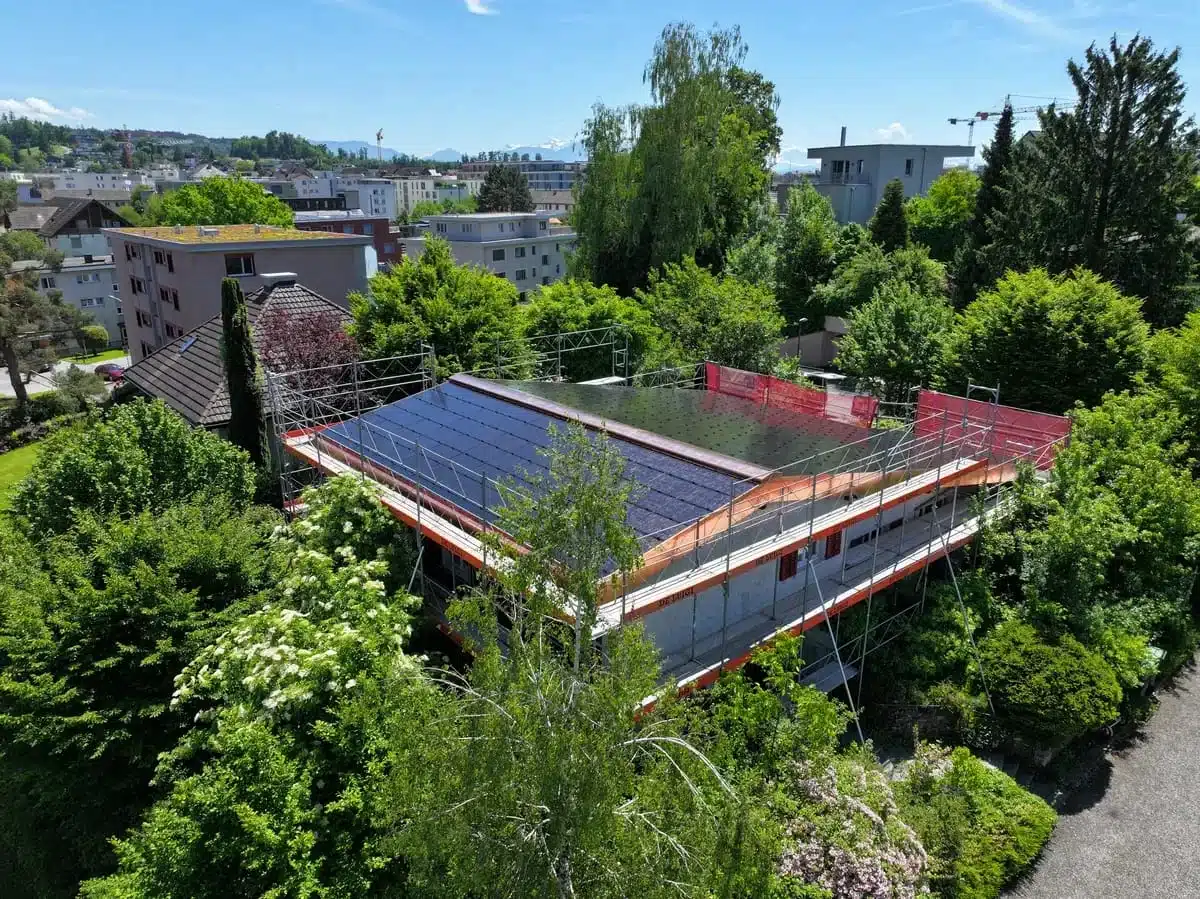
Apartment building, Affoltern am Albis
- 31.74 kWp · 276 roof-integrated modules
- Hybrid inverter with around 20 kWh of storage and backup power
- Commissioned 2026
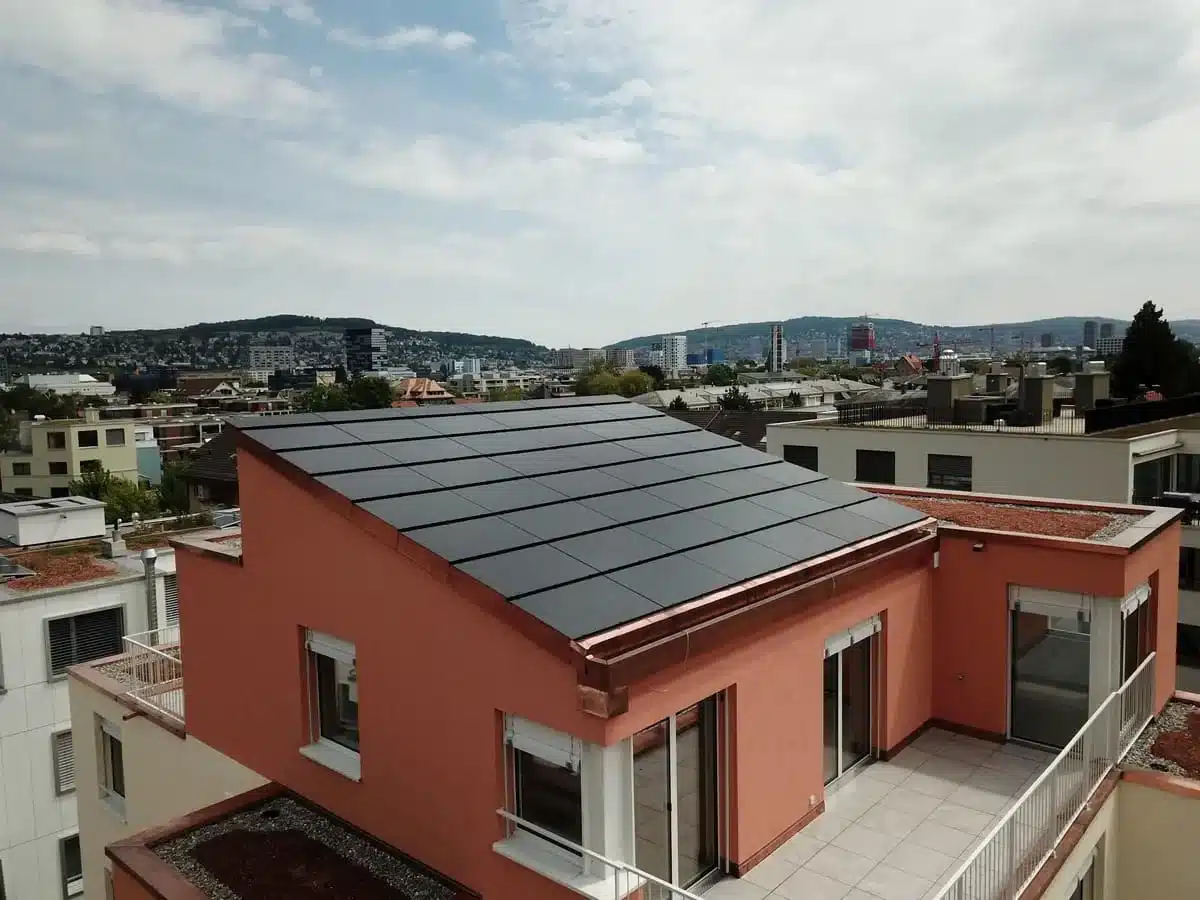
Apartment building, City of Zurich
- 8.19 kWp · 42 roof-integrated modules
- full-coverage roof-integrated roof in the city
- Commissioned 2021
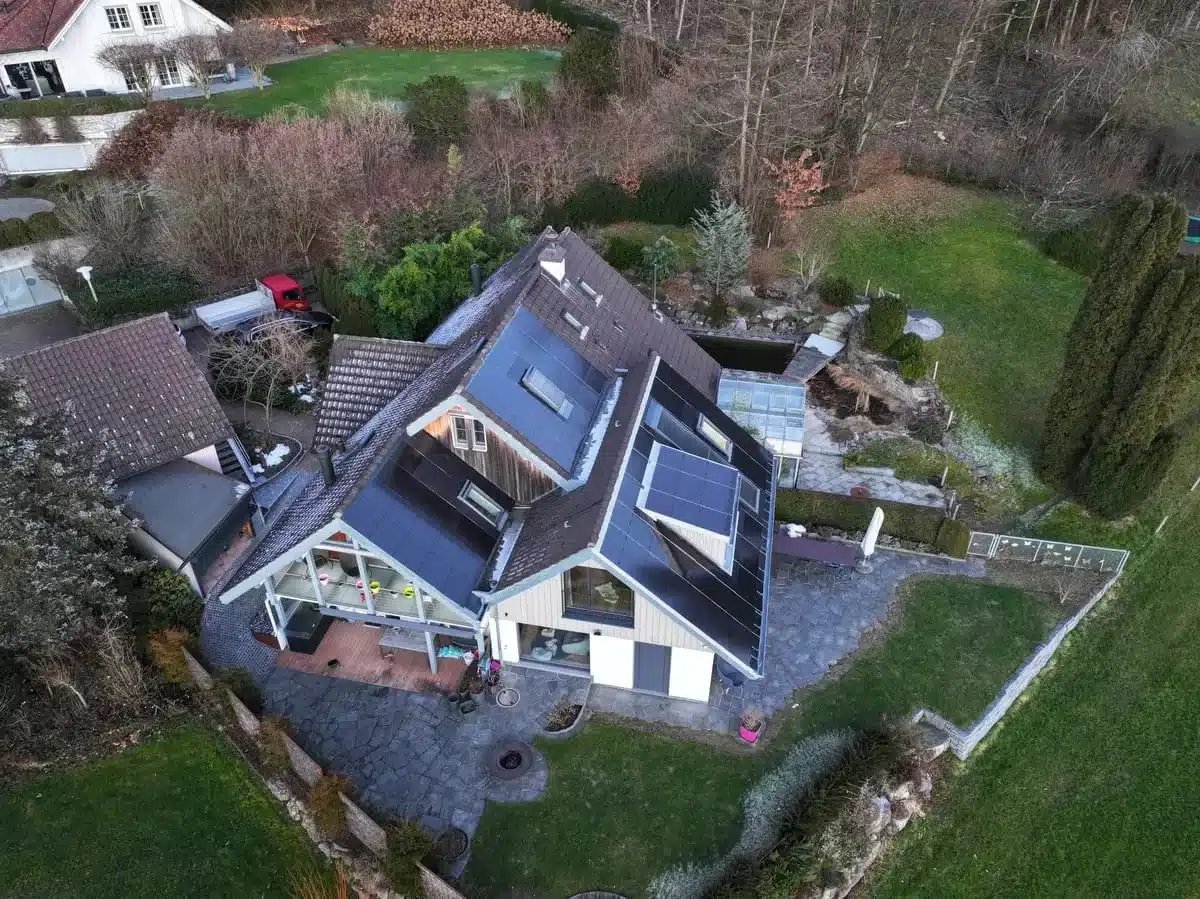
Single-family home, Ebertswil
- 9.0 kWp · 56 roof-integrated modules
- DC-coupled battery storage · backup-capable
- Commissioned 2022
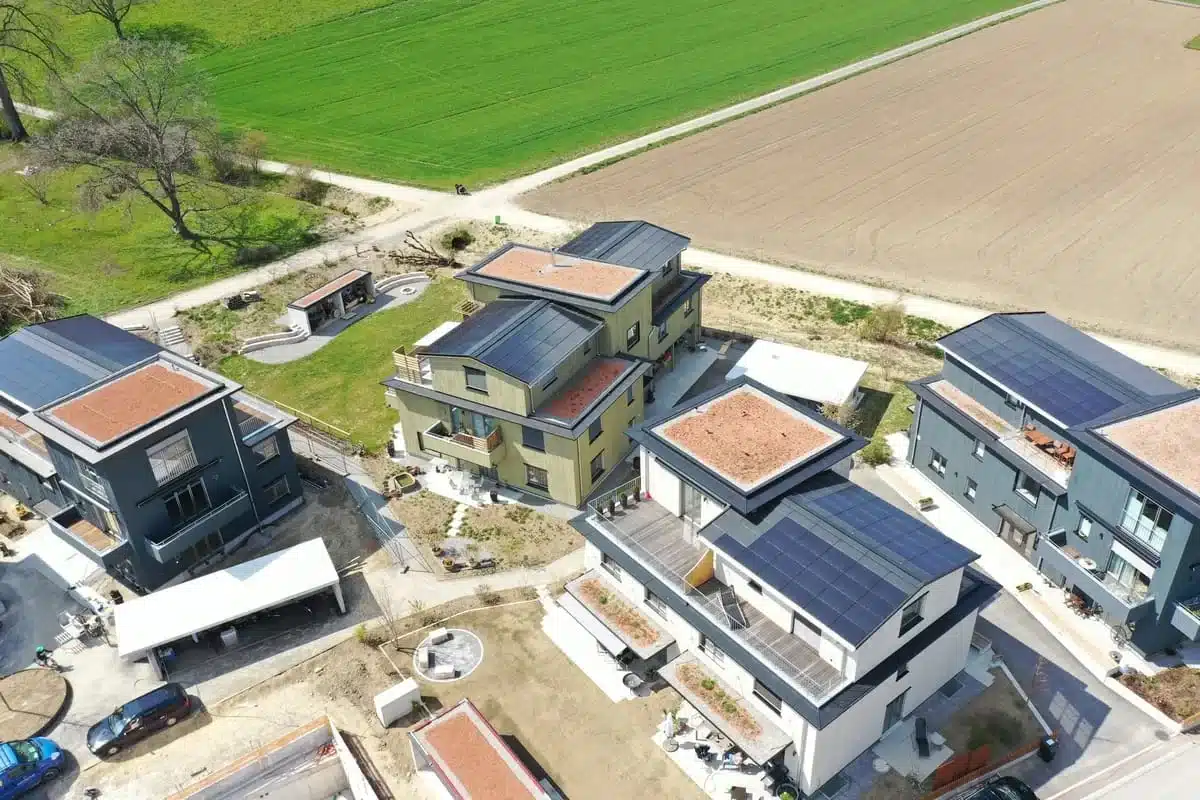
Single-family home, Embrach
- 9.36 kWp · 48 roof-integrated modules
- North-east/south-west roof with power optimisers
- Commissioned 2020
All completed systems with key data: Projects & references.
How a roof-integrated roof is created
- Assess the roof. Condition of the covering, sub-roof, rafter layout and remaining service life – with roof-integrated systems, the roof decides feasibility, not the yield.
- Calculate the options. On-roof versus roof-integrated, with an honest comparison of surcharge, appearance and yield – as guideline figures, without sales pressure.
- Clarify the design. In a core zone, for an inventoried property or an exposed location, a preliminary clarification with the municipality – before calculating and ordering.
- Permit and incentives. Notification procedure or building application, incentive applications always before construction; we also register the higher one-off incentive for integrated systems.
- Covering and installation. Old covering off, sub-roof repaired, roof-integrated system as the new roof skin – roofing and solar work in one process, not two appointments.
- Commissioning. Measurement, grid registration, acceptance report and registration with Pronovo – responsibility for roof and system remains with us.
When a roof-integrated system really pays off
Roof-integrated isn't the better on-roof system – it's a different task. It has a clear advantage in three situations:
| Situation | Why roof-integrated fits here |
|---|---|
| The roof is being re-covered anyway | The modules take over the function of the covering – tiles and part of the roofing work are no longer needed. That's the economically strongest moment. |
| Core zone, inventoried property, protected zone | Where a mounted system won't be approved, the flush surface is often the only option that stands a chance. |
| Appearance is a real criterion | Exposed hillside locations, replacement new builds, demanding architecture – a calm roof without a visible frame. |
And the honest counter-case: an intact tiled roof that will last another twenty years usually calls for an on-roof system. Tearing off a good covering to replace it with a more expensive one almost never pays off. The trade-off in detail: Roof-integrated or on-roof – the comparison.
The surcharge – and what to compare it against
A roof-integrated system costs more per kilowatt peak than an on-roof system: more work, special materials, higher demands on workmanship. That's undisputed. What matters, however, is the basis of comparison, and this is exactly where the calculation usually goes wrong.
If you build at the time of renovation, you compare the roof-integrated solution not against zero, but against the new tiled roof you would have bought anyway. The honest surcharge is the difference between the two – and some of the additional costs are the same for both options: scaffolding, disposal of the old covering, part of the labour hours. In this calculation, the gap shrinks considerably.
We deliberately don't give concrete figures here: the surcharge depends on roof shape, system, accessibility and the condition of the sub-roof and varies too much from project to project for a table. The quote after the roof assessment is decisive. The system behind it: Roof-integrated or on-roof – the cost comparison and Solar roof instead of tiled roof.
Who is liable for the roof's watertightness?
This is the most important question in every roof-integrated project – and the one most often left open in quotes. With an on-roof system, the roof skin remains untouched; if it drips, responsibility is clear. With roof-integrated, the system itself becomes the roof. This merges two trades that are otherwise separate: roofing work and electrical installation.
If they come from different companies, exactly this seam creates the gap that becomes expensive in the event of damage. We carry out the roof structure and system in one contract – responsibility for the watertight surface lies with us and is agreed in writing before construction, not assumed verbally.
Ask about this in every roof-integrated quote, including ours: who is liable for watertightness, for what period, and what does the contract say? What else matters with the systems: Roof-integrated systems compared.
Incentives: the federal government pays more for integrated systems
A point that regularly gets lost in the surcharge discussion: the federal one-off feed-in incentive differentiates by system category – and roof-integrated systems are paid more than roof-mounted ones.
| System category | Capacity contribution, one-off incentive (under 30 kW) |
|---|---|
| roof-mounted (on-roof) | around CHF 360 per kW |
| integrated (roof-integrated) | around CHF 400 per kW |
Capacity contributions according to EnFV Annex 2.1, as of August 2026; plus the base contribution. The rates are adjusted periodically – what applies is the rate at the time of commissioning. Background and process: One-off incentive explained · Applying to Pronovo.
The additional amount doesn't cover the surcharge, but it reduces it – and it's often simply not included in the calculation. On top come the tax deduction and, depending on where you live, a municipal contribution: some municipalities additionally and independently subsidise roof-integrated systems, for example Küsnacht. We check what applies in your municipality for your postcode – the cantonal situation is in the Canton of Zurich incentive overview.
What we build – and what we only advise on
To avoid any misunderstanding: we work with roof-integrated systems that integrate standard modules into the roof skin – that's the design of all four systems shown above. It combines a flush roof surface with the efficiency and warranty coverage of standard market modules.
There are also solutions we know and can assess for you, but don't offer as a standard product: small-format solar tiles, colour-matched modules for protected buildings and vertical facade surfaces. If your project goes in this direction, we say so openly and discuss it case by case, instead of selling something we don't regularly build.
- Solar tiles: prices and alternatives
- Solar facade: using the vertical surface
- Heritage protection and core zones: what's possible
- Swiss solar modules: market overview
- Combining roof renovation with photovoltaics
- For architects and planners
Frequently asked questions
What is the difference between roof-integrated and on-roof?
Is a roof-integrated system watertight?
How much more expensive is roof-integrated than on-roof?
Does roof-integrated produce less than on-roof?
Is roof-integrated permitted for listed buildings or in the core zone?
Does the federal government subsidise roof-integrated systems more?
Do you also build solar tiles or coloured modules?
Knowledge on roof-integrated photovoltaics
- Roof-integrated or on-roof: the comparison
- Roof-integrated or on-roof: the cost comparison
- Roof-integrated systems compared
- Solar roof instead of tiled roof
- Solar tiles: prices and alternatives
- Heritage protection and core zones
- Roof renovation with photovoltaics
- Solar facade: what it costs
Planning a roof renovation? Then now is the moment.
We assess your roof and put on-roof and roof-integrated side by side as guideline figures – including the incentive situation and an honest statement if the surcharge doesn't pay off in your case.