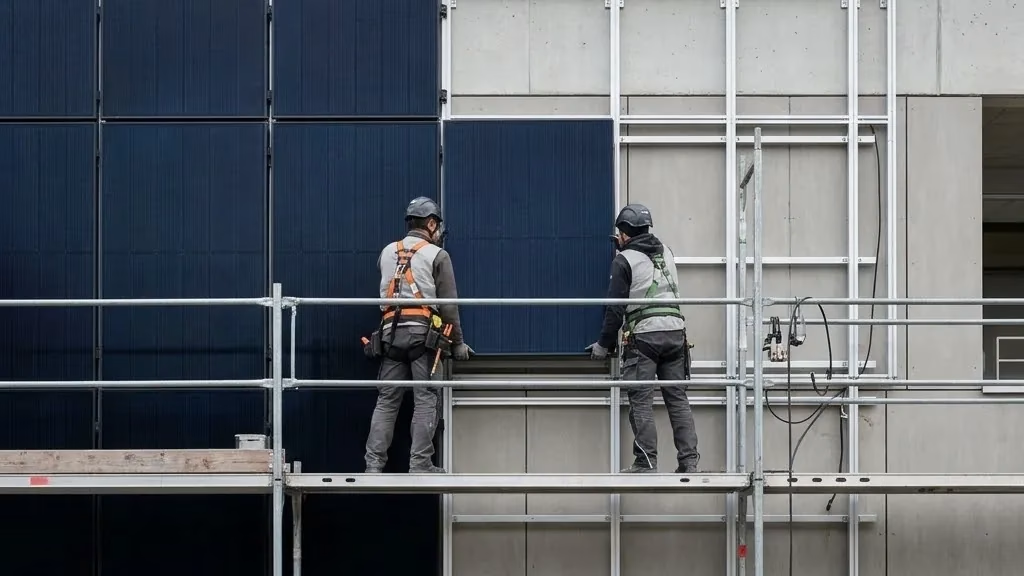
Photovoltaics on the facade – the solar facade – usually costs more per kilowatt peak than on the roof – because of scaffolding, a more elaborate substructure and lower area utilisation. In return, the vertical south facade delivers its power in winter, when the sun sits low and the roof yields little. Facade PV is therefore rarely the cheapest option, but sometimes the smartest addition – above all when the roof is full, a facade renovation is due anyway, or winter power is specifically needed. (As of July 2026)
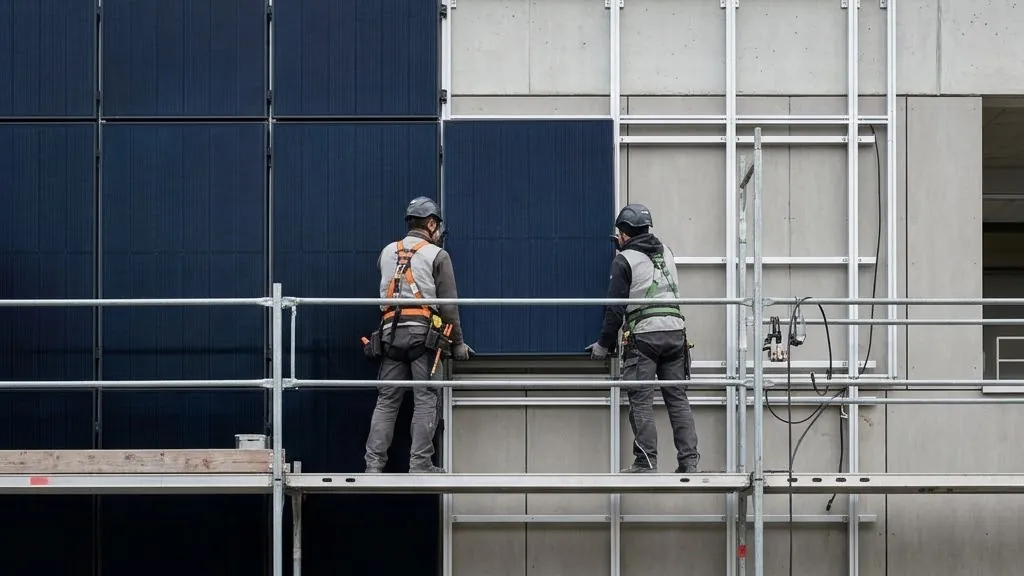
Key points in brief
- Facade PV is usually above the roof per kWp – scaffolding and the substructure drive up the price.
- The yield per module is lower, but it falls favourably into the winter half-year.
- Rarely the first choice as a standalone project; interesting as a supplement or during facade renovation.
- If the facade is being renovated anyway, the surcharge becomes relative – the PV takes on part of the facade.
- The exact costs depend heavily on the building – the quote here is especially individual.
Why does facade PV cost more than the roof?
For several reasons at once, and none of them lie with the modules. The first is the scaffolding: a facade is scaffolded over its entire height, and this scaffolding is a real cost block that an easily accessible roof doesn't trigger to the same extent. The second is the substructure: attaching modules to a vertical wall requires a different, often more elaborate system than on a roof – the connection to the facade, the structural engineering, the weatherproofing all need to be solved properly.
On top of that comes area utilisation: facades are broken up by windows, balconies and doors, and the usable share is smaller than a contiguous roof area. Fewer modules for more effort – that drives up the price per kilowatt peak. How this kWp price is actually made up, and why it's the fair basis for comparison, is shown in the article Cost per kWp.
What do I get for the higher price?
Something the roof doesn't deliver: winter power. The vertical south facade is optimally positioned for the low winter sun – exactly when the shallow-pitched roof lies under snow or makes poor use of the shallow radiation. The article Facade photovoltaics describes this winter profile in detail; for the cost question, what matters is this context: facade PV produces less over the year than the same output on the roof, but it spreads its production more favourably across the seasons.
That turns the higher price into a deliberate decision rather than a bad deal – if the reasons are right. Four situations speak for the facade:
- The roof is already fully covered, and you want to expand production.
- It's specifically about winter power – for example in combination with a heat pump or EV.
- The facade is being renovated anyway (more on this shortly).
- A design or architectural requirement is to be met.
| Aspect | Roof | Facade |
|---|---|---|
| Price per kWp | lower | higher (scaffolding, substructure, area loss) |
| Annual yield per kWp | higher | lower |
| Winter share | lower | higher (low sun, vertical) |
| Makes sense as | Base build-out | Supplement / winter power / during facade renovation |
Simplified overview, as of July 2026. The specific costs depend heavily on the building – the individual quote is decisive.
When does the surcharge pay off?
Most likely when the facade is due anyway. If a facade renovation is coming up, the facade PV takes on part of the facade area and replaces other material – similar to the roof-integrated principle on the roof. You're then not comparing «facade plus PV» against «facade only», but counting the PV as part of the building envelope. In this logic, the surcharge shrinks, and you're paying for the scaffolding anyway.
As a standalone project on an intact facade, on the other hand, facade PV is rarely the first choice – here, the same investment on the roof usually brings a higher annual yield. The honest order is therefore almost always: fill the roof first, then talk about the facade. As with a roof system, the quality of the mounting system also decides longevity here, and formal requirements apply depending on the municipality – especially for visible facades in core zones, related to the topics of flat roof regulations.
Facade PV rarely sells on price – it convinces on the situation. When someone comes to us saying «I want to use the south facade», our first question is: «Is the roof already full?» In most cases it isn't, and then we first recommend the roof – same investment, higher annual yield. The facade becomes genuinely interesting in two situations: when the roof is maxed out and the household specifically needs winter power for a heat pump and EV, or when the facade is being renovated anyway. In the second case, the scaffolding is going up anyway, and the PV replaces facade material – that's the moment the calculation works out.
Frequently asked questions
Is a solar facade more expensive than a roof system?
As a rule, yes, per kilowatt peak. Scaffolding, the more elaborate substructure on the vertical wall, and the smaller usable area drive up the price. In return, the south facade delivers valuable winter power. As a supplement or during a facade renovation, the surcharge can be justified; as a replacement for the roof, rarely.
Why bother with the facade at all if the roof is cheaper?
Because of the winter profile and the area. The vertical south facade produces above average in winter, when the sun is low – exactly when a heat pump and EV need a lot of electricity. And if the roof is full, the facade is the next available area. For the base build-out, though, the roof remains the first choice.
Is facade PV worth it during a facade renovation?
That's when it's most likely. If the facade is being renovated anyway, the PV takes on part of the building envelope and replaces other material, and the scaffolding is needed anyway. The surcharge becomes relative accordingly. On an intact facade as a standalone project, on the other hand, the calculation is considerably harder.
How much less does a facade system produce?
Noticeably less per kilowatt peak over the year than on a well-oriented roof, because the vertical area makes poorer use of the high summer sun. Specific figures depend heavily on orientation and shading. What matters is the different distribution: the winter share is higher – and that's often worth more than the pure annual total.
Free initial consultation
Use the facade – when it fits.
We tell you honestly when facade PV pays off and when the roof is the better choice – and work through the combined option for a facade renovation.
Want to calculate yourself first? Solar calculator with official roof data →
Prefer to talk? +41 78 830 83 35
Photovoltaics Switzerland – installation by a specialist company →
Swissolar member and Solarprofi · ESTI installation authorisation (Art. 14 NIV) · in Zurich since 2017 · over 150 systems completed · a personal answer from the specialist company, no call centre
Further guides
 Fassaden-Photovoltaik erklärt
 Cost per kWp
 Solaranlage Kosten Schweiz
 Flachdach: Vorschriften & Abstände
 Das Montagesystem
Sources: Empirical values from ecoEn GmbH's facade and roof projects (Zurich region), Swissolar expert information on building-integrated photovoltaics, mounting system manufacturer specifications.
Last updated: 9 July 2026 · Author: ecoEn editorial team