
With a solar system your electricity bill consists of two directions: consumption from the grid (energy + grid usage + levies – as before) and feed-in (energy remuneration, mostly quarterly, plus a separate GO item). It looks confusing mainly because the two directions have different prices and rhythms. Anyone who can check five items can read any bill – and surprisingly often finds forgotten money in the process. (As of: July 2026)

Key points in brief
- Your bill shows two separate transactions: you buy electricity at the full purchase tariff and sell surplus at the (lower) feed-in tariff – in the end the balance is settled.
- The self-consumed solar power appears nowhere – it is the invisible saving that lowers the purchased quantity.
- With market-price models, feed-in is remunerated differently each quarter; monthly payments are on-account amounts.
- The GO remuneration is a separate item – if it's missing, you're giving money away (how to claim it).
- Five-minute check once a year: is the purchased quantity plausible? Fed-in quantity ≈ production minus self-consumption? Tariff = published tariff sheet? GO there? On-account payments settled?
Why the bill looks different with PV
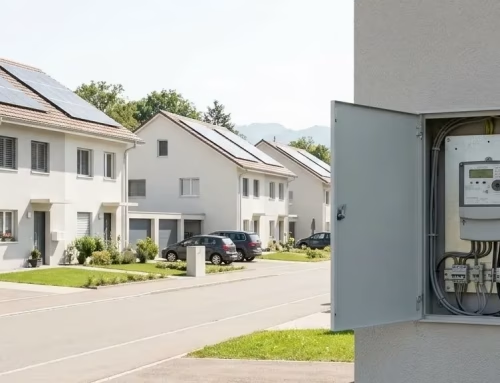
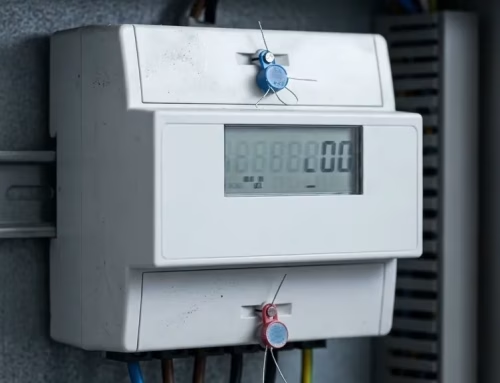
Without a solar system the electricity bill is a one-way street: consumption times tariff, done. With a system you become a producer – and your meter (today a smart meter) measures both directions separately: what you draw from the grid and what you feed in. This produces two billing parts with their own prices, their own rhythms and – this causes the most confusion – without direct offsetting of quantities: a purchased kilowatt-hour costs 25–35 Rp., a fed-in one brings 6–14 (why).
And a third quantity is deliberately missing: self-consumption – solar power flowing directly from the roof into your appliances – happens behind the meter and appears on no bill. It shows only indirectly: as a clearly reduced purchased quantity.
The items one by one
Part 1: consumption (you buy). As before the system, only less: energy (high/low tariff), grid usage, levies (KEV/grid surcharge, municipal levies), metering charge, VAT. Checkpoint: the purchased quantity should have fallen noticeably compared with the pre-solar period – by your self-consumption.
Part 2: feed-in (you sell). This is where it becomes model-dependent:
| Item | What's behind it |
|---|---|
| Energy remuneration | fed-in kWh × your utility's tariff – with market-price models different each quarter (reference market price), but at least the statutory lower limit |
| GO remuneration | separate item for the guarantee of origin – only if registered (details); at WWZ, for example, only in May of the following year |
| On-account/final settlement | monthly payments are advances; the quarterly or annual settlement corrects them |
The balance. Depending on the utility, consumption and feed-in are netted on the same invoice or billed/remunerated separately. Both are correct – all that matters is that you see both parts.
The five most common confusions – resolved
1. "I produce more than I consume – why do I still pay?" Because production and consumption don't happen at the same time: surplus sold at midday for 10 Rp., consumption bought in the evening at 30 Rp. The annual quantities can match, the francs can't – that's the whole core of the self-consumption logic. 2. "The remuneration per kWh keeps changing." Correct with market-price models – the rate changes quarterly. Compare with the published quarterly values, not with the previous year. 3. "Where is my self-consumption?" Nowhere – and that's a good thing: neither grid charges nor electricity levies apply to it – precisely because it never ran through the grid. You'll find the figure in your monitoring app, not on the bill. 4. "What is this GO item?" Your guarantee-of-origin revenue. If it's missing although the system is registered with Pronovo: ask the utility – the most common find in our bill checks. 5. "The monthly amounts never match." They needn't – they're on-account payments. The final settlement is what counts; check quantities and rates there once.
The 5-minute annual check
Once a year, ideally with the final settlement:
1. Check the fed-in quantity for plausibility: production (app) minus self-consumption (app) ≈ fed-in kWh (bill)? Rough deviation → clarify meter reading/measurement. 2. Match the tariff: rate on the bill = current tariff sheet or published quarterly value? 3. GO item present and with a plausible quantity? 4. Consumption quantity trend: stable versus the previous year or explainable (new EV, heat pump)? 5. On-account payments settled cleanly, no duplicate items?
Five minutes – and you know more about your system than most owners. In case of discrepancies: present the bill to the installer or the utility; both are everyday business.
At commissioning we offer to go through the first annual bill together – a quarter of an hour that has become established since we noticed how often the same three things happen: the GO item is missing (registration never completed), the fed-in quantity is surprisingly high (self-consumption worse than thought – usually solvable with a timer and control), or simply the wrong yardstick is applied ("the system brings nothing" – when only the invisible self-consumption francs were missing from the picture). All three finds have the same value: they cost nothing but a glance – and that's exactly why reading competence for this one document pays off.
Frequently asked questions
Do I get a separate credit note for the feed-in or an offsetting?
Both occur – depending on the utility, it's netted or paid out separately. Your grid operator's practice is what counts; at year-end the total must be right, not the form.
Why is there a metering charge on my bill?
Metering (smart meter, data provision) is billed separately – with and without PV. Details and your rights: Smart meters in Switzerland.
My feed-in remuneration fluctuates strongly between quarters – is that an error?
With market-price models, no, that's the model: summer quarters typically pay less than winter quarters. Check against the published quarterly values – not against the average.
Do I have to declare the feed-in proceeds in my tax return?
Yes, feed-in and GO proceeds are in principle to be declared; in return the investment is deductible. The details: Tax deduction for solar systems.
Can I have you check my bill?
Yes – we go through bills free of charge, even for systems we didn't build. It usually takes ten minutes; sometimes it finds several hundred francs a year.
Free initial consultation
Bill unclear? We'll translate it.
Send us your last annual bill – we check quantities, tariffs and the GO item free of charge and tell you whether money is being left on the table.
Prefer to talk? +41 78 830 83 35
Photovoltaics Switzerland – installation by a specialist company →
Swissolar member and Solarprofi · ESTI installation authorisation (Art. 14 NIV) · in Zurich since 2017 · over 150 systems completed · a personal answer from the specialist company, no call centre
Further guides
 Eigenverbrauch oder Einspeisen?
 HKN verkaufen
 Der Referenz-Marktpreis erklärt
 Smart Meter Schweiz
 Feed-in tariffs: the big comparison
Sources: Billing practice of the regional grid operators, ElCom (invoice transparency requirements), 2026 tariff sheets.
Last updated: 9 July 2026 · Author: ecoEn editorial team