You cannot recognise quality from the price tag – but you can in four areas that every layperson can check: the completeness of the quote, the type of consultation, the warranty and service structure behind the components, and the details of the installation. Anyone who looks at these four areas can reliably distinguish solid, affordable quotes from risky, cheap quotes. (As of: July 2026)
Key points in brief
- Affordable and cheap are not the same thing: one saves on margins and the superfluous, the other on planning, installation and service.
- Modules produce solidly today across all price classes – the decisive differences are rarely found in the module.
- Quality leaves traces before you sign: in the quote, in the consultation, in the warranties.
- More is decided on the roof than in the brochure – cable routing, finishes and documentation reveal the working method.
- Saving money is perfectly fine in the right places; in three places it is bought at a high price.
How do you recognise quality right away in the quote?
By its completeness, not the final total. A proper quote specifies all cost items – from scaffolding to registrations – and provides the minimum technical specifications: exactly which components, which mounting system, who is responsible for the watertightness of the roof. If this is missing, you are not comparing a price, but a promise.
A second quote signal is inconspicuous: the treatment of exclusions. A company that writes «Meter box replacement if necessary, not included, guideline price on request» is working transparently. A company that does not mention sensitive items at all has not forgotten them – it has postponed them until later.
How do you recognise quality in the consultation?
By their interest in your case rather than in closing the deal. Specifically: A reputable consultation wants to see your roof – including the basement and main distribution board, because that is where the surprises arise – and asks about your electricity consumption, heat pump and e-car plans. Anyone who presents a ready-made solar system with an exact amortisation figure after ten minutes on the phone is not consulting, but selling; the exact figure is the most reliable warning signal.
This also includes the counter-check: A good consultant will occasionally advise against something – from an oversized battery, from a superfluous extra, in case of doubt from the whole project. Anyone who just nods at every request is not optimising your solar system.
How do you recognise quality in the components?
Not by the brand name, but by three verifiable things. Firstly, the warranty structure: How long, for what exactly, and who is behind it – the manufacturer, the importer or just the installer? The three types of warranty are worth differing amounts. Secondly, transparency: Every reputable product has a readable data sheet; anyone who advertises with «Premium Quality» instead replaces specifications with adjectives. Thirdly, the spare parts and service issue: Is the product and its support still likely to exist in fifteen years when the inverter needs to be replaced?
Important for classification: Equipment and service differ between the price classes – an economy module does not produce worse kilowatt hours because of this. Quality risks rarely arise with the material and often with what is done with it.
How do you recognise quality on the roof?
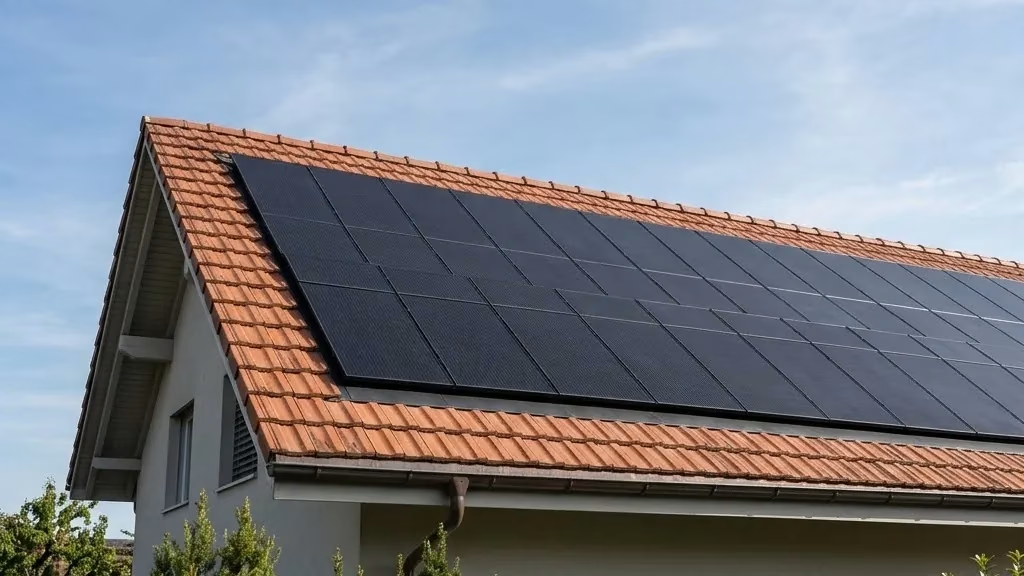
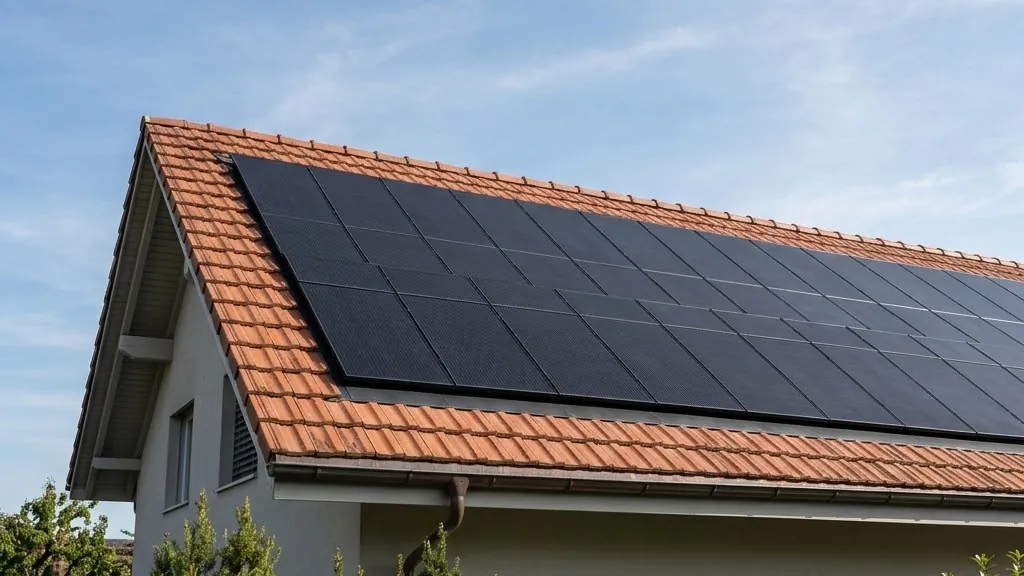
The fire risk, the watertightness, the service life of the solar system – all of this is decided less in the brochure than on the day of installation. The indicators visible from below are: straight rows of modules with neat edge distances, guided rather than hanging cables, tidy roof penetrations and flashing. Anyone who wants to know in more detail asks about the mounting system and its design – the answer («System X, designed according to the load values of your location») separates professionals from improvisers faster than any reference list.
The second roof indicator comes after installation: the documentation. A company that hands over a complete solar system dossier with photos, schematics and measurement protocols has nothing to hide – and you have the evidence in your hand for any future warranty claim.
Where are you allowed to save – and where not?
| Item | Save? | Why |
|---|---|---|
| Modules (standard instead of premium aesthetics) | yes | broad mass-produced quality, same electricity production |
| Extras without benefit (oversizing, additional packages) | yes | every surcharge without added value worsens the calculation |
| Timing (installation combined with roof work that is planned anyway) | yes | Scaffolding and travel costs are only incurred once |
| Inverter quality | no | Workhorse of the solar system, first candidate for replacement |
| Electrical installation | no | Safety and standard conformity are non-negotiable |
| Planning, installation, documentation | no | The follow-up costs of poor work reliably exceed the savings |
Classification aid, As of: July 2026. The assessment of the specific project is binding.
This is at the same time the boundary between affordable and cheap: Affordable companies save in the left half of the table – lean structure, standard components, efficient processes. Cheap ones save on the right. Exactly where cheap providers use the red pen and what this costs over the service life is detailed in its own article.
The most revealing calls reach us years after a third-party installation: a module is causing problems, and nobody can find any documentation – no string plan, no photos, no system specification for the mounting material. Only then does it become apparent what the cheapest quote really cost back then. Conversely: With neatly documented solar systems, even a defect is usually a minor issue – a glance at the dossier, a phone call, done.
Frequently asked questions
Is an expensive provider automatically the better one?
No. A high price can mean premium equipment, but also high sales costs or simply full order books. Check the same four areas as with the affordable quote – quality is shown by features, not by the amount.
How do I recognise quality if I have no idea about technology?
By behaviour instead of technology: Site visit before the price, complete items, named exclusions, clear warranties, references nearby. This check does not require any specialist knowledge – only the willingness to ask questions.
Does the brand name of the modules say anything about the provider quality?
Very little. Good companies also install inexpensive mass-produced modules neatly; bad ones also install branded goods sloppily. More meaningful are the mounting system specification, warranty structure and documentation.
What does poor quality cost in the end?
Typical follow-up costs: Additions for forgotten items, troubleshooting without documentation, premature component replacement and, in the worst case, roof damage. Individually hundreds to thousands of francs – together regularly more than the cheapest quote ever saved.
Can I still have the installation quality checked after the purchase?
Yes, an independent solar system check provides clarity – sensible, for example, before the expiry of warranty periods or when buying a house with an existing solar system. What you can check yourself every year is shown in the checklist for solar system owners.
Free initial consultation
Quality that you can verify.
Site visit before the quote, every item named, system specifications instead of adjectives – and at the end a dossier that makes every subsequent manual task easy. Feel free to compare us.
Want to calculate yourself first? Solar calculator with official roof data →
Prefer to talk? +41 78 830 83 35
Photovoltaics Switzerland – installation by a specialist company →
Swissolar member and Solarprofi · ESTI installation authorisation (Art. 14 NIV) · in Zurich since 2017 · over 150 systems completed · a personal answer from the specialist company, no call centre
Further guides
 Preisklassen: Was Sie fürs Geld bekommen
 Billiganbieter richtig einordnen
 Warum sich Offerten unterscheiden
 Technische Mindestangaben
 Rote Flaggen erkennen
Sources: Quote and project practice of ecoEn GmbH, Zurich region (As of: July 2026); Swissolar (specialist partner standards).
Last updated: 9 July 2026 · Author: ecoEn editorial team