Even without your own roof, several paths lead to solar power: If your property has a solar system with a self-consumption community (ZEV), you buy solar power directly from the house roof – usually cheaper than grid power. Now, tenants can buy solar power from the neighbourhood via local electricity communities. In addition, there are solar power products from the utility – and the underestimated way of convincing the property owners of a solar system: Well-prepared tenant requests move more than many think. (As of: July 2026)
Key points in brief
- With a ZEV in the building, tenants buy solar power from their own roof – protected by the statutory price cap.
- New since 2026: The LEG brings solar power via the public grid to tenants without their own roof.
- Solar power products from the utility are the easiest way – ecologically sensible, but without the price advantage of direct purchase.
- Tenants have more influence than they think: A well-founded request to the property owners is often the beginning of a solar system.
- When moving in, the question about ZEV and solar power is now just as worthwhile as the one about the basement compartment.
Which solar power can I buy directly as a tenant?
The one from your own house roof – if the property has a solar system with a self-consumption community (ZEV). Then the solar power flows from the roof directly to the residents, and you buy two types of electricity: the solar share from the house and the rest from the grid. How billing in the apartment building works is neatly regulated – and a statutory line of protection applies for tenants: The internal solar power price must not be higher than what you would otherwise pay for the standard product of the utility. In a well-managed ZEV, it is noticeably lower – you benefit without having invested a franc; the financial flows in detail are shown in the article on ZEV remuneration.
Whether your building has a ZEV is stated in the tenancy agreement or the service charge documents – and is increasingly becoming a justified question when moving in: A property with a solar system and a fair ZEV is simply the better offer than the same apartment without.
As a tenant, you do not have to organise anything – the ZEV is the responsibility of the property owners. Your role is that of a customer with rights: transparent billing with a designated solar share, adhered-to price cap, regulated entry and exit modalities.
What does the new LEG bring for tenants?
A real system change – especially for anyone without a solar-compatible house roof. Since 2026, local electricity communities (LEG) have been allowed to sell solar power via the public grid in the neighbourhood: The large roof of the cooperative next door, the commercial roof in the quarter – their surplus can now flow directly to households in the surrounding area, at a reduced grid usage fee.
For tenants, this means: You can buy solar power from the neighbourhood, without your own property building anything. The prerequisites are a smart meter (whose rollout is running comprehensively) and a LEG offer in your area – in the City of Zurich, an early pioneer exists with the neighbourhood electricity model from ewz, other utilities are building up their offers. The models in comparison are shown in the large overview.
Honestly classified: The LEG landscape is young, the offers are regionally at different stages of development, and the price advantage depends on the specific model. But the direction is right – for the first time, buying solar power is no longer tied to your own roof or your own house.
| Route | Requirement | Price character |
|---|---|---|
| ZEV in the building | Solar system + ZEV in the property | cheaper than the standard product (cap) |
| LEG in the neighbourhood | Offer in the area + smart meter | depending on the model, local solar power |
| Solar power product from the utility | available everywhere | mostly a surcharge for the eco-product |
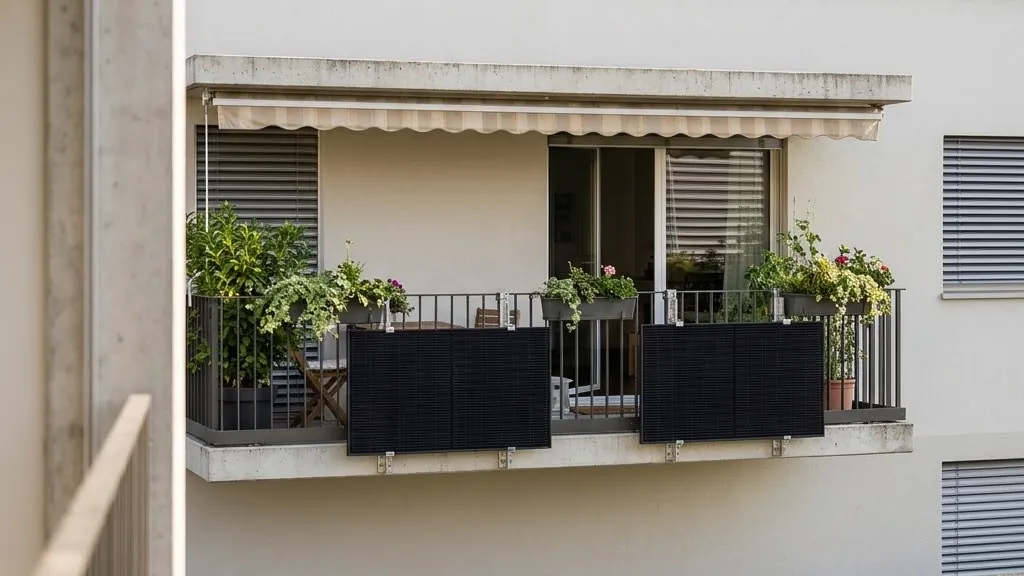
| Balcony solar system | Landlord's permission + rules | small own contribution |
Orientation, As of: July 2026. The offers at your address are authoritative.
How do I get my property owners on board for a solar system?
With a request that looks like a project instead of a wish – the most underestimated lever of the whole topic. Property owners do not build solar systems because nobody asks; and they build them when the calculation and the demand are right. As a tenant, you are part of this calculation.
What a good tenant initiative contains:
1. Bundle the interest. A request from eight parties carries more weight than one from one. A quick survey in the building: Who would buy solar power from the roof? 2. Name the benefit for the property owners. A solar system with a ZEV is a business for owners: investment with yields from electricity sales and feed-in, upgraded property, more satisfied tenants. The reference to the comparison of the models and the processing shows that the project has been thought through. 3. Offer the first step. A quote without obligation costs the property owners nothing – the proposal to obtain one is low-threshold and concrete.
With cooperatives, the same path runs via membership rights, in condominium ownership (STWEG) – if you rent from an owner – via their community. And where nothing at all is possible, the LEG and utility product remain: You can now get solar power past even the most reluctant landlord.
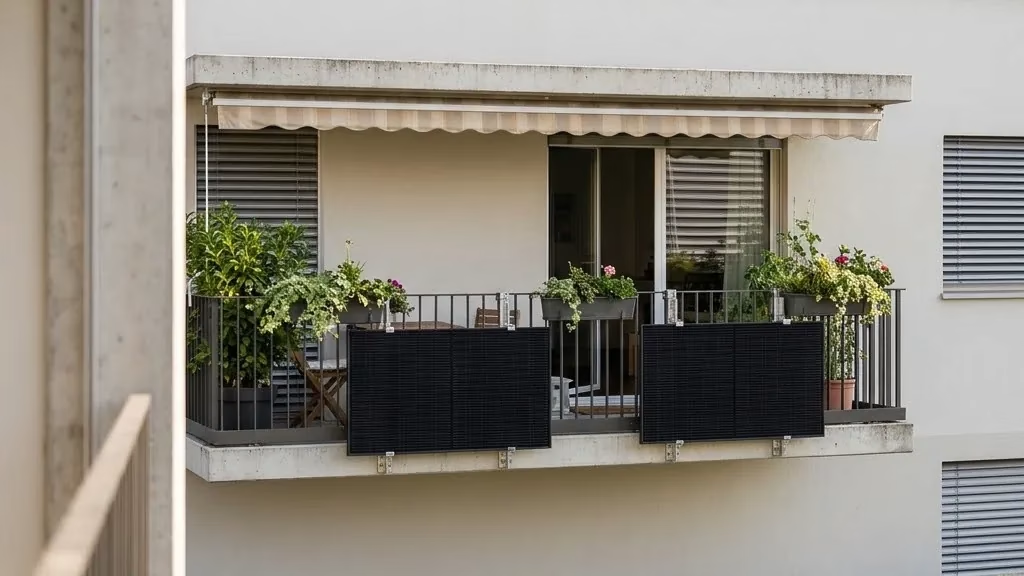
The fourth way for active people – the small balcony solar system – is a nice entry point, but requires the landlord's consent and compliance with the connection rules; due to its size, it is not suitable as a replacement for a roof solar system.
Some of our apartment building projects in the Zurich region started as a tenant enquiry – and the pattern of the successful ones is always the same: it is not just «someone from the building» asking, but half the building, with a signature list and the specific request to obtain a quote. For the owners, this transforms the starting point: a cost issue becomes an in-demand offer with secured consumers. Our role in this: we calculate the variants including ZEV for the owners – and if the numbers are right, the tenant enquiry from spring becomes a system in autumn. Asking costs nothing; asking well-prepared moves roofs.
Frequently asked questions
Can my landlord force me to buy the ZEV solar power?
Joining the ZEV is part of the tenancy agreement for new rentals and is regulated for existing ones – you are protected by the price cap: solar power from the roof must not be more expensive than the external standard product. Economically, tenants fare better, not worse, in a properly managed ZEV; the modalities are in the ZEV agreement.
May I install a balcony solar system as a tenant?
In principle, only with the landlord's consent – the system changes the rented property or its external appearance – and in compliance with the electrical connection rules. Ask in writing before purchasing. As a sign of commitment, the enquiry incidentally also serves as an entry point to the larger question: how about a proper roof system?
What does solar power from a LEG cost me?
That is determined by the respective LEG model – prices vary locally and the range of offers is young. The charm, besides the price, lies in the origin: verifiably local solar power from the neighbourhood. Ask your utility whether an offer exists at your address.
Is the more expensive solar power product from my utility actually worth it?
Ecologically, it is a real contribution – your surcharge promotes renewable production. It does not have the price advantage of direct sourcing (ZEV/LEG); it is support, not a saving. As an immediately available step, it makes sense; in parallel, it is worth looking at more direct ways.
I am moving – what should I look out for in the new apartment?
Ask about a solar system and ZEV – specifically: is there solar power from the roof, at what price, how is it billed? A property with a properly managed ZEV offers genuinely lower electricity costs. The question costs nothing and incidentally signals to landlords that solar power is in demand.
Free initial consultation
Your building does not have a system yet? Give us the opportunity.
We prepare variant quotes for owners without obligation, including the ZEV model – the perfect next step after your tenant initiative.
Want to calculate yourself first? Solar calculator with official roof data →
Prefer to talk? +41 78 830 83 35
Have a photovoltaic system installed →
Swissolar member and Solarprofi · ESTI installation authorisation (Art. 14 NIV) · in Zurich since 2017 · over 150 systems completed · a personal answer from the specialist company, no call centre
Further guides
 ZEV in apartment buildings: billing & organisationRead more
 Lokale Elektrizitätsgemeinschaften (LEG)Weiterlesen
 ZEV-Überschuss: wer bekommt das Geld?Weiterlesen
 ZEV, vZEV oder LEG?Weiterlesen
 Solaranlage im StockwerkeigentumWeiterlesen
Sources: Energy legislation (ZEV, LEG from 2026), ElCom FAQ on the Energy Strategy, offers from regional grid operators, empirical values from apartment building projects by ecoEn GmbH, Zurich region.
Last updated: 9 July 2026 · Author: ecoEn editorial team