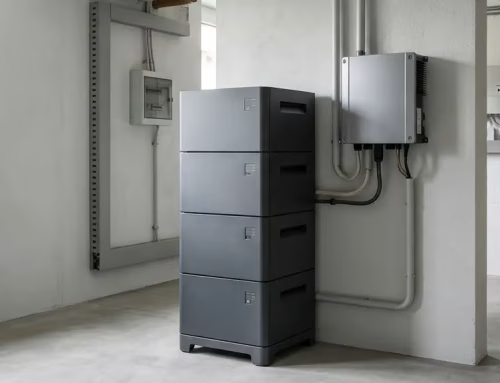
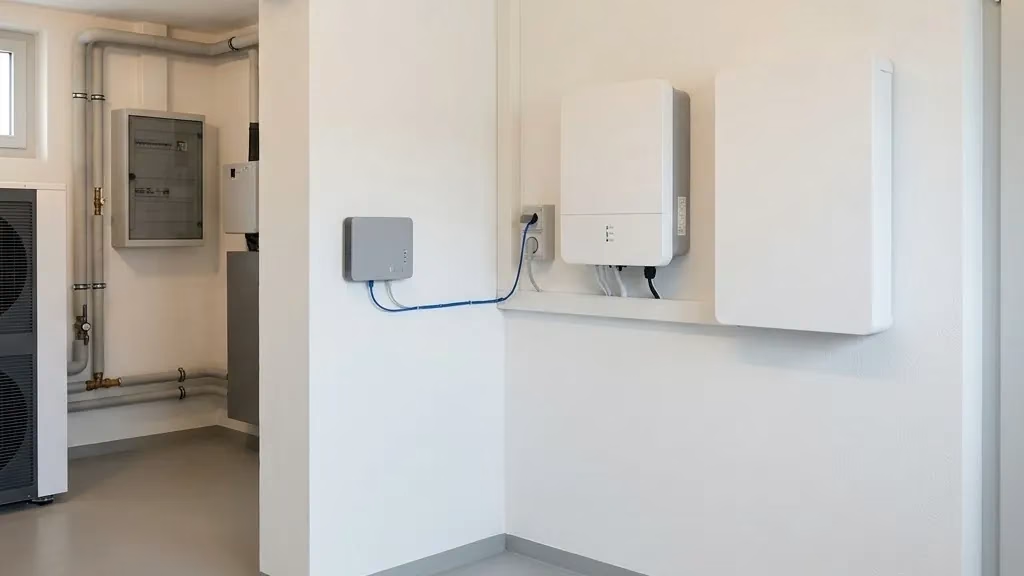
A battery storage system can deliver yields beyond self-consumption — via dynamic tariffs, as flexibility for the grid operator, or in the pool of a marketer on the balancing energy market. Since 2026, the Electricity Act has clarified: your flexibility belongs to you, and anyone who wants to use it needs a contract with remuneration. Realistically, however, marketing remains an extra for the single-family home — the main lever continues to be self-consumption.
Key points in brief
- «Flexibility» is the ability to shift consumption or feed-in in time — precisely what a storage system can do.
- Since 1 January 2026, the following applies: The grid operator may only use your flexibility with an agreement and against remuneration — except in the event of an immediate threat to grid operation.
- Anyone who has an old ripple control (boiler, heat pump) can prohibit its continued use by letter (opt-out).
- Dynamic tariffs turn the storage system into a price hunter: charge cheaply, consume expensively — a smart meter is a prerequisite.
- An arbitrage ban applies within the LEG: charging grid electricity and selling it expensively into the neighbourhood is excluded.
What does "flexibility" mean — and who owns it?
Flexibility is the ability to purposefully shift one's own electricity draw or feed-in. A boiler that heats at night instead of at midday is flexibility. A wallbox that waits until the sun shines is too. And a battery storage system is flexibility in its purest form — it can charge and discharge whenever it is useful.
What is new since 1 January 2026 is the clear legal order: flexibility fundamentally belongs to you as the holder or owner. If the distribution grid operator wants to use it in a grid-serving manner — such as throttling your storage system in critical hours — they require an agreement that regulates deployment, scope, and remuneration. They may only intervene without your consent in one case: in the event of an immediate, substantial threat to secure grid operation.
A detail for existing buildings: Anyone who has had a classic ripple control on their boiler or heat pump for years — their grid operator may continue to use this existing flexibility, but must provide annual information about it. If you no longer want that, you can prohibit continued use in writing by letter. Whether that is worthwhile is another question; what is important to know is that the choice lies with you.
Channel 1: Self-consumption — the unspectacular main prize
Before it comes to marketing, the honest order of priority: by far the greatest value of a storage system is generated in one's own house. Every stored kilowatt-hour that replaces grid draw in the evening brings the difference between your electricity price and the feed-in tariff — reliably, every day, without a contract with third parties. How large this lever is and what it depends on is shown by Is a battery storage system worthwhile? and Optimise self-consumption.
Everything else in this article is a supplement to that — not a replacement.
Channel 2: Dynamic tariffs — the storage system as a price hunter
With the new law, dynamic tariffs are making their way in: electricity and grid usage prices that are oriented hourly towards the market or expected grid loading and are published the day before. For storage owners, this opens up a simple game: charge when electricity is cheap — consume or draw nothing when it is expensive. In combination with your own PV system, a good energy manager controls both together.
The prerequisites: an intelligent measuring system (no dynamic tariffs without a smart meter — the rollout is underway, your utility knows the status) and a tariff offer from your grid operator or supplier. The offer is currently developing differently from utility to utility. More on the concept: Dynamic electricity tariffs & PV and Smart meter: What is coming your way.
Channel 3: Selling flexibility to the grid operator
Grids are experiencing higher loads from PV systems, heat pumps, and electric cars — and grid operators have a new interest in smoothing load peaks with flexibility instead of installing copper. Exactly for this, the new law creates the framework: the grid operator can offer to control your storage system (or your wallbox, your heat pump) in defined situations in a grid-serving manner — against remuneration, with a contractually regulated scope.
To be honest: this market is at the beginning. Whether and what your utility offers varies greatly regionally, and the remunerations are not yet established. Our advice: check such offers, but never base your storage investment on them.
Channel 4: Pooling — participating jointly in the balancing energy market
An individual home storage system is too small for the national balancing energy market. Marketers solve this with pools: they bundle hundreds or thousands of storage systems into a virtual power plant that offers balancing power to Swissgrid — and give owners a share of the proceeds. For you, this runs in the background; the storage system keeps up with its homework for your house and only makes a portion of its capacity available to the pool.
What to watch out for: Which capacity share is reserved? How does that affect self-consumption and emergency power reserve? What happens to the warranty with additional battery cycles? Reputable providers answer this transparently — and name realistic rather than fanciful proceeds.
The limits: ZEV, LEG, and the operating mode
Three rules from the new legal situation that one must know before building business models:
1. An arbitrage ban applies in the LEG. Storage systems may not sell more electricity into the community per billing period than they drew from it. Charging grid electricity cheaply and selling it expensively into the neighbourhood — precisely that has been excluded by the legislator. The models at a glance: ZEV, vZEV or LEG? 2. In the ZEV, the storage system is part of the whole. The community acts as a single end consumer vis-à-vis the grid — a storage system cannot buy separately on the free market while the rest remains in the basic supply. Internally, stored electricity may be delivered to participants; it is useful there primarily for breaking capacity peaks. 3. The operating mode is binding. A storage system is registered with the grid operator with a defined operating mode — with or without end consumption, with a corresponding metering concept. A change is permissible, but requires a new connection request. An installation that can switch arbitrarily is treated as a storage system with end consumption. And since 2025, the following applies: grid draw for the purpose of storage counts as end consumption — with the corresponding levies.
What is realistic bottom line?
For the typical single-family home, the sober ranking is: self-consumption first, by a wide margin. Dynamic tariffs can noticeably add to this as soon as your utility offers them and an energy manager uses them automatically. Pooling and grid operator flexibility are interesting but young additional channels with currently modest and fluctuating yields — we deliberately do not name any franc amounts here because serious figures depend on the provider, region, and market situation.
The good news: these channels are not mutually exclusive. A storage system that optimises self-consumption today can additionally use dynamic tariffs tomorrow and enter a pool the day after — if the technology is prepared for it. Exactly that is the planning point: install open interfaces and a capable energy management system today, keep options open for later.
In consultation meetings, the sales argument increasingly crops up that the storage system will "finance itself through marketing in the future". Our classification: the direction is right, the pace is not. The new markets are real, but young — anyone buying a storage system today should calculate it via self-consumption and consumption profile and book any marketing proceeds as a bonus. What we consistently recommend instead: pay attention to pooling capability and open control when purchasing. The option costs little — not having it can become expensive later.
Frequently asked questions
Am I allowed to trade electricity with my home storage system?
Behind your own meter yes — charging cheaply, consuming expensively is your business. When selling to the outside, rules apply: arbitrage is excluded in the LEG, and the operating mode of the storage system registered with the grid operator must match the usage.
Do I have to give the grid operator access to my storage system?
No. Without an agreement, they may only use your flexibility in the event of an immediate, substantial threat to grid operation. Any planned use requires a contract with regulated remuneration — and you can cancel existing ripple controls in writing.
What is an aggregator pool?
A marketer bundles many home storage systems into a virtual large power plant that offers capacity on the balancing energy market. The owners receive a share of the proceeds; the storage system continues to work primarily for its own house.
Does marketing also work in a ZEV or LEG?
To a limited extent: In a ZEV, the community counts as a single end consumer — the storage system cannot act separately on the market, but helps internally, for example, against capacity peaks. In the LEG, the storage system may not discharge more than it drew from the community.
Do I need a new connection request for marketing?
If the operating mode changes — for example from a self-consumption storage system to a pure market storage system — fundamentally yes. When joining a pool that complements the existing operation, the provider usually clarifies the registration question; ask about it explicitly.
Free initial consultation
Plan storage systems with future options.
We dimension your storage system for self-consumption — and select systems that are ready for dynamic tariffs and pooling. Free of charge and without obligation.
Want to calculate yourself first? Solar calculator with official roof data →
Prefer to talk? +41 78 830 83 35
Your battery storage system from a specialist company →
Swissolar member and Solarprofi · ESTI installation authorisation (Art. 14 NIV) · in Zurich since 2017 · over 150 systems completed · a personal answer from the specialist company, no call centre
Further guides
 Lohnt sich ein Stromspeicher?
 Eigenverbrauch optimieren
 Dynamische Stromtarife
 ZEV, vZEV oder LEG?
 Smart Meter
Sources: ElCom (FAQ Energy Strategy 2050 from the Mantle Decree, as of 16 June 2026), StromVG/StromVV (Art. 17c StromVG, Art. 19b–19d StromVV, Art. 19h para. 4 StromVV), EnG, Swissgrid (balancing energy).
Last updated: 9 July 2026 · Author: ecoEn editorial team