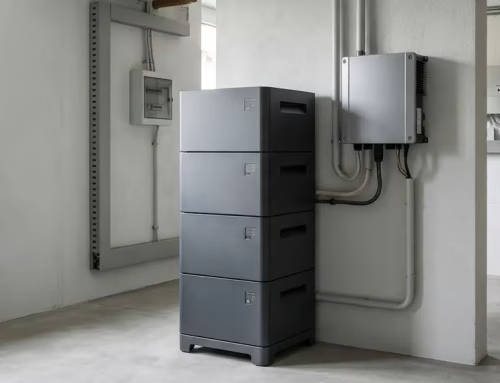

Mostly no. Without its own electricity production, a battery storage can only shift grid electricity over time – and the difference between two grid tariffs is usually too small to cover the purchase and battery losses. It becomes interesting in three cases: with dynamic electricity tariffs with a smart meter, as an emergency power solution without the expectation of a return, and in business for capping peak loads. (As of: July 2026)

Key points in brief
- A battery earns its money with the price difference between charging and discharging – without a solar system, only the gap between two grid tariffs remains, and that is usually small.
- With your own solar system, the calculation looks different: it is charged with cheap own electricity, the full grid tariff is saved – that is why the combination is increasingly paying off, the solo battery rarely.
- Incentives are tied to a generation system in many locations: the City of Zurich, for example, has only paid its battery incentives since August 2026 for batteries that are operated with a generation system at the same house connection.
- Three exceptions deserve a second look: dynamic electricity tariffs, emergency power as a need for security, and peak loads in business.
- Whoever googles «battery without PV» is often actually planning the wrong order: first check the roof – the solar system is almost always the more economic first step.
What a battery without a solar system can actually do
A battery storage does not produce electricity, it shifts it. With a solar system, it shifts your own midday electricity into the evening – that is its core business. Without a solar system, only one task remains: buying grid electricity when it is cheap, and then consuming it when it would be expensive. Experts call this tariff arbitrage.
Technically, this is possible without any problems. Practically all of today's home batteries can be operated AC-coupled, i.e. directly on the house grid and independently of a PV system – the same technology that is also used when retrofitting to an existing solar system. The question is not whether it works. The question is whether enough comes out of it.
The calculation: why it usually does not add up
For a battery to pay for itself, every shifted kilowatt-hour must bring in more than it costs. Three items are on the debit side: the purchase – for home batteries as a guideline value about CHF 800 to 1,200 per kilowatt-hour of capacity, installed (details on battery costs, As of: July 2026) –, the battery losses, because a part of every kilowatt-hour is lost during charging and discharging, and the limited number of charging cycles over the lifespan.
On the credit side without a solar system is only the tariff difference. With classic high/low tariff models, it is usually a few Rappen per kilowatt-hour – too little to cover the debit side. For comparison, the combination with a solar system: there, every stored kilowatt-hour replaces the full grid tariff of around 25 to 30 Rappen, while the alternative – feed-in – in many places only brings in the minimum remuneration of around 6 Rappen (why the remunerations have fallen, As of: July 2026).
| Question | Battery with solar system | Battery without solar system |
|---|---|---|
| What is it charged with? | own solar electricity | grid electricity at low tariff |
| Earnings per shifted kWh | Grid tariff instead of feed-in tariff – currently a large gap | Difference between two grid tariffs – usually small |
| Incentives | possible depending on location | frequently excluded |
| Typical conclusion | pays off more and more often | rarely pays off |
Simplified comparison with guideline values, As of: July 2026. The tariff sheet, consumption profile, and quote in the individual case are decisive.
Then there is the question of incentives. Many programmes understand the battery as an addition to electricity production, not as a standalone device: the City of Zurich explicitly ties its battery incentives, valid since August 2026, to a generation system at the same house connection – a battery without PV goes away empty-handed there. What the conditions look like at your location is shown in the overview of battery incentives.
The exceptions: when the solo battery deserves a second look
Dynamic electricity tariffs. Individual grid operators offer tariffs that follow the stock exchange price – with significantly larger price fluctuations over the course of the day than with the classic double tariff. A battery that automatically charges in the cheap hours can exploit these fluctuations. The prerequisites are a smart meter, a tariff offer from the local grid operator, and energy management that actually implements the price signals. The field is moving fast; the current status is described in the guide to dynamic electricity tariffs. Honestly: even here, the price difference must first overtake the purchase and losses – calculate instead of hoping.
Emergency power. Whoever wants to continue operating the fridge, heating control, or home office during a grid interruption buys security with an emergency power-capable battery – that also works without a solar system. Except: without your own production, the battery cannot be recharged during the interruption; if it is empty, it is empty. And security is the honest reason for buying, not return. What emergency power can and cannot do is clarified in the emergency power guide.
Peak loads in business. The economically strongest case without PV: businesses whose electricity bill contains a capacity charge pay for the highest measured peak load. A battery that caps these peaks lowers a real block of costs – entirely without a solar system. For whom this is an option is shown in the business battery guide.
Market flexibility. In the future, controllable batteries can sell flexibility to the grid – the StromVG lays the foundation for this. Today, this is not yet a sustainable business model for individual home batteries, but rather an additional argument; the classification is provided in the guide on marketing battery flexibility.
First check the roof: the better order
Behind the question «battery without a solar system?» there is often a house with an unused roof. Then the order is almost always clearer than it feels: the solar system lowers the electricity costs from the first kilowatt-hour, only really makes the battery profitable – and in many places opens the incentive pots that remain closed to the solo battery. Whether the battery is worth it is then decided in the combination.
If the roof is actually left out – tenancy, heritage protection, unsuitable orientation –, then the three exceptions above serve as a checklist: dynamic tariff available? Emergency power the real motive? Peak loads on the bill? If none of the three questions is answered with yes, the honest conclusion is: wait until one of them changes.
Since dynamic tariffs have been in the media, the question about the battery without a solar system appears regularly in our consultations. Our process is always the same: first we look at the roof, not at the battery – and surprisingly often the conversation ends with planning a solar system, in which the battery then has its economic place. The cases in which we have advised a solo battery can be counted on one hand, and they were almost always businesses with peak loads on the bill. Advising honestly here mostly means: «Not yet – or the solar system first.»
Frequently asked questions
Can I operate a battery storage without a solar system?
Technically yes: AC-coupled batteries work directly on the house grid and do not need a PV system. Economically, however, this is rarely worth it, because without your own production, only the small difference between two grid tariffs remains as earnings.
Is a battery worth it with night electricity or a dynamic tariff?
With the classic high/low tariff, the difference is usually too small. Dynamic tariffs with larger price fluctuations can improve the calculation – the prerequisites are a smart meter, a corresponding tariff offer from the grid operator, and energy management that automatically charges in the cheap hours. Even then: calculate first, do not hope.
Are there incentives for a battery without a solar system?
Frequently not. Many programmes understand the battery as an addition to electricity production – the City of Zurich, for example, ties its battery incentives, valid since August 2026, to a generation system at the same house connection. Check the conditions of your municipality before you count on incentive money.
Is a battery without PV useful as an emergency power solution?
Yes – if security is the motive, not return. An emergency power-capable battery bridges grid interruptions for the most important consumers. Without a solar system, however, it cannot be recharged during the interruption; the capacity is therefore the hard limit.
I am planning a solar system later – should I buy the battery now?
Better to plan together: dimensioning, inverter concept, and incentives mesh with one another, and the combination pays off significantly better than solo operation. Thanks to AC coupling, a battery can also be easily retrofitted later – so there is no reason to buy it before the system.
For which businesses is a battery without PV worth it?
For business with a capacity charge on the electricity bill: a battery that caps peak loads lowers this block of costs even without a solar system. Whether this works out for your load profile is shown by an analysis of the quarter-hour values.
Free initial consultation
Battery idea, but no solar system yet? The free of charge battery check.
We calculate honestly whether a battery is worth it at your location – and also tell you if the better order is «solar system first».
Want to calculate yourself first? Solar calculator with official roof data →
Prefer to talk? +41 78 830 83 35
Battery storage – Advice & Installation in Zurich →
Swissolar member and Solarprofi · ESTI installation authorisation (Art. 14 NIV) · in Zurich since 2017 · over 150 systems completed · a personal answer from the specialist company, no call centre
Further guides
 Lohnt sich ein Stromspeicher?
 Dynamische Stromtarife Schweiz
 Gewerbespeicher: Lastspitzen kappen
 Stromspeicher und Notstrom
 Stromspeicher nachrüsten
 Speicher-Flexibilität vermarkten
Sources: Tariff sheets and tariff models of the regional grid operators (2026), ordinance texts of the City of Zurich on the battery incentives valid since August 2026 (AB VGL), market guideline values for home batteries (cf. battery cost guide), project experience ecoEn.
Last updated: 9 July 2026 · Author: ecoEn editorial team