
Retrofitting a battery to an existing solar system is technically almost always possible – usually via a separate battery inverter on the alternating current side (AC coupling). The battery is then added as a second, independent construction site, which makes it somewhat more expensive than joint installation ex works. Whether the retrofit is worthwhile is decided by the same calculation as for a new purchase – consumption profile, tariff area and incentives. (As of: July 2026)
Key points in brief
- Retrofitting is almost always feasible – the existing system does not have to be modified for this.
- AC coupling is usual: the battery gets its own battery inverter, the existing solar inverter remains.
- As a separate second construction site, retrofitting is somewhat more expensive than installation together with the system.
- Anyone who built «battery-ready» (hybrid inverter, space, empty conduit) retrofits more easily and cheaply.
- The worthwhile question when retrofitting is the same as with a new purchase – the investment is decided by the profile, not the point in time.
Can I retrofit any battery to any system?
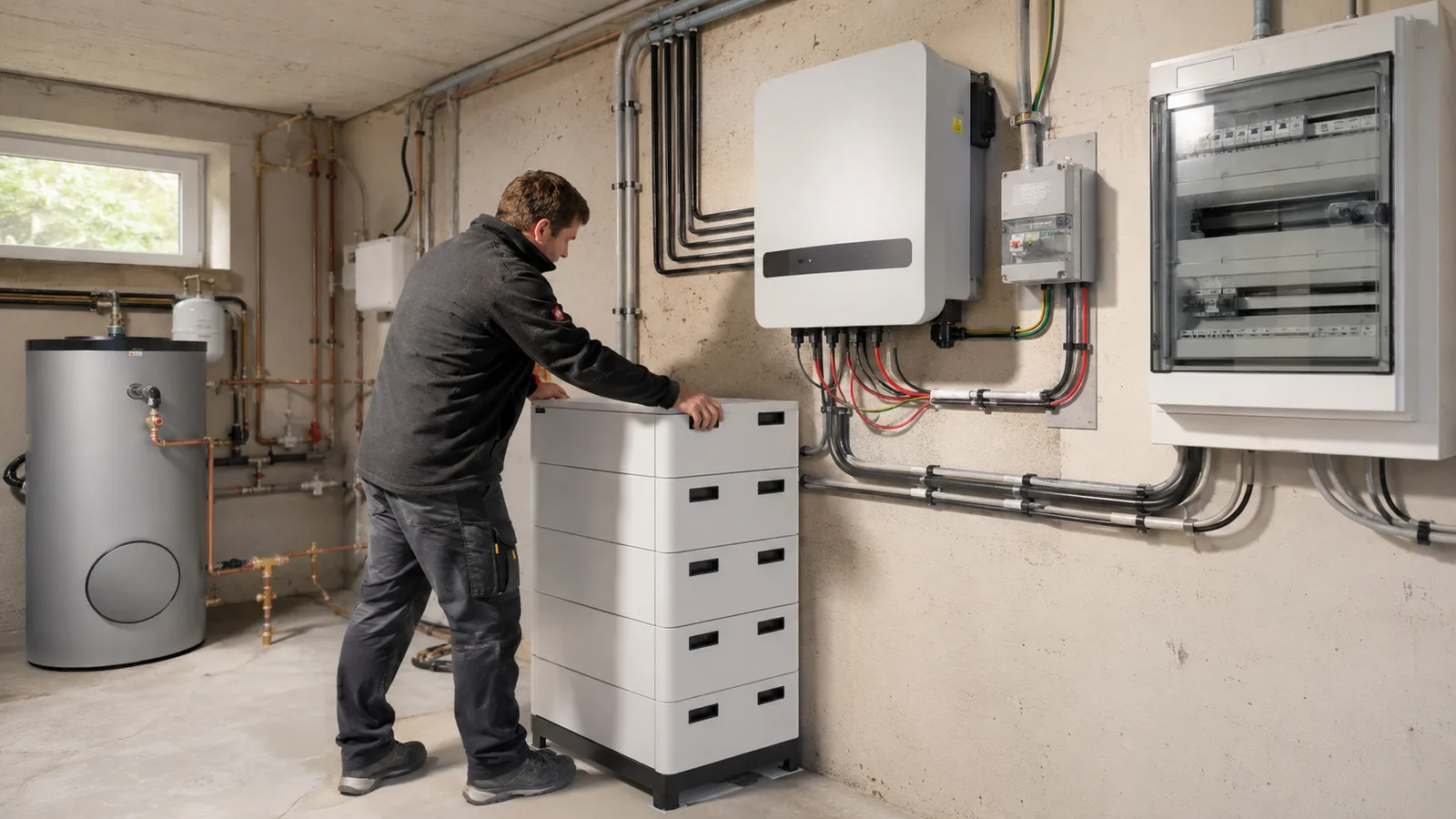
Generally yes – the good news first. An existing solar system does not have to be modified for the battery retrofit; the battery is added, not swapped. The usual way for this is AC coupling: the battery brings its own battery inverter and is integrated into the house grid on the alternating current side. The existing solar inverter continues to run unchanged.
Exactly that is the reason why retrofits are almost always AC-coupled: you do not replace functioning technology just to force it into a DC coupling. The small efficiency advantage that a DC-coupled battery on the hybrid inverter would have almost never justifies replacing an intact device. The exception proves the rule: if the old inverter is nearing the end of its lifespan anyway, changing to a hybrid inverter together with the battery can make sense – two due steps in one.
Why is retrofitting more expensive than installation ex works?
Not because the battery itself costs more – but because work all around occurs twice. Anyone who installs the battery together with the system shares a lot: an appointment, the electrician, the registration with the grid operator, often the inverter. When retrofitting, all of this becomes necessary a second time.
| Item | With installation ex works | With retrofitting |
|---|---|---|
| Journey & appointment | once, with the system | separate appointment |
| Battery inverter | not applicable (hybrid covers both) | separate device necessary (with AC coupling) |
| Electrical work | bundled | again |
| Registration with grid operator | with the system | again |
Simplified overview, as of: July 2026. The specific cost components depend on the starting position.
The extra effort is therefore not a surcharge by the battery manufacturers, but the logic of a second construction site. How the battery costs are fundamentally made up can be found in the article on home battery costs – retrofitting tends to be at the upper end there because the second journey and installation effort is added.
The advantage if you have built «battery-ready»
Anyone who thought ahead when building the system retrofits much more easily – and that is exactly why we recommend consciously keeping the battery question open with every new system, instead of unintentionally obstructing it. «Battery-ready» specifically means:
- A hybrid inverter with a battery connection is already installed. The battery can then dock directly and efficiently without a separate battery inverter being necessary.
- Space and connection in the right place are provided for: a free wall area or floor space in the frost-free, dry utility room, an empty conduit, reserve at the meter box.
This preparation costs only moderately more when building the system, but saves exactly the items during later retrofitting that otherwise make it expensive. This is the variant we most frequently recommend if the battery calculation is still tight today: it keeps the door open without you committing yourself immediately. In contrast, anyone who chose the cheapest solar inverter without a battery option pays for retrofitting with a separate device – the most expensive of the variants.
When is retrofitting worthwhile?
The honest answer: it is the same calculation as with a new purchase, only at a later point in time. Whether a battery is worthwhile depends on the consumption profile, tariff area and incentives – and retrofitting does not change anything fundamental about that. It only shifts the entry and adds a small extra effort on top.
But exactly this later point in time can be an advantage. Anyone who has operated the system for one or two years knows their real consumption data – and thus calculates the battery question more honestly than any forecast could for a new building. In addition: the starting position often changes by itself. An e-car is added, a heat pump, the tariffs shift – and suddenly the battery, which made no sense when the system was built, pays off. Retrofitting is therefore not a missed opportunity, but often the more data-based decision. Provided you have not bricked up the door for yourself during construction.
The retrofitting enquiries that reach us are neatly divided into two camps. Some consciously built «battery-ready» years ago – hybrid inverter, space in the basement, empty conduit – and for them retrofitting is a short, cheap appointment: dock the battery, register, done. The others took the cheapest inverter without a battery option back then, and for them it will be the somewhat more expensive variant with a separate battery inverter. We tell both the same thing on the actual question: whether the battery is worthwhile has little to do with retrofitting – that pays off based on your consumption and your tariff, today as it did then. The big advantage of waiting is that we now calculate with your real numbers instead of with assumptions. Anyone who has operated for a year finally knows how much they really need in the evening – and that is the best basis for the battery size that there is.
Retrofitting outside of Zurich: what is added regionally
Technically, nothing changes from canton to canton when retrofitting – the coupling, the space requirement and the question about the existing inverter remain the same. Regionally, three other things differ, and they decide on the effort and the appointment.
Firstly, the grid operator: the expansion is registered, and the form, processing time and requirements for the measurement vary from utility to utility. Secondly, the incentives – battery contributions are regulated at the municipal or cantonal level and change more frequently than the federal regulation; whether something is running at the location is clarified before the quote, not after. Thirdly, the availability of a company that wants to touch the existing system at all: when retrofitting, you work on someone else's installation, and not every provider does that.
Our headquarters are in Zurich, the operational area includes the neighbouring cantons in eastern Switzerland. For the region there are separate overviews with the cantonal incentive and tariff figures: Canton of St. Gallen as well as Appenzell Ausserrhoden and Innerrhoden. Planning, installation and electrical work are handled by our own team – especially when retrofitting, this is the practical difference, because the site visit to the existing system and the modification remain in the same hands.
Frequently asked questions
Can I retrofit a battery to my old solar system?
As a general rule, yes. Via AC coupling, the battery gets its own battery inverter and is integrated into the house grid without the existing system needing to be modified. The existing solar inverter continues to run unchanged. This is feasible with practically any grid-connected system.
Is retrofitting more expensive than adding the battery right during construction?
A little, yes – not because of the battery itself, but because of the second installation phase: a separate appointment, electrical work and registration are required again, and with AC coupling, a separate battery inverter is added. Anyone who built «battery-ready» can retrofit much more cheaply.
What exactly does «battery-ready» mean?
That the system is prepared for a later battery: a hybrid inverter with a battery connection, a suitable, frost-free location and the necessary empty conduits and reserves at the meter box. This preparation costs little during construction and saves exactly the expensive items during retrofitting.
Should I wait with the battery or buy it straight away?
Both can be right. Those who are sure buy it straight away – the most economical option. Those who are unsure build battery-ready and wait one or two operating years: then actual consumption data is available, and the battery size can be determined more precisely. Only an unprepared later purchase without a hybrid inverter is unfavourable.
Does the battery have to be from the same manufacturer as the system?
Not necessarily, but the components must fit together – compatibility, approvals, voltage level. With AC coupling, the battery is largely independent of the existing solar inverter; with DC coupling, a suitable hybrid inverter is required. The specialist company ensures compatibility.
Free initial consultation
PV without a battery? The free battery check.
We check your existing system, calculate the retrofit with your actual consumption data and tell you honestly whether taking this step is worthwhile now or if it is better to wait.
Want to calculate yourself first? Solar calculator with official roof data →
Prefer to talk? +41 78 830 83 35
Battery storage – Advice & Installation in Zurich →
Swissolar-certified specialist company · ESTI installation authorisation (Art. 14 NIV) · in Zurich since 2017 · over 150 systems completed · a personal answer from the specialist company, no call centre
Sources: Manufacturer documentation (retrofitting and AC coupling of home batteries); empirical data from the planning and installation practice of ecoEn GmbH, Zurich region.
Last updated: 9 July 2026 · Author: ecoEn editorial team