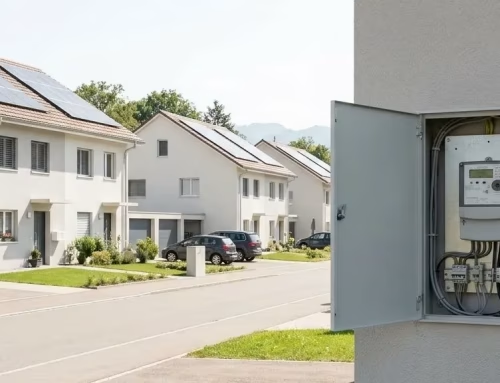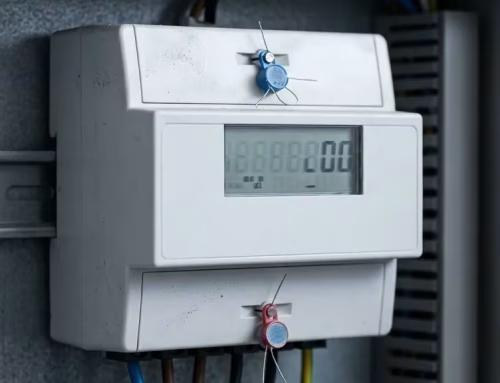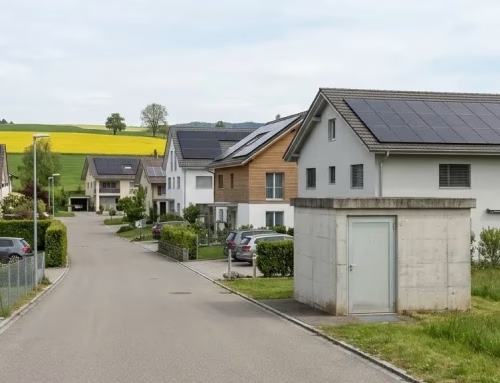
Stadtwerk Winterthur remunerates solar power in 2026 under the contract model with seasonal fixed prices: for the typical system under 100 kW with self-consumption, there's 13.00 Rp./kWh in the winter quarters and 10.00 Rp./kWh in the summer quarters – each including guarantee of origin. Without a contract, the federal quarterly reference market price applies with the statutory minimum remuneration. (As of July 2026)
Key points in brief
- Two routes: the contract model with fixed prices for the calendar year (incl. GO purchase), or, without a contract, the SFOE's quarterly reference market price.
- The fixed prices are staggered by season – winter feed-in (Q1 and Q4) is paid significantly better than summer feed-in.
- Single-family home systems fall into the «under 100 kW with self-consumption» category: 13.00 Rp. in the winter half-year, 10.00 Rp. in the summer half-year (excl. VAT).
- The system's DC power is decisive for the category; billing is per quarter.
- Under the market model, the statutory minimum remuneration of 6.00 Rp./kWh (systems up to 30 kW) protects against low-price phases.
- In 2027, the fixed prices fall by around 10 per cent (energy component, GO unchanged): 11.70 Rp. in the winter and 9.00 Rp. in the summer half-year for the typical single-family home system. Without a contract, the spot price at the time of feed-in now applies.
How high is the remuneration under the contract model?
Anyone who signs a purchase contract including guarantee of origin with Stadtwerk Winterthur receives these fixed prices in 2026:
| Category | Winter quarters (Q1 + Q4) | Summer quarters (Q2 + Q3) |
|---|---|---|
| under 100 kW, with self-consumption (typical single-family home) | 13.00 Rp./kWh (9.50 energy + 3.50 GO) | 10.00 Rp./kWh (8.00 + 2.00) |
| under 100 kW, without self-consumption | 10.20 Rp./kWh (6.70 + 3.50) | 7.20 Rp./kWh (5.20 + 2.00) |
| from 100 kW, with self-consumption | 9.20 Rp./kWh (5.70 + 3.50) | 6.20 Rp./kWh (4.20 + 2.00) |
| from 100 kW, without self-consumption | 7.40 Rp./kWh (3.90 + 3.50) | 4.40 Rp./kWh (2.40 + 2.00) |
Guideline figures excl. VAT according to the Einspeisevergütung Photovoltaik 2026 product sheet (as of October 2025). The tariffs apply for the calendar year and are republished annually – Stadtwerk Winterthur's current product sheet applies.
The DC power of the system is decisive for the classification, not the inverter power – a detail worth knowing given today's common oversized (DC-overpowered) systems. Billing is per quarter.
What applies in 2027?
On 2 October 2026, the city council decided the remuneration for 2027: the fixed prices in the contract model will fall by around 10 per cent as of 1 January 2027 because electricity tariffs in Winterthur are also falling. This affects the energy component; the remuneration for the guarantee of origin stays the same.
| Category 2027 | Winter quarters (Q1 + Q4) | Summer quarters (Q2 + Q3) |
|---|---|---|
| under 100 kW, with self-consumption (typical single-family home) | 11.70 Rp./kWh (8.20 energy + 3.50 GO) | 9.00 Rp./kWh (7.00 + 2.00) |
| under 100 kW, without self-consumption | 9.18 Rp./kWh (5.68 + 3.50) | 6.48 Rp./kWh (4.48 + 2.00) |
| from 100 kW, with self-consumption | 8.28 Rp./kWh (4.78 + 3.50) | 5.58 Rp./kWh (3.58 + 2.00) |
| from 100 kW, without self-consumption | 6.66 Rp./kWh (3.16 + 3.50) | 3.96 Rp./kWh (1.96 + 2.00) |
Guideline values excl. VAT according to the product sheet «Einspeisevergütung Photovoltaik 2027» (as of: October 2026).
For a system that feeds in 3,500 kWh a year, the city expects around CHF 338 instead of CHF 377 – just under 40 francs less. Anyone who does not sign a contract will be remunerated under the new federal model from 2027: at the spot price of the respective quarter hour, with the minimum remuneration premium for systems under 150 kW and without Stadtwerk taking over the GO. For the typical rooftop system, the contract therefore remains the better choice. What the federal model means in detail: Feed-in tariff 2027: solar power now paid at the spot price.
Why does Winterthur pay more in winter?
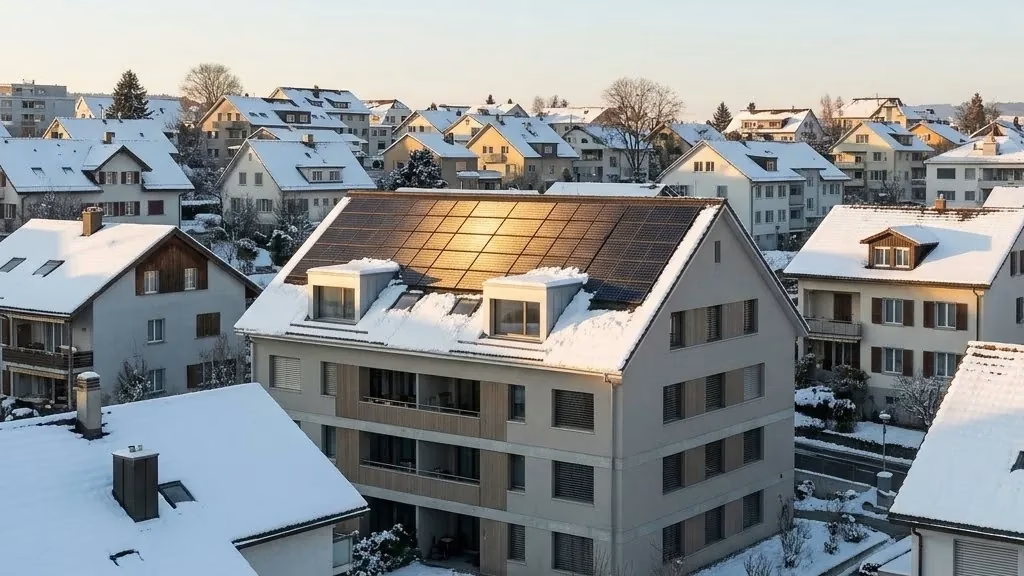
The seasonal tiering is the real distinctive feature of the Winterthur model – and it's economically consistent: in summer, all solar systems export at the same time, electricity is abundant and cheap on the exchange. In winter, solar power is scarce and valuable. The price signal passes this reality on to producers: under the contract model, the winter kilowatt-hour brings in 30 percent more than the summer kilowatt-hour.
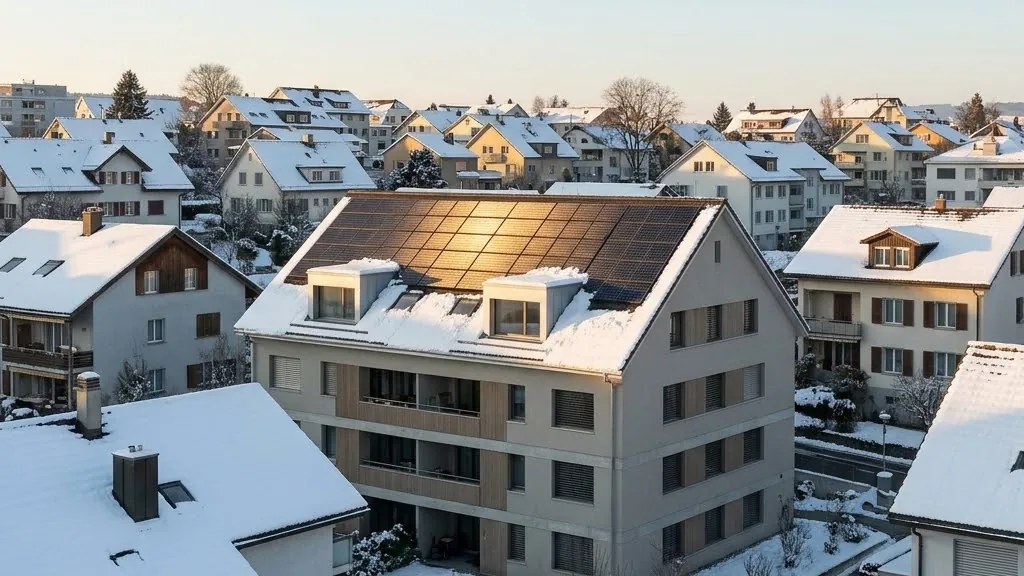
For you as a system owner, this has a practical consequence: measures that improve winter production pay off twice over in Winterthur – a steeper module tilt, an east-west or even facade layout, and snow-free modules in January are real money here. When planning a system, it's worth playing this card instead of stubbornly optimising for maximum summer yield.
What applies without a contract – the reference market price?
Anyone who doesn't sign a purchase contract is remunerated under the federal standard model: the quarterly averaged reference market price calculated by the Federal Office of Energy. It fluctuates from quarter to quarter; on the downside, the statutory minimum remuneration applies – for PV systems up to 30 kW, that's 6.00 Rp./kWh. The guarantee of origin is not remunerated under this model; systems under 2 kW can't take part in the GO system anyway.
The comparison with the contract model usually comes out in favour of the contract for a typical roof system – if only because the GO share of 2.00 to 3.50 Rp. would otherwise simply be lost. For existing systems, check which model is in place; for new systems, the purchase contract belongs on the commissioning checklist.
How does Winterthur compare regionally?
Over the year, the typical single-family home system under the contract model lands between the two big neighbours: the summer quarters at 10.00 Rp. dominate by volume, the winter quarters lift the average. That puts Winterthur below the stable ewz tariff of the City of Zurich (average 12.91 Rp.), but above what the pure EKZ market-price model yields in weak quarters – and, with the fixed-price contract, considerably more predictable than either. You can't choose your grid operator anyway; the comparison is relevant for managing expectations.
Don't forget: in Winterthur, the feed-in remuneration is joined by the municipal incentive surcharge of 50 percent on the one-off feed-in incentive – in the overall calculation, that often weighs more heavily than a cent's difference in the tariff.
What does that mean for your viability calculation?
Even with 13 Rp. in winter, the basic rule remains untouched: electricity you consume yourself replaces the full purchase tariff and is therefore worth more than any export. So the order in Winterthur too is: optimise self-consumption – shift consumption into the production hours, pair a heat pump and EV, add storage if the profile fits – and export the surplus at the contract tariff. What's interesting here is the product sheet's category logic: the remuneration «with self-consumption» is the highest of all – so the model doesn't punish self-consumption, it rewards it.
The seasonal tiering noticeably changes consultation conversations in Winterthur. The classic example is the east-west roof, which on paper delivers a lower annual yield than the perfect south orientation: with the winter bonus and the better spread over the day, the gap in the franc calculation shrinks considerably. Something similar applies to steeply pitched surfaces, which shed snow in winter and capture the low winter sun better. We therefore consistently calculate Winterthur projects with quarterly values instead of an annual average – the differences between two roof options often look quite different as a result.
Frequently asked questions
Which category applies to my single-family home?
Practically always «under 100 kW with self-consumption» (PV-E1A): 13.00 Rp./kWh in the winter quarters, 10.00 Rp./kWh in the summer quarters, excl. VAT. «Without self-consumption» applies to pure export systems with no consumption of their own behind them.
Do I need to do anything to get the fixed prices?
Yes – the fixed prices apply under the contract model with GO purchase. Without a contract, you fall into the federal reference-market-price model, without GO remuneration. The contract is arranged through Stadtwerk Winterthur.
How often do the tariffs change?
The fixed prices apply for one calendar year at a time and are published in autumn for the following year. Check the current product sheet before every viability calculation.
Does the AC or the DC power count for the category?
The DC power of the modules – that's what the ordinance requires. For systems just under 100 kW DC, a close look during planning is worthwhile.
Do I get incentives in addition to the feed-in remuneration?
Yes – regardless of the tariff: the federal one-off feed-in incentive plus the Winterthur surcharge of 50 percent on top of it, plus the tax deduction. The feed-in remuneration is the ongoing revenue, the incentive lowers the investment.
Free initial consultation
Your roof, calculated with quarterly values.
We calculate Winterthur projects with the real seasonal tariffs – including an incentive check and all registrations.
Prefer to talk? +41 78 830 83 35
Have a photovoltaic system installed →
Swissolar member and Solarprofi · ESTI installation authorisation (Art. 14 NIV) · in Zurich since 2017 · over 150 systems completed · a personal answer from the specialist company, no call centre
Further guides
 Förderung in WinterthurWeiterlesen
 Rückliefertarif ewzWeiterlesen
 Rückliefertarif EKZWeiterlesen
 The one-off feed-in incentive explainedRead more
 Eigenverbrauch optimierenWeiterlesenSolaranlage Winterthur: Kosten & FörderungWeiterlesen
Sources: Stadtwerk Winterthur (Einspeisevergütung Photovoltaik 2026 product sheet, as of October 2025; feeding in solar power), Federal Office of Energy (reference market price), Pronovo AG.
Last updated: 9 July 2026 · Author: ecoEn editorial team