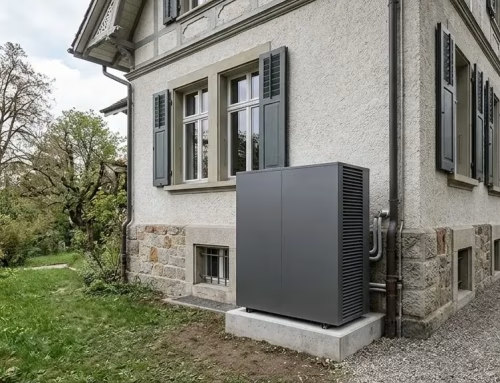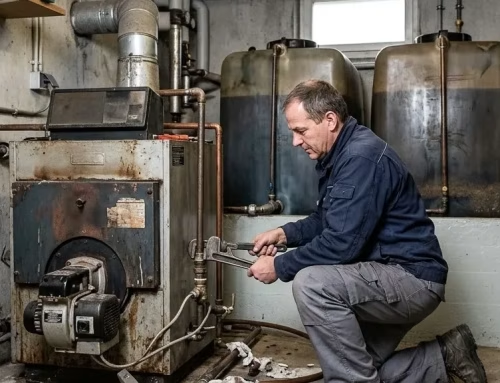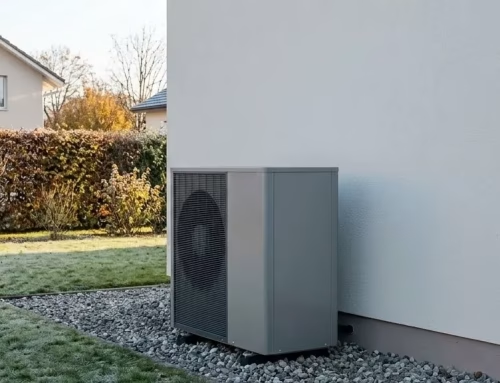
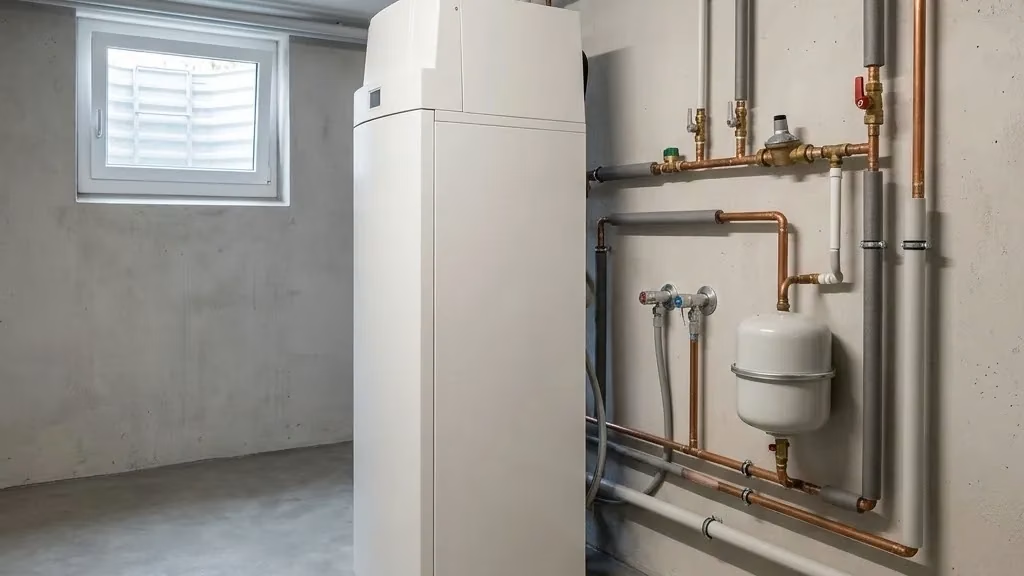
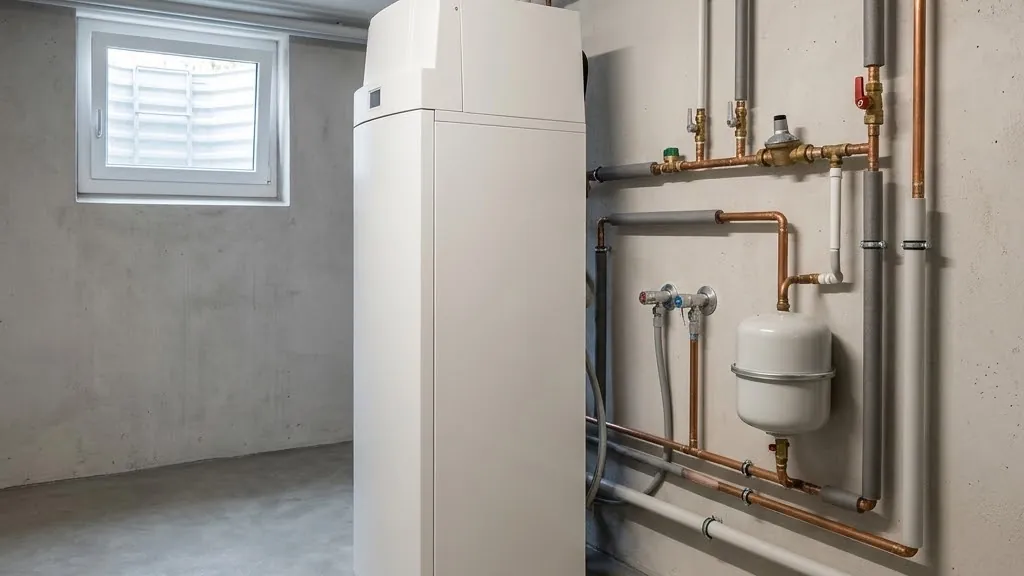
Eine Warmwasser-Wärmepumpe – oft Wärmepumpenboiler genannt – erwärmt ausschliesslich das Brauchwasser, nicht die Heizung. Sie nutzt dafür meist die Wärme der Umgebungsluft, etwa im Keller, und arbeitet deutlich sparsamer als ein reiner Elektroboiler. Das macht sie zum günstigen Einstieg in die Wärmepumpentechnik, besonders wenn die Heizung noch nicht ersetzt werden soll. Mit Solarstrom kombiniert wird sie besonders attraktiv. Im Kanton Zürich müssen zentrale, rein elektrisch beheizte Boiler in Wohnbauten bis 2030 ersetzt werden. (Stand: November 2026)
Key points in brief
- The hot water heat pump only heats the domestic hot water, the heating remains unaffected.
- It mostly uses the heat of the ambient air and needs significantly less electricity for it than an electric boiler.
- It is an affordable, minimally invasive entry – sensible when an old electric boiler is replaced.
- It can be well combined with solar electricity: it runs at midday when the system delivers.
- Kanton Zürich: Zentrale Elektroboiler in Wohnbauten müssen bis 2030 ersetzt werden; Boiler pro Wohnung oder Etage sind nicht betroffen.
- It does not replace a heating renewal – for that, a heating heat pump is needed.
What is a hot water heat pump?
A heat pump that limits itself to a single task: the hot water. Instead of warming the whole house like a heating heat pump, it only heats the domestic hot water in the boiler – i.e. the water for shower, bath and kitchen. That is why it is often simply called a heat pump boiler.
The principle is the same as with any heat pump: it extracts heat from the environment and raises it to a usable level. Mostly it uses the air in the installation room for this – often a cellar or technical room, where there is some heat anyway. As a result, it needs significantly less electricity for the same amount of hot water than a classic electric boiler, which heats the water directly with a heating element.
This clearly distinguishes it from the large solution: the heating heat pump warms the whole house and is part of a heating replacement. The hot water heat pump leaves the existing heating untouched and only takes care of a sub-area. This makes it a small entry.
For whom is the entry worthwhile?
Especially for households that want or have to replace an old electric boiler without immediately touching the whole heating. Exactly in this constellation, the hot water heat pump plays to its strengths.
A pure electric boiler is one of the most inefficient ways to heat water – it converts electricity directly into heat, one to one. A hot water heat pump gets a multiple of heat from the same amount of electricity, because it draws the largest part of the energy from the ambient air. Anyone who has an aged electric boiler noticeably lowers their electricity consumption for hot water with the switch.
It is particularly sensible if the heating is still running well and a complete heating replacement is not imminent. Then the hot water heat pump is a manageable step with clear benefit, which does not turn the whole house upside down. If, on the other hand, a heating replacement is imminent anyway, the hot water is usually included in the planning of the large heat pump right away – then no separate solution is needed.
A point from practice: the hot water heat pump slightly cools the room from which it draws the heat. In a cellar this is mostly unproblematic or even desirable. However, it needs a suitable installation room with enough air volume – that is part of the planning.
Kanton Zürich: Zentrale Elektroboiler müssen bis 2030 ersetzt werden
Im Kanton Zürich gilt eine Frist, die viele Hausbesitzer noch nicht kennen: Gemäss § 10b Abs. 3 des kantonalen Energiegesetzes müssen bis 2030 alle zentralen Elektro-Wassererwärmer ersetzt werden, die ausschliesslich direkt elektrisch beheizt werden. Nicht betroffen sind dezentrale Elektroboiler, also ein Boiler pro Wohnung, pro Etage oder pro Bezugsstelle. Einen zentralen Elektroboiler neu einzubauen oder einen defekten wieder durch einen Elektroboiler zu ersetzen, ist nicht mehr zulässig.
Ob Ihr Boiler unter die Pflicht fällt, hängt von der Einbausituation ab. Das kantonale Merkblatt nennt als Pflichtfälle den zentralen Boiler im Einfamilienhaus, der in der Nähe der Heizung steht, und im Mehrfamilienhaus den zentralen Boiler bei zentraler Heizung im gleichen Raum. Massgebend ist das Merkblatt des Kantons Zürich (AWEL, Juli 2026).
Reicht eigener Solarstrom, damit der Elektroboiler bleiben darf?
Das Merkblatt nennt eine Ausnahme mit Photovoltaik nur für bestehende dezentrale Elektroheizungen: Die Solaranlage muss dann pro Jahr mindestens 10 % mehr Strom erzeugen, als für Heizung und Warmwasser benötigt wird. Für zentrale Elektroboiler nennt es keine solche Ausnahme. Wer das Warmwasser mit Solarstrom bereiten will, plant deshalb besser gleich eine Warmwasser-Wärmepumpe: Sie braucht für dieselbe Warmwassermenge deutlich weniger Strom und lässt sich ebenso auf die Mittagsstunden legen.
Gibt es Förderung für den Wärmepumpenboiler?
Vom Kanton Zürich nicht, wenn nur der Boiler ersetzt wird. Das Förderprogramm 2026 fördert Wärmepumpen nur, wenn sie Raumwärme liefern; die alleinige Aufbereitung von Warmwasser ist ausdrücklich nicht förderberechtigt. Anders, wenn eine Öl-, Gas- oder Elektroheizung durch eine Heizungs-Wärmepumpe ersetzt wird, die auch das Warmwasser erwärmt: Dann kann der Kantonsbeitrag greifen, mehr dazu unter Wärmepumpen-Förderung Kanton Zürich. Im Kanton Aargau gilt dasselbe: Das kantonale Förderprogramm (Version 01.05.2026) fördert Wärmepumpen nur als Hauptheizung, die eine Heizöl-, Erdgas- oder Elektroheizung ersetzt; ein Wärmepumpenboiler allein erfüllt diese Bedingung nicht. Ob Ihre Gemeinde zusätzlich etwas beiträgt, zeigt die Suche nach Postleitzahl auf energiefranken.ch, auf die auch der Kanton verweist. Das frühere Förderprogramm für Wärmepumpenboiler von AgroCleanTech richtete sich nur an Landwirtschaftsbetriebe, Haushalte waren ausgeschlossen; es wurde per Ende 2025 beendet.
Boilerersatz zusammen mit der Solaranlage planen
Beim Ersatz geht es selten nur um das Gerät: Aufstellraum, Elektroanschluss, Steuerung über die Solaranlage und im Mehrfamilienhaus die Etappierung gehören zusammen. Wir klären die Einbausituation, binden den Wärmepumpenboiler in Solaranlage und Energiemanagement ein und übernehmen das Projekt als Generalunternehmer; den Gerätetausch führt eine spezialisierte Partnerfirma aus. Steht ohnehin der Ersatz einer Elektroheizung an, gehören Heizungs-Wärmepumpe, Warmwasser und Solaranlage in ein gemeinsames Projekt.
How does it interact with a solar system?
Exceptionally well – hot water is one of the most grateful consumers for solar electricity. The reason is the timing: the hot water heat pump can be easily controlled so that it runs at midday, when the solar system delivers a lot.
Hot water is an ideal «battery» for surplus solar electricity, because the boiler holds the heat for hours. Instead of feeding the midday surplus into the grid at the low tariff, you heat the water for the evening with it. This lines up exactly with the levers described in the article on optimising self-consumption: placing a large consumer in the sun hours. The boiler thus becomes the «cheapest battery that is already in the cellar», as the article on battery and heat pump formulates it.
For many households, the combination of solar system and hot water heat pump is therefore an effective duo – with manageable effort and without the heating having to be touched.
The hot water heat pump is often the underestimated solution. If someone comes to us with a solar system and the heating is still running flawlessly, the old electric boiler is frequently the biggest unnecessary power guzzler in the house. Replacing it with a heat pump boiler is a small intervention with noticeable effect – and the midday electricity from the roof lands directly in the warm water. What we pay attention to is the installation room: the boiler needs air from which it draws the heat. In a normal cellar this is no problem. In a small, tight room you have to look more closely.
Frequently asked questions
Does a hot water heat pump replace the heating?
No. It only heats the domestic hot water, the heating remains unaffected. Anyone who wants to replace the heating needs a heating heat pump. The hot water heat pump is the partial step for one area – ideal if the heating is still running and only the boiler is due.
Is the switch from the electric boiler worthwhile?
In many cases yes, because an electric boiler heats the water directly with electricity very inefficiently. A hot water heat pump needs significantly less electricity for the same amount of hot water, because it gets the largest part of the energy from the ambient air. Especially in combination with a solar system, the benefit is great.
Will the cellar become cold due to the hot water heat pump?
It slightly cools the installation room, because it extracts heat from it. In a normal cellar this is mostly unproblematic. Important is a room with sufficient air volume; a very small, tight room is less suitable. The assessment of the installation location is part of the planning.
Can I run the hot water heat pump specifically with solar electricity?
Yes, and that is one of its biggest advantages. It can be controlled so that it preferably runs at midday when the solar system produces a lot. The boiler retains the heat for hours so that the water heated with solar electricity is available in the evening. This way, the surplus is used instead of feeding it in cheaply.
Muss ich meinen Elektroboiler im Kanton Zürich bis 2030 ersetzen?
Wenn es ein zentraler Boiler in einem Wohngebäude ist, der ausschliesslich direkt elektrisch heizt: ja, gemäss § 10b Abs. 3 EnerG bis 2030, auch wenn er noch funktioniert. Dezentrale Boiler, etwa einer pro Wohnung oder pro Etage, sind nicht betroffen. Welche Einbausituation als zentral gilt, zeigt das Merkblatt des Kantons Zürich (AWEL, Juli 2026).
Darf der Elektroboiler bleiben, wenn er mit Solarstrom vom eigenen Dach läuft?
Das Merkblatt des Kantons Zürich nennt eine Ausnahme mit Photovoltaik nur für bestehende dezentrale Elektroheizungen, nicht für zentrale Elektroboiler. Eine Solaranlage allein hebt die Ersatzpflicht für den zentralen Boiler nach diesem Merkblatt also nicht auf. Die naheliegende Lösung ist eine Warmwasser-Wärmepumpe, die den Solarstrom ebenfalls nutzt, aber deutlich weniger davon braucht.
Gibt es im Kanton Zürich Förderung für einen Wärmepumpenboiler?
Nicht vom Kanton, wenn nur der Boiler ersetzt wird: Das Förderprogramm 2026 schliesst die alleinige Aufbereitung von Warmwasser aus. Wird gleichzeitig eine Öl-, Gas- oder Elektroheizung durch eine Heizungs-Wärmepumpe ersetzt, die auch das Warmwasser erwärmt, kann der Kantonsbeitrag für diese Wärmepumpe greifen; das Gesuch muss vor Baubeginn eingereicht werden. Ob die Gemeinde zusätzlich etwas beiträgt, lässt sich nach Postleitzahl auf energiefranken.ch prüfen.
Gibt es im Kanton Aargau Förderung für einen Wärmepumpenboiler?
Nicht vom Kanton: Das Förderprogramm Aargau (Version 01.05.2026) fördert Wärmepumpen nur, wenn sie als Hauptheizung eingesetzt werden und eine Heizöl-, Erdgas- oder Elektroheizung ersetzen. Ein Wärmepumpenboiler, der nur das Warmwasser erwärmt, erfüllt das nicht. Wird die Heizung mitersetzt, kann der Beitrag für die Heizungs-Wärmepumpe greifen; das Gesuch muss vor Baubeginn eingereicht werden.
Free initial consultation
Old electric boiler? We show the simple switch.
We check whether a hot water heat pump suits your house, and integrate it so that it optimally uses your solar electricity.
Prefer to talk? +41 78 830 83 35
Plan your heat pump heating replacement →
Swissolar member and Solarprofi · ESTI installation authorisation (Art. 14 NIV) · in Zurich since 2017 · over 150 systems completed · a personal answer from the specialist company, no call centre
Further guides
 Wärmepumpe & Photovoltaik kombinieren
 Heizungsersatz: der Ablauf
 Speicher & Wärmepumpe
 Optimising self-consumption
 Luft-Wasser- vs. Sole-Wasser-Wärmepumpe
Quellen: Kanton Zürich, AWEL: Merkblatt «Sanierungspflicht Elektroheizungen und Elektro-Wassererwärmer bis 2030» (Juli 2026; § 10b Abs. 3 EnerG, § 45c BBV I) und Förderprogramm 2026 (Version 01.01.2026); Kanton Aargau, Förderprogramm Energie (Version 01.05.2026); AgroCleanTech, Förderprogramm Wärmepumpenboiler (Stand 01.01.2026); allgemeine Fachgrundlagen zu Warmwasser-Wärmepumpen (Wärmepumpenboiler) und deren Betrieb mit Solarstrom; Erfahrungswerte aus der Planungspraxis der ecoEn GmbH, Region Zürich.
Zuletzt aktualisiert: 22. November 2026 · Autor: ecoEn Redaktion