The inverter is the only wear part of the solar system and is typically replaced once in the life of the system – after around 10 to 15 years. This is not a defect, but a scheduled appointment: Monitoring usually announces the decline, and the replacement itself is done in a few hours. Those who include the replacement in the cost calculation from the beginning experience it as a routine, not a surprise. (As of: July 2026)
Key points in brief
- The inverter lasts around 10 to 15 years – a replacement during the system's life is normal, not damage.
- The decline is usually announced by monitoring: fault notifications and yield loss.
- The replacement itself is unspectacular and done in a few hours – the device is accessible in the basement.
- The right moment has come when faults accumulate or a repair is no longer worthwhile.
- The replacement is the opportunity to switch to a hybrid inverter if a battery storage is planned.
When must the inverter be replaced?
The inverter is the only continuously working component of the system and therefore its wear part. While the modules last 25 to 30 years and longer, its lifespan is around 10 to 15 years – a replacement during the life of the system is therefore normal, not a sign of a bad device or poor planning.
The concrete point in time usually announces itself, rather than occurring suddenly. Two situations lead to replacement:
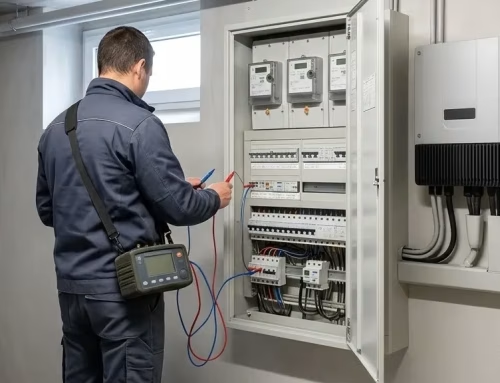
The device fails or accumulates faults. If error messages accumulate or the inverter stops completely, the end is reached. Often a repair is then no longer a sensible option – for a device near the end of its lifespan, a replacement is more worthwhile than patching it up.
A repair is no longer financially viable. Even if the device is still running but acts up repeatedly, the planned replacement can be the more peaceful solution than waiting for the next failure. This weighing up – repair or replace – is best made with the specialist company that knows the condition.
How does the end announce itself?
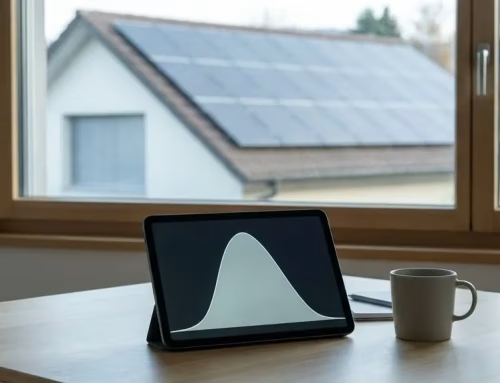
The good news: The inverter rarely says goodbye silently, because it is also the device that monitors the system. Its decline shows up in the same channels that otherwise report problems – provided someone looks.
Two signals are crucial, and both belong to the normal monitoring of the system: Fault notifications that accumulate or no longer disappear, and a yield loss that the annual comparison makes visible. How to recognise and classify such faults – and what can still be fixed before a complete replacement is necessary – is covered in the article on inverter faults. The distinction from normal module ageing is important: A sudden drop in yield indicates a component such as the inverter, while the degradation of the modules proceeds only slowly and minimally.
Exactly for this reason, functioning monitoring for the inverter is not a luxury: It transforms a potential emergency into a plannable appointment. Those who read the messages replace the device in an orderly manner – those who never look only notice the failure by the lack of production.
How does the replacement work – and what does it cost?
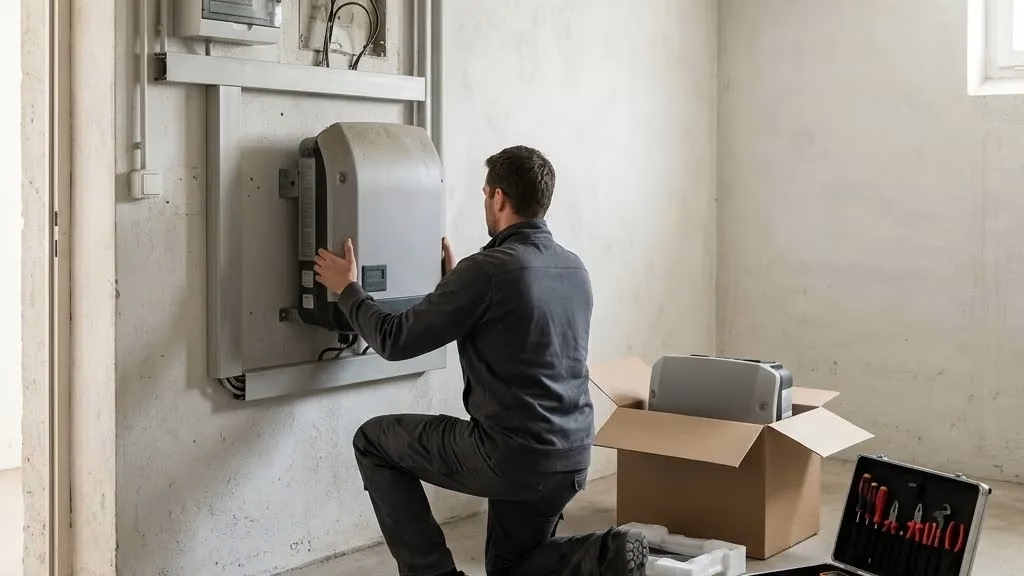
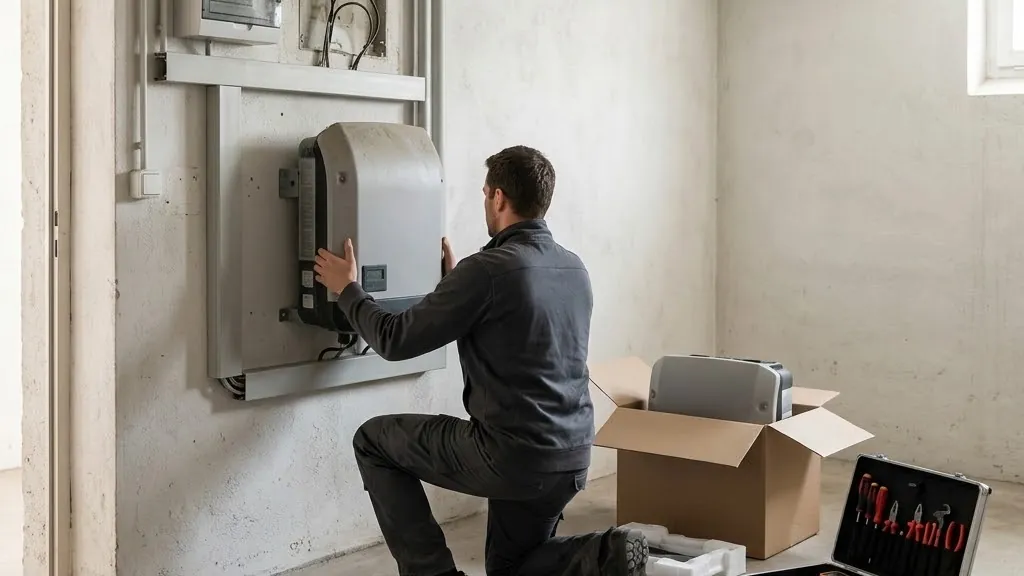
The replacement itself is one of the most unspectacular jobs on a solar system. The inverter is accessible in the basement or utility room – unlike the modules on the roof. The specialist company removes the old device, installs the new one, connects it and registers it: generally a matter of a few hours, without scaffolding, without intervention on the roof.
The cost side includes honesty about what can be said seriously and what cannot: The replacement includes the new device and the installation work. A flat-rate Swiss franc figure would be dubious, because performance class, device choice and effort vary – a quote provides the binding figure. But what can be clearly said: The replacement belongs from the start in the profitability calculation of the system, as a calculated provision. Those who put aside a small amount for this over the years do not feel the replacement as a sudden expense. A system only «pays off» honestly if this one plannable item is considered – those who calculate it away sugarcoat the numbers.
The right moment for an upgrade?
The replacement is more than a one-to-one exchange – it is the natural opportunity to adapt the system to changed plans. The most frequent consideration here concerns the battery storage.
Those who did not want a battery storage when building the system, but are now toying with the idea, can use the due inverter replacement to switch to a hybrid inverter. This makes the system battery-ready without the need for a second device – two due steps in one, economically smarter than each on its own. On the other hand, those who are certainly not planning a battery storage simply replace it with a suitable new device of the same type.
| Your situation | Sensible choice for replacement |
|---|---|
| no battery storage planned | equivalent new inverter |
| battery storage is being considered | Switch to hybrid inverter |
| battery storage is definitely coming | hybrid inverter, plan battery storage right away |
Simplified overview, as of: July 2026. The suitable choice depends on your plans.
This is how a mandatory appointment becomes an opportunity: The moment when the inverter is replaced anyway is the most favourable to set up the system properly for the next decade.
We also carry out the replacement on systems built by another company, for example if the original installer can no longer be reached. How such a job works and what we take on is described on the page Service for existing solar systems.
No service appointment is as feared and at the same time as harmless as the inverter replacement. The fear almost always stems from the fact that no one said at the time of purchase that this day would come – then it seems like a defect and a nasty surprise. Yet it is the opposite: announced by monitoring, done in a morning, in the basement instead of on the roof. What we often address on this occasion is the battery storage question. Surprisingly many customers consider a battery storage after ten, twelve years – and the due inverter replacement is exactly the moment to do this without double effort: install a hybrid instead of an ordinary device, and the door to battery storage is open. Those who have planned and set aside for the replacement from the beginning experience it as what it is: a quiet routine appointment, not the hassle its reputation suggests.
Frequently asked questions
When do I have to replace the inverter?
Typically once during the life of the system, after around 10 to 15 years – if the device fails or faults accumulate and a repair is no longer worthwhile. Monitoring usually announces the decline, so the replacement can be planned instead of occurring as an emergency.
Is an inverter replacement a sign of a bad solar system?
No – the inverter is the only continuously working component and therefore the wear part of the system. A replacement after a good decade is normal and was foreseeable from the beginning. The modules last twice as long at 25 to 30 years.
How long does the replacement take?
Usually a few hours. The inverter is accessible in the basement or utility room, not on the roof – no scaffolding and no intervention on the modules are needed. The specialist company removes the old device, installs the new one, connects it and registers it.
What does a new inverter cost?
This depends on performance class and choice of device – a flat-rate figure would be dubious, a quote provides the binding one. The classification is more important: The replacement belongs as a calculated provision from the beginning in the cost calculation. Those who put something aside annually do not feel it as a sudden expense.
Should I switch to a hybrid inverter during the replacement right away?
If a battery storage is planned or seriously considered: yes. The due replacement is a favourable opportunity to make the system battery-ready – a hybrid inverter instead of an ordinary one, and the battery storage can dock later without a second device. Those who are sure they do not want a battery storage replace it with an equivalent.
Free initial consultation
Inverter at the end – or time for an upgrade?
We check the condition, tell you honestly whether repair or replacement makes sense, and use the exchange on request for the step to a battery-ready system.
Prefer to talk? +41 78 830 83 35
Your photovoltaic system from a specialist company →
Swissolar member and Solarprofi · ESTI installation authorisation (Art. 14 NIV) · in Zurich since 2017 · over 150 systems completed · a personal answer from the specialist company, no call centre
Further guides
 Wechselrichter-Lebensdauer
 Der Wechselrichter: Aufgaben, Typen, Auswahl
 Wechselrichter-Störungen erkennen & beheben
 Hybridwechselrichter
 Solaranlage im Betrieb: Wartung & Monitoring
Sources: Manufacturer documentation (inverters, replacement and system change); EnergieSchweiz; empirical values from the installation and service practice of ecoEn GmbH, Zurich region.
Last updated: 9 July 2026 · Author: ecoEn editorial team