Whether your roof is suitable for a solar system, you can check yourself in ten minutes: enter your address on sonnendach.ch and read off the suitability class – even «good» is sufficient in most cases. A south-facing roof is not a must; shade is more critical than the compass direction. The assessment only becomes binding after a site visit, because no online tool sees the roof condition and usable area. (As of: July 2026)
In this chapter, you'll learn
- how you check the suitability of your roof yourself in ten minutes free of charge;
- why an east-west roof is better than its reputation – and shade more important than the compass direction;
- what the online tool doesn't see and when the professional has to get to work.
The ten-minute check: sonnendach.ch
The first step costs nothing and needs no prior knowledge: The federal government has calculated for practically every building in Switzerland how much sun falls on each individual roof area. You open sonnendach.ch, enter your address and see your roof marked in colour – from «low» to «excellent».
The most important reading note right up front, because the scale regularly leads astray: Even the class «good» is sufficient for an economical system in most cases. «Good» sounds mediocre, but it is not – the yield difference between a good and an excellent roof is significantly smaller than the colour scale suggests. Those who only read on at dark red are giving away a suitable roof in most neighbourhoods of the region.
Note three things from the tool: the suitability class of your largest roof area, the approximate area and the orientation. Nothing more is needed for the beginning – how to read all the information in detail and what the numbers mean is explained in the article using sonnendach.ch correctly.
Does it have to be a south-facing roof?
No – and this prejudice is more persistent than any other. The theoretically best location is indeed a south-facing roof with a medium pitch. But practice is more forgiving than theory sounds: Deviations to the south-east or south-west usually only cost a few percent yield, and even the often smiled-at east-west roof has its own advantage. It produces slightly less in total than the ideal south-facing roof, but distributes its electricity more evenly over the day – in the mornings and evenings, when someone is actually at home. For self-consumption, the magic word from Chapter 1, this is a real plus.
The roof pitch is also rarely an exclusion criterion: flatter and steeper roofs than the ideal work, flat roofs anyway – there the modules are elevated and brought into the appropriate pitch. The guide has the subtleties of orientation and pitch in detail; for the guide, the rule of thumb is sufficient: Almost every roof is suitable – the question is not whether, but how it is covered.
The point that really counts: shade
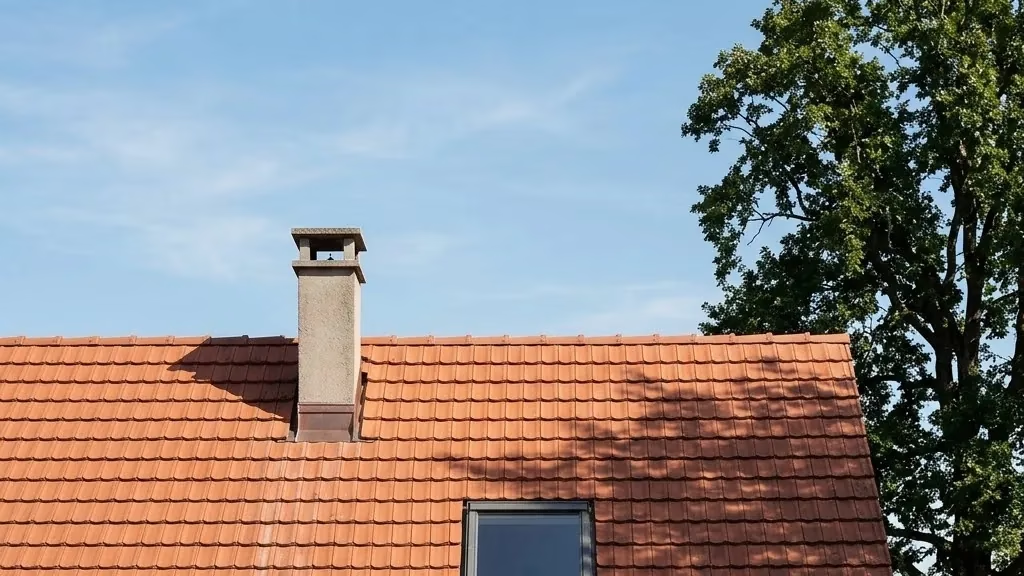
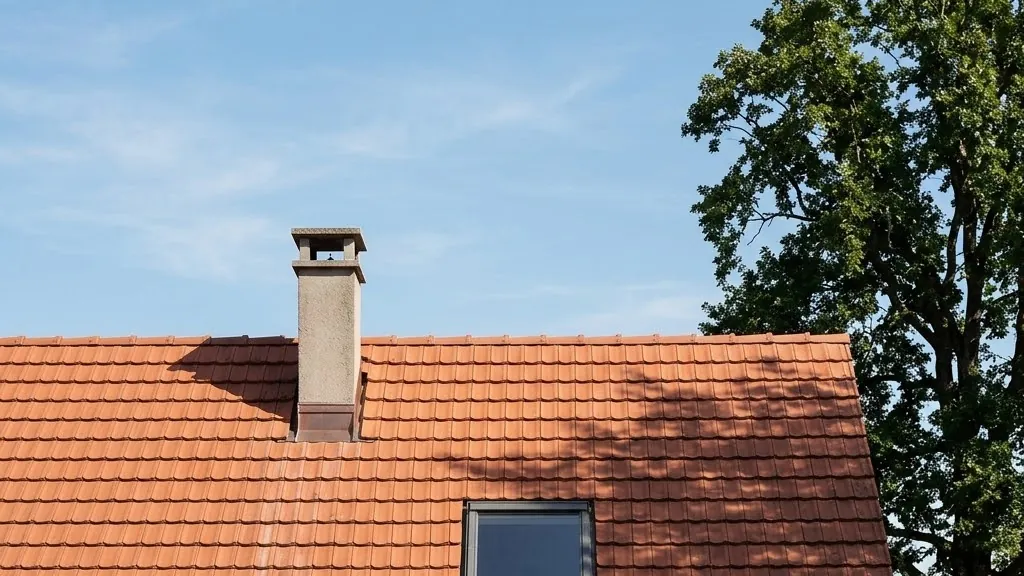
If a roof causes problems, then rarely because of the compass direction – but because of shade. Shading has a stronger effect than most expect, because one shaded module drags others down with it, depending on the system technology. A single chimney in the middle of the best area, the neighbouring tree that pushes its shadow over the roof every afternoon, the taller building to the south of it: These are the candidates that really occupy a planning.
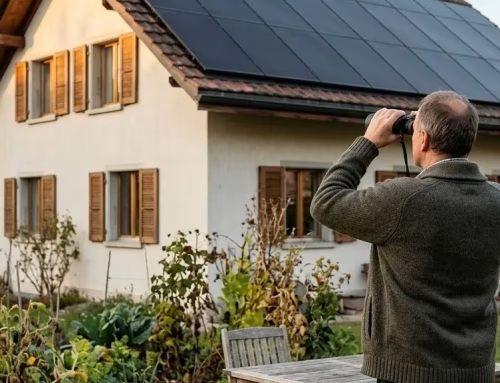
How to check yourself, without tools: Look at your roof at different times of the day – in the morning, at midday, in the late afternoon. Does a hard shadow wander across the surface? Where does it come from, and how long does it stay? Also think a few years ahead: Trees grow, and the harmless sapling of today is the shadow caster of the day after tomorrow.
Important for reassurance: Partial shading is a planning topic, not an exclusion criterion. Clever module placement and the right technology defuse many cases – how this works is shown in the article on shading. Only permanent, large-scale shading remains critical, for instance directly south of a high-rise building.
What the tool doesn't see – and the professional checks
sonnendach.ch knows the sun, but not your roof. Three things remain for the site visit:
| Question | Why it counts |
|---|---|
| Condition and age of the roofing | if a renovation is due in the next ten years, it belongs before the modules |
| Actually usable area | Chimneys, skylights, vents and edge distances noticeably reduce the coverable area |
| Statics and fastening | the roof must carry modules plus wind and snow load for decades |
The three site visit questions at a glance. The assessment by the specialist company on site is binding.
The first point is the most important and is most frequently overlooked: Modules last decades – the roofing underneath should too. A roof that would have to be renovated in five years is better renovated first and then covered, otherwise you pay for the dismantling and reassembly of the system at the same time. And the area question explains why the nice big number in the tool ends up as fewer modules: How many actually fit on the roof is estimated in the article How many solar modules do I need?
With that, your homework part is done: class read off, shade observed, roof age in mind. Everything else – statics, area, allocation – belongs to the free site visit, with which every serious quote begins.
### Keep in mind Even a «good» roof is usually sufficient for an economical system – critical is not the compass direction, but shade and the condition of the roofing.
In brief
My roof points to the east and west – is that still worthwhile? Often yes. East-west roofs deliver slightly less in total than an ideal south-facing roof, but the production is distributed better over the day – which accommodates self-consumption. In practice, such roofs are often covered on both sides and deliver very decent yields.
Is a flat roof suitable? Yes. On flat roofs, the modules are elevated and brought into the appropriate pitch and direction – the flat roof is therefore even particularly flexible. What needs to be clarified there above all are statics, wind load and the distances between the module rows; the specialist planning takes care of this.
My roof is over thirty years old – can I still build? The decisive factor is not the age, but the condition of the roofing. If it is fit for the next decades, nothing speaks against it. If a renovation is foreseeably due, it belongs before the modules – the specialist company checks this during the site visit, including the asbestos question for older Eternit roofs.
Unsure what your roof has to offer? Call us without obligation – we take a quick look at the aerial photo and sonnendach values of your address and tell you honestly whether the next step is worthwhile: +41 78 830 83 35
Solar-Guide: ← Chapter 1: How solar energy works · To the guide overview · Chapter 3: The system at a glance →
Free initial consultation
Check Chapter 2 specifically?
We check the roof, incentives, self-consumption and the next sensible step for your address.
Prefer to talk? +41 78 830 83 35
Have a photovoltaic system installed →
Swissolar member and Solarprofi · ESTI installation authorisation (Art. 14 NIV) · in Zurich since 2017 · over 150 systems completed · a personal answer from the specialist company, no call centre
Sources: sonnendach.ch (SFOE/swisstopo), Swiss Federal Office of Energy SFOE; classifications taken 1:1 from the guides on sonnendach.ch (T20) and orientation/pitch (T15).
Last updated: 9 July 2026 · Author: ecoEn editorial team