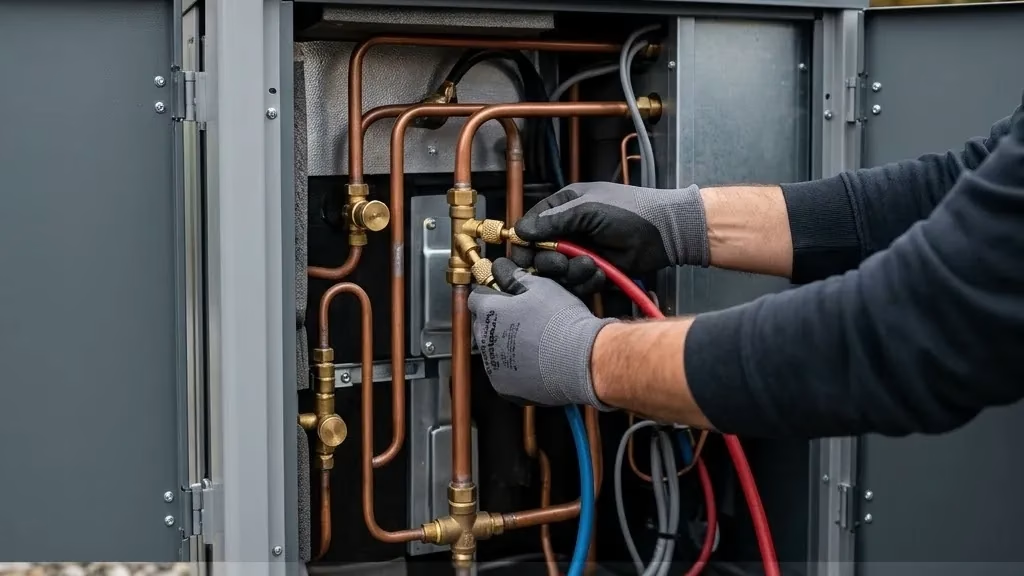
The refrigerant is the working fluid inside every heat pump – it transports the heat by alternately evaporating and condensing. Two things are relevant for you as a homeowner: the environmental impact of the agent (natural ones such as R290/propane perform clearly better here than older synthetic ones) and safety (flammable agents require a suitable location). Only the specialist company works on the refrigeration circuit itself. (As of: July 2026)
Key points in brief
- The refrigerant is not a fuel and is not consumed – it circulates in a closed, hermetic circuit.
- Its environmental impact is measured via the GWP value (greenhouse effect if it escapes) – this is where the old is separated from the new.
- R290 (propane) is the natural refrigerant of the moment: very low greenhouse effect, good efficiency, but flammable.
- Flammability does not mean «dangerous», but «location and installation must match it» – this is planned by the specialist company.
- What counts above all for your purchase decision: a future-proof agent, a suitable location, cleanly executed.
What does the refrigerant do in the heat pump?
The heat pump does not generate heat, it transports it – from outside (air or ground) to inside. The substance that performs this transport is the refrigerant. It has a special property: it evaporates even at very low temperatures. In the evaporator, it absorbs the ambient heat and becomes gaseous, a compressor compresses the gas and thereby raises its temperature, in the condenser it releases the heat to the heating system and becomes liquid again – and the cycle starts anew.
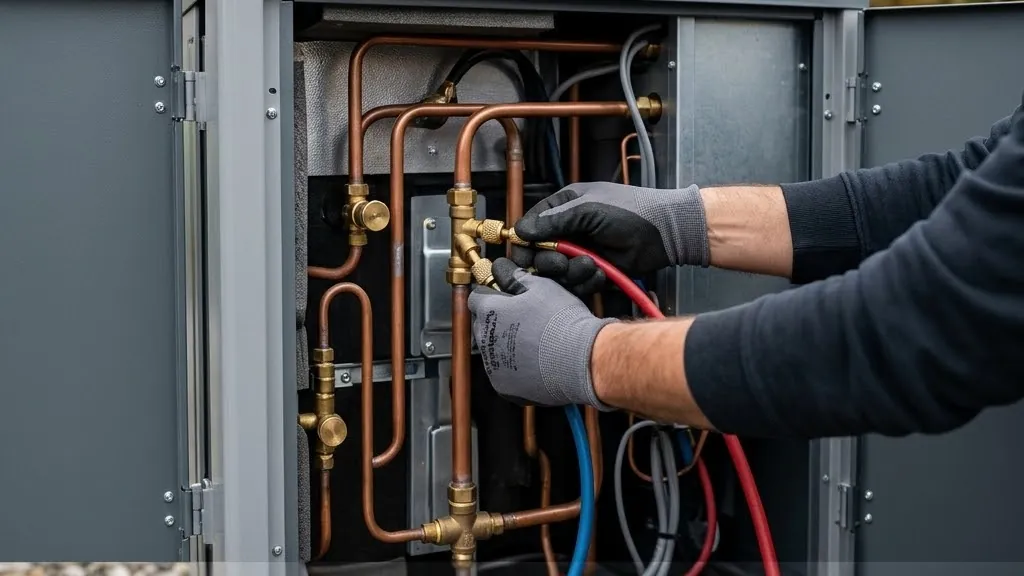
Important for understanding: this circuit is closed and hermetic. The refrigerant is not burned and not consumed; in normal operation, the same filling remains in the system over the entire lifespan. Refilling is not a maintenance ritual, but an alarm signal: if the amount drops, there is a leak – a service case, not part of normal maintenance. And because the circuit is under pressure, it is off-limits to laypersons: only specialist personnel with appropriate authorisation work on it.
Why is the refrigerant an issue at all?
For two reasons that have nothing to do with everyday operation, but shape the development of the entire industry: environment and safety.
The environmental point revolves around the GWP value (Global Warming Potential): it describes how strongly a refrigerant acts as a greenhouse gas if it ever escapes. Older synthetic refrigerants have high values here – if they escape, the climate impact is considerable. This is exactly why the regulatory direction has clearly pointed away from these substances for years and towards agents with a low greenhouse effect. This development is the reason why new devices are increasingly relying on natural refrigerants.
The safety point is the flip side: many of the environmentally friendly agents are flammable. This is manageable – but requires the location and installation to match. This turns the refrigerant into a point that should be considered during planning, even if you never have to deal with it during operation.
R290 (propane) and the alternatives at a glance
| Refrigerant type | Environment (GWP) | Distinctive feature | Role today |
|---|---|---|---|
| Older synthetic (F-gases) | high | proven, but harmful to the climate in case of leakage | phasing out, under regulatory pressure |
| R290 / propane (natural) | very low | efficient, good for high flow temperatures – but flammable | the rising agent in new devices |
| Other natural ones (e.g. CO2, for special applications) | very low | special technology necessary depending on the substance | Niches / specific areas of application |
Classification, As of: July 2026. The available devices and the exact regulatory requirements are developing – the current regulations and the specific product are decisive.
R290 is so present because it fulfils several wishes simultaneously: a tiny greenhouse effect, good efficiency and the ability to also meaningfully deliver higher flow temperatures – an advantage especially in existing buildings. The price for this is the flammability, which determines the next section.
What does flammability mean for the location?
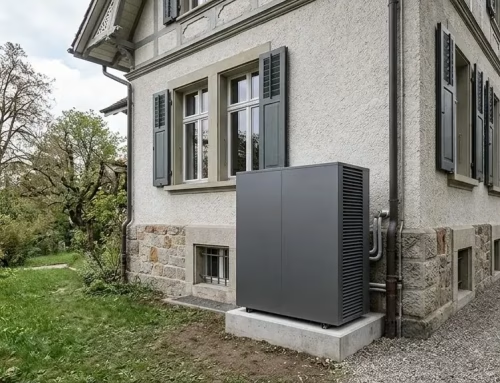
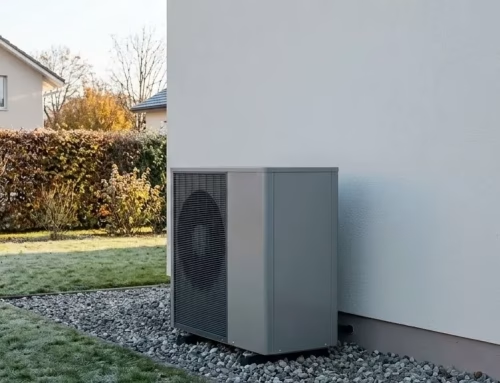
Above all one thing: it is a planning topic, not a reason for exclusion. Flammable refrigerants such as propane are safely in use in countless devices – the safety comes from the correct design. With air-to-water heat pumps with an outdoor unit, the question is largely mitigated anyway, because the refrigeration circuit is located outside. If technology is placed indoors, requirements for room size, ventilation and positioning apply – the specialist company knows them and plans the location accordingly.
For you, this means specifically: ask during planning which refrigerant the device uses and what this means for the intended location. A reputable provider answers this without hesitation and includes it in the installation planning. Improvised locations «just because there is space» are certainly not an option with flammable agents.
What should you look out for when buying?
Three points are enough for the purchase decision. Firstly, future-proofing: A device with a natural, climate-friendly refrigerant is on the right side of regulatory development – a real argument for a system that is supposed to run for two decades. Secondly, location planning: Let them show you that the refrigerant and installation location are compatible; this is part of clean heating replacement planning. Thirdly, execution: The cooling circuit must be installed professionally and be leak-tight – this is where quality shows, and this is where a specialist company that knows what it is doing pays off.
What you do not need is deep specialist knowledge of thermodynamics. It is enough to have the refrigerant on your radar as a criterion – just as you do not study the cell chemistry of a solar system, but know that it plays a role.
The refrigerant rarely comes up in consultation discussions on its own – and if it does, mostly as a concern about the flammability of propane. We take this concern seriously and put it into context: an outdoor unit has its cooling circuit outside, and where indoor installation is necessary, we plan the location according to the applicable rules. What we recommend conversely: consciously look out for a future-proof refrigerant when buying new. It would be a shame to install a device with a phasing-out substance that you want to keep for twenty years.
Frequently asked questions
Do I have to have the refrigerant topped up?
No. The cooling circuit is closed, the refrigerant is not consumed. If it needs to be topped up, there is a leak – that is a service case for the specialist company, not a maintenance appointment.
Is a propane heat pump (R290) dangerous?
No, not with professional installation. Propane is flammable, but is used safely in closed, tested systems. The decisive factor is the suitable installation location and clean execution – both of which are the responsibility of the specialist company.
Why are old refrigerants being replaced?
Because of their high greenhouse gas effect in the event of a leak. Regulation has been pushing for refrigerants with a low GWP for years – natural refrigerants like propane fulfil this and are therefore becoming the standard for new devices.
Is there a mandatory inspection for my refrigerant?
Depending on the amount of refrigerant, periodic leak checks may be mandatory – this tends to affect larger systems. The specialist company will tell you whether yours is one of them at the handover; the basics on this are in the article Maintenance & lifespan.
Does the refrigerant affect the efficiency of the heat pump?
It plays a part – some refrigerants deliver high flow temperatures more efficiently, which counts especially in existing buildings. However, the overall efficiency depends on more than just the refrigerant: design, heat source and building carry more weight.
 Propane heat pump (R290)Read more
Free initial consultation
Which heat pump suits your house – and your location?
We advise you on technology, refrigerants and installation location, and plan the system cleanly from A to Z. Free of charge and without obligation.
Prefer to talk? +41 78 830 83 35
Have photovoltaics with battery storage installed →
Swissolar member and Solarprofi · ESTI installation authorisation (Art. 14 NIV) · in Zurich since 2017 · over 150 systems completed · a personal answer from the specialist company, no call centre
Further guides
 Luft oder Erdsonde: der Vergleich
 Wartung & Lebensdauer
 Wärmepumpe im Altbau
 Heizungsersatz: der Ablauf
 Wärmepumpe & PV kombinieren
Sources: EnergieSchweiz, FWS Fachvereinigung Wärmepumpen Schweiz, Federal Office for the Environment (FOEN/BAFU) (refrigerants/ChemRRV), manufacturer documentation.
Last updated: 9 July 2026 · Author: ecoEn editorial team