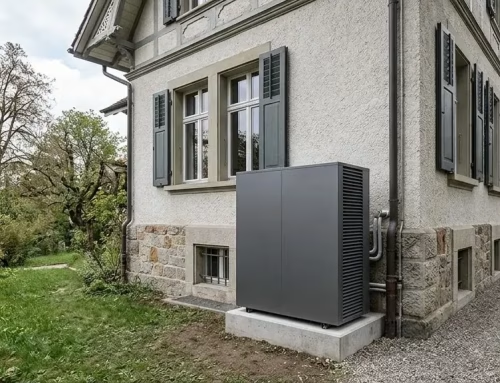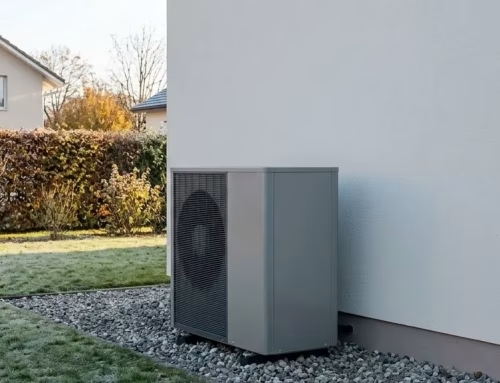
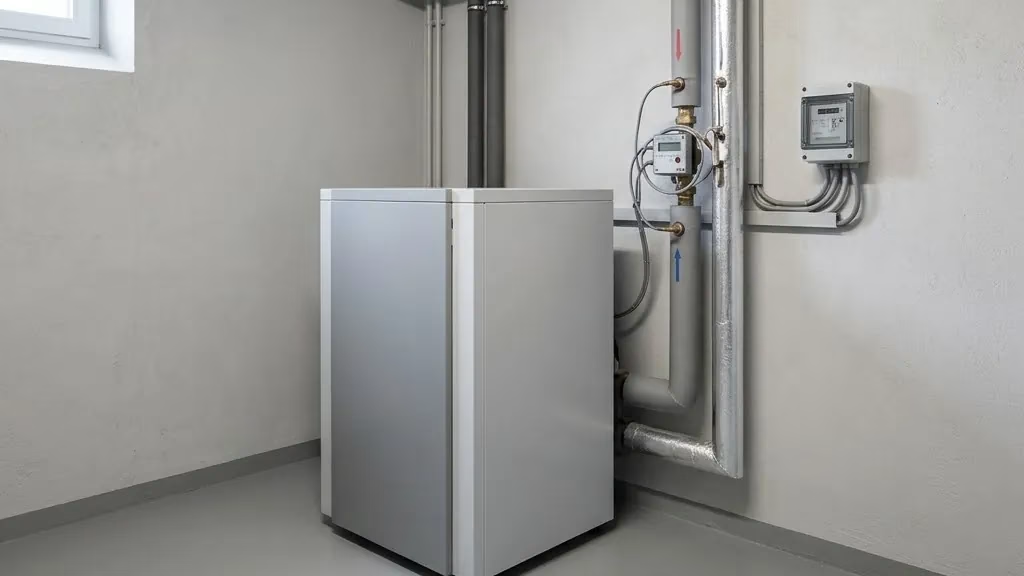
The seasonal performance factor says how much heat your heat pump makes from one kilowatt hour of electricity over the year – an SPF of 4 means: four times more heat than electricity. It is the honest efficiency metric because it measures real operation instead of the laboratory best point of the brochure. And it is not fate: Flow temperature and setting move it more than the brand of the device. (As of: July 2026)
Key points in brief
- SPF = generated heat divided by consumed electricity, measured over a whole year on the real building.
- The COP from the brochure is a laboratory snapshot under ideal conditions – the SPF is practically always lower.
- Rough guideline values are an SPF of around 3 to 4 for air-to-water heat pumps, and around 4 to 5 for geothermal probes – the decisive factor is the building, not just the device.
- The biggest lever is the flow temperature: The lower the heating system needs it to be, the higher the SPF.
- The SPF directly determines the electricity bill: Electricity demand = heat demand divided by SPF.
What exactly is the seasonal performance factor?
A heat pump does not generate heat from electricity – it pumps ambient heat to heating temperature using electricity. Therefore, more heat energy comes out at the end than electricity goes in, and exactly this ratio describes the seasonal performance factor: the heat emitted over a whole year divided by the electricity consumed in the same time.
An example makes it tangible: If a house needs 12,000 kWh of heat a year and the heat pump uses 3,000 kWh of electricity for this, the JAZ is 4 – four kilowatt hours of heat were generated from every kilowatt hour of electricity. The same heat pump in a less favourable house could need 4,000 kWh of electricity for the same heat: JAZ 3, a third more electricity costs. The device is the same – the conditions are not. This is exactly why the JAZ is the most interesting number in the whole heat pump world: It does not measure the device, but the interaction of device, building and setting.
SPF and COP: Why the brochure always looks better
The JAZ is not on the data sheet, but rather the COP (Coefficient of Performance) – and that is something else: a snapshot in the laboratory, measured at a defined operating point with a favourable source temperature and low flow temperature. Under such conditions, every device shines.
The JAZ, on the other hand, contains real life: cold January nights, hot water at over 50 degrees, defrost cycles for the outdoor unit, start-up losses. It is therefore practically always below the brochure COP – this is normal and not a defect. It is only important not to confuse the two numbers: Whoever compares quotes compares COPs at the same standard point; whoever wants to estimate operating costs needs a realistic JAZ assumption for their own building. A reputable provider shows both separately – and names the assumptions behind their JAZ forecast, instead of selling the COP as an operating value.
In between lies the SCOP, a standardised seasonal calculated value from the laboratory – closer to reality than the COP, but still without your specific house.
What SPF is realistic?
As rough guideline values for today's systems in typical single-family homes: Air-to-water heat pumps achieve around 3 to 4, geothermal probe systems around 4 to 5. The difference comes from the source – the ground is warmer than the air in winter, the temperature lift is smaller, the system comparison explains this in detail.
Within these ranges, four factors decide where your system ends up:
1. The flow temperature – by far the biggest lever. Underfloor heating with a low flow temperature makes the JAZ rise; old radiators that require high temperatures push it down. The same heat pump, two different heat distributions: noticeably different annual performance factors. 2. The source – geothermal probe ahead of air, and for air units, the location including the climate. 3. The hot water share – hot water needs higher temperatures than heating and pulls the JAZ down slightly; the larger its share, the more strongly. 4. The setting – heating curve, blocking times, storage behaviour. Here, many systems quietly give away efficiency, for years.
Guideline values, As of: July 2026 – the location-based design is decisive. A reputable JAZ forecast names its assumptions (building, flow temperature, hot water share).
How do you improve the SPF of a running system?
The good news: The JAZ is not a fate that is fixed with the purchase. Three levers also work retrospectively – ordered by effort:
Lower the heating curve. The factory setting is rarely the most efficient for your house. Whoever gradually lowers the flow temperature until it is just still comfortable everywhere gets the most favourable JAZ points of all – free of charge, in the first heating season after installation ideally together with the installer.
Time hot water cleverly. Do not store hotter than necessary, and place the heating in favourable hours – with photovoltaics in the midday period, otherwise in the off-peak hours. Small setting, lasting effect.
Improve heat distribution. The big lever for old buildings: larger radiators in critical rooms or the switch to surface heating structurally lower the required flow temperature. This is an investment – but one that makes every future heat pump generation more efficient.
And how do you know where you stand? Honestly: Many systems do not measure their JAZ at all – this requires a heat meter and a separate electricity meter for the heat pump. Newer devices estimate the values in the app; this is a useful reference point, but not a measurement. Whoever wants to know exactly (for example to prove an optimisation), has both meters retrofitted – who measures what is the same question with the heat pump as with solar power.
Why the SPF decides your electricity bill
The calculation is short: Electricity demand = Heat demand ÷ JAZ. A house with 12,000 kWh heat demand needs around 4,000 kWh of electricity with JAZ 3, with JAZ 4 only 3,000 – a quarter less, year after year, with every electricity price. That is why taking a look at the JAZ is doubly worthwhile: when buying (system choice, design) and in operation (setting).
The same number also controls the combination with the solar system: The electricity demand of the heat pump determines how much of its own production it can take – and beyond the heat pump electricity tariff, the following applies: The cheapest kilowatt hour is the one that is not even needed in the first place thanks to a good JAZ.
When we are asked which heat pump is «the most efficient», we give an answer that initially disappoints: Between established devices of the same class, the differences are smaller than the brochures suggest – between a well and a poorly adjusted example of the same device, on the other hand, there are worlds. The most efficient heat pump we know is the one with the lowered heating curve in the correctly understood house. That is why commissioning with us always includes the advice to readjust together in the first heating season – and the simple test for doubters with old radiators is in the heating replacement guide: lower the flow temperature as a test and see whether the house stays warm. If so, your better annual performance factor already lies there.
Frequently asked questions
Does the manufacturer guarantee a specific JAZ?
No – the JAZ depends on the building, heat distribution and setting, i.e., on factors outside the device. Manufacturers guarantee device data (COP at the standard point), planners forecast the JAZ with stated assumptions. Distrust any «guaranteed» annual performance factor in a sales pitch.
Is a JAZ of 5 realistic?
Under favourable conditions, yes – typically with a geothermal probe, surface heating with a low flow temperature and a moderate hot water share. For an air-to-water heat pump in an old building with radiators, however, the same number would be an unserious forecast.
What is the difference between JAZ and SCOP?
The SCOP is a standardised seasonal indicator from the laboratory – more realistic than the COP, but calculated without your specific building. The JAZ is the measured (or location-specifically forecasted) value of your system in real operation. For operating costs, the JAZ counts.
Does the JAZ deteriorate with the age of the system?
Not noticeably by itself – heat pumps do not have a creeping decline in efficiency like calcifying boilers, for example. If the efficiency drops noticeably, it is mostly due to a maladjusted control, a technical problem or changed user behaviour – a case for the service, not for fate.
Do old radiators obligatorily lower the JAZ?
They push it down, but often do not prevent the heat pump – the decisive factor is the actually required flow temperature, not the age of the radiators. Many radiator houses are over-dimensionally heated and get by with lower temperatures than their owners believe; the practical test on the existing heating shows it.
Free initial consultation
Your JAZ starts with the planning.
We design heat pumps with stated assumptions – building, flow temperature, hot water – and readjust them in the first heating season. Honest numbers instead of brochure COP.
Prefer to talk? +41 78 830 83 35
PV & battery – Advice & installation in Zurich →
Swissolar member and Solarprofi · ESTI installation authorisation (Art. 14 NIV) · in Zurich since 2017 · over 150 systems completed · a personal answer from the specialist company, no call centre
Further guides
 Air-to-water or brine-to-water?
 Heizungsersatz: der Ablauf in 7 Schritten
 Combining a heat pump and photovoltaics
 Wärmepumpe und Stromtarif
 Messung und Zähler: Wer misst was?
Sources: EnergieSchweiz/SFOE (JAZ guideline values: air-to-water ~3, geothermal probe ~4); Swiss field measurements FWS/SFOE/OST (real measured JAZ: air-to-water 2.8–3.7, modern devices with underfloor heating towards 4; brine-to-water mostly 4.5–5); empirical values from the planning and service practice of ecoEn GmbH, Zurich region. (As of: July 2026)
Last updated: 9 July 2026 · Author: ecoEn editorial team