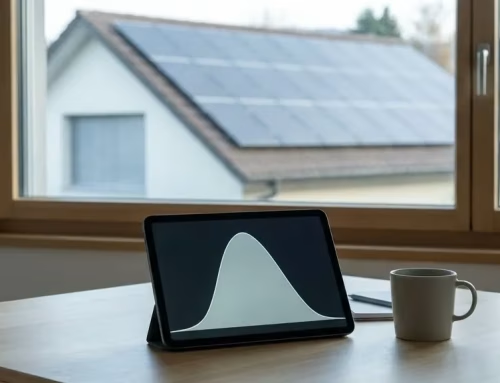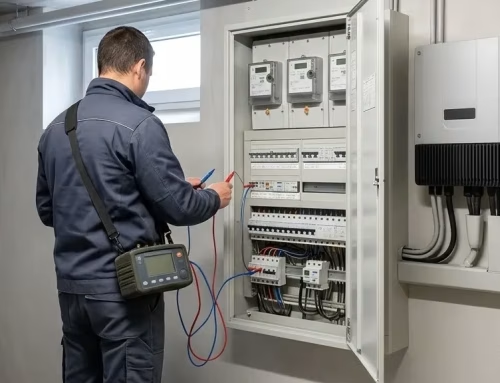
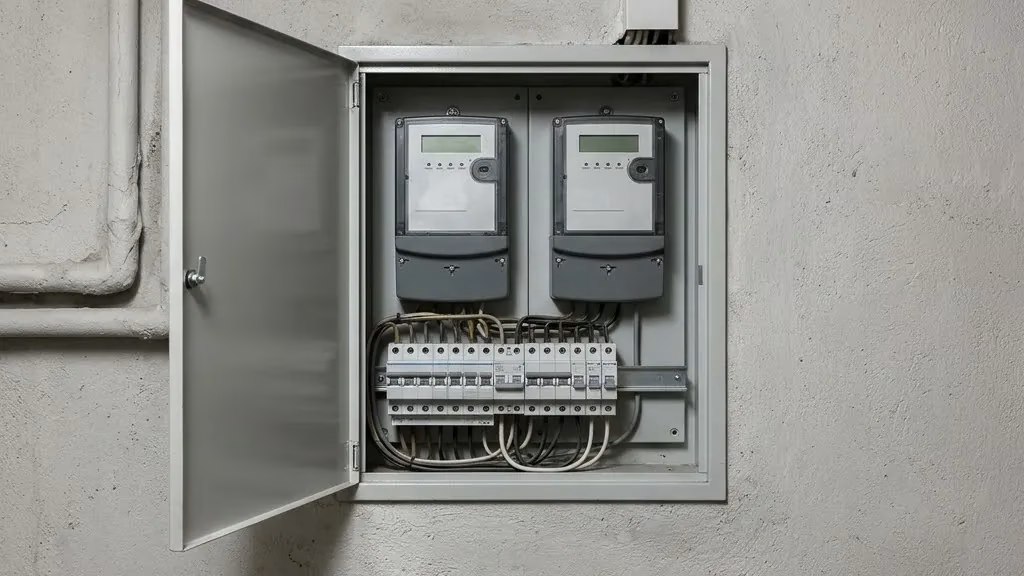
With a solar system, two systems measure in parallel: the grid operator's meter at the house connection (purchase and feed-in, basis for billing) and the inverter's monitoring (production, basis for yield control). Both show different numbers – and both have their purpose. Anyone who knows the difference understands their billing and detects faults early. (As of: July 2026)
Key points in brief
- The grid operator measures at the house connection what flows into the grid and what you purchase – not what your system produces.
- You see the production in the inverter's monitoring; the self-consumption only results from the combination of both values.
- With the smart meter rollout, you are entitled to your consumption data in fine resolution.
- In ZEV and vZEV, a third level is added: private meters per apartment (submetering).
- A monthly look into the monitoring belongs to the basic care of every system – otherwise failures remain unnoticed for weeks.
Which meters and measurements are there in a PV system?
Let's sort the levels that regularly get mixed up in practice:
| Metering | Who measures | What is measured | For what |
|---|---|---|---|
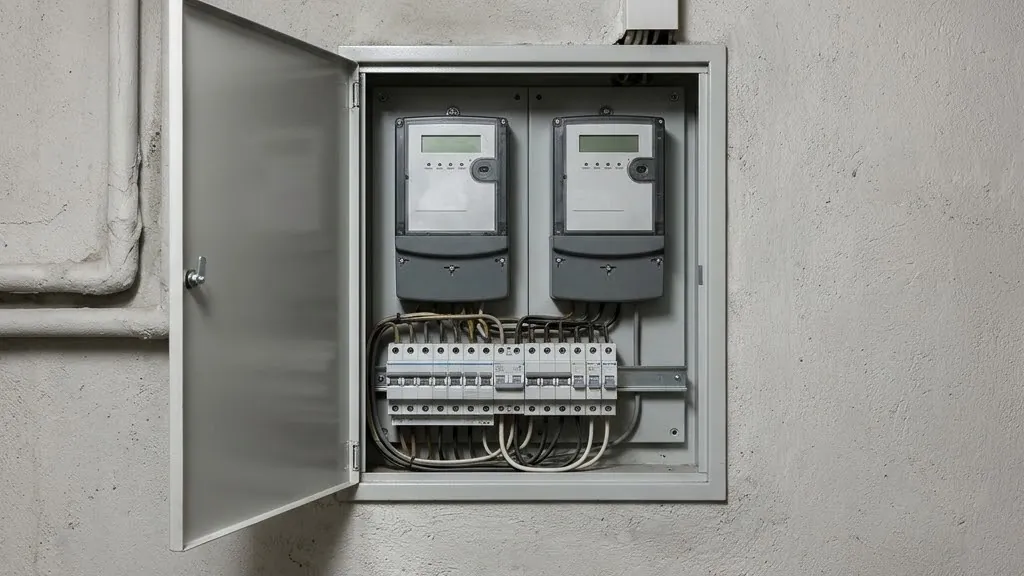
| Meter at the house connection | Grid operator (utility) | Grid purchase and feed-in, per direction | Electricity bill and feed-in credit |
| Inverter monitoring | Your system | Production of the modules, often per string | Yield control, fault detection |
| Energy manager / smart home measurement | optional, in the house | Consumption of individual devices, charging power | Self-consumption optimisation |
| Private meters (submetering) | ZEV/vZEV operator | Consumption per apartment/unit | internal distribution of solar power |
As of: July 2026. The specific design depends on the grid operator and the chosen model.
The most important point of this table: The grid operator does not see your production. They only see what flows past the house connection. Electricity that your solar system produces and that you self-consume at the same time does not appear in any bill – that is exactly the economic core of self-consumption.
Why do the app and billing show different numbers?
Because they measure different things. An example with round numbers: If the solar system produces 40 kWh in a day and you self-consume 15 directly in the house, the inverter app shows 40 kWh production – but the grid operator's meter only shows 25 kWh feed-in. Neither number is wrong; they answer different questions.
This also results in the simplest check calculation for system owners:
Self-consumption = Production (app) − feed-in (meter)
Doing this calculation once a year pays off doubly: It shows whether investments in self-consumption optimisation are paying off, and it is the basis for understanding the electricity bill.
What does the smart meter change?
With the ongoing rollout of smart measuring systems, the meter at the house connection becomes digital: It measures in quarter-hour resolution and transmits the values automatically to the grid operator. For PV owners, this is more than convenience – you have a right to your own measurement data in this resolution, which makes consumption analyses and the optimisation of self-consumption significantly easier. In addition, dynamic tariffs and newer remuneration models require a smart meter.
We have written down separately what the rollout means for costs, obligations and data protection: Smart meters in Switzerland.
How does measurement work in the ZEV or vZEV?
As soon as several parties share the solar electricity of a building – classically in an apartment building –, a measurement level is added. The principle of the self-consumption community (ZEV): Towards the grid operator, the community acts as a single customer with one meter at the connection point. How the solar electricity and grid purchase are distributed internally to the apartments is measured by the ZEV operator themselves – with private meters per unit, the submetering.
These internal meters do not belong to the grid operator, and their billing follows its own rules – where the money flows and what limits apply to internal prices is explained in the article ZEV surplus and internal billing. Whether ZEV, vZEV or LEG suits the building is clarified by the model comparison.
What should you pay attention to when monitoring?
Monitoring is not a toy for the first two weeks, but the early warning system of the solar system. Our recommendation to all customers:
1. A monthly look at the yield – a comparison with the previous month and the same month last year is enough. Gross deviations without a weather explanation are a signal. 2. Activate fault notifications. Practically every inverter app can report failures via email or push. Switch it on – otherwise a silent failure in summer costs weeks of production. 3. Note down annual values. Production and feed-in per year in a simple list. This allows you to identify creeping changes and have numbers at hand for warranty questions – keyword degradation.
Usually, no more is needed in a single-family home. More complex measurement concepts with energy managers pay off where there is active control – heat pump, battery storage, controlled charging.
The most frequent monitoring question that reaches us is something like: «My app shows 9,000 kWh, the utility credits me 6,000 – where did 3,000 kWh go?» The answer is almost always pleasing: nowhere. The difference is the self-consumed electricity, and that is exactly what saves the most money. More serious is the reverse case – solar systems that stand still for weeks after a failure because no one activated the fault notification. Setting this up takes five minutes and is part of our handover.
Frequently asked questions
Who pays for the meter change during the commissioning of the PV system?
The grid operator provides and operates the meter at the house connection; the measurement costs are part of their tariffs. How high the measurement fee is and what changes with the smart meter rollout is regulated by each utility in its tariff sheets – check the current publication of your grid operator.
Do I need a separate production meter for the one-off feed-in incentive?
For typical single-family home systems, generally not – the requirements of Pronovo and your grid operator in the registration process are decisive. Your installer clarifies this in the connection request; for larger systems, sometimes further measurement requirements apply.
Can I view my quarter-hour data myself?
Yes – with a smart measuring system, you have a right to your measurement data. Many grid operators provide a customer portal for this. The data pays off: It shows when your household actually consumes, and makes optimisations measurable instead of felt.
How accurate is the inverter monitoring?
Accurate enough for yield control, not for billing – billing is done exclusively via the calibrated meter of the grid operator or the meters of the ZEV operator. Small deviations between the app and the meter are normal and not a defect.
Do I need my own electricity meter as a tenant in a ZEV?
The ZEV operator measures your consumption with a private meter so that it can be distributed fairly internally. Your rights – for example to comprehensible billing – remain; the rules for this are explained in the article ZEV surplus and internal billing.
Free initial consultation
Measurement concept unclear? We bring order to it.
Whether single-family home, battery storage retrofitting or ZEV in an apartment building: We plan the measurement at the same time – clean, comprehensible and matching the grid operator.
Prefer to talk? +41 78 830 83 35
Your photovoltaic system from a specialist company →
Swissolar member and Solarprofi · ESTI installation authorisation (Art. 14 NIV) · in Zurich since 2017 · over 150 systems completed · a personal answer from the specialist company, no call centre
Further guides
 Smart Meter in der Schweiz
 Stromabrechnung mit PV verstehen
 Eigenverbrauch optimieren
 ZEV, vZEV oder LEG?
 Degradation von Solarmodulen
Sources: ElCom (Frequently asked questions), Swiss Federal Office of Energy SFOE, Pronovo AG.
Last updated: 9 July 2026 · Author: ecoEn editorial team