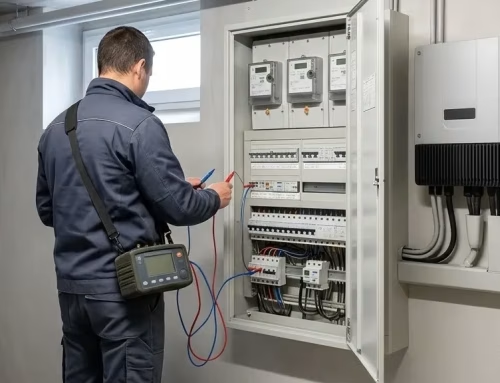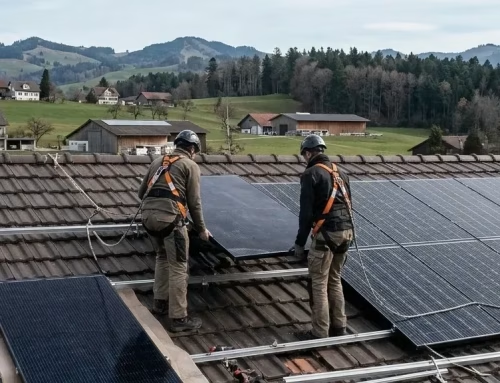
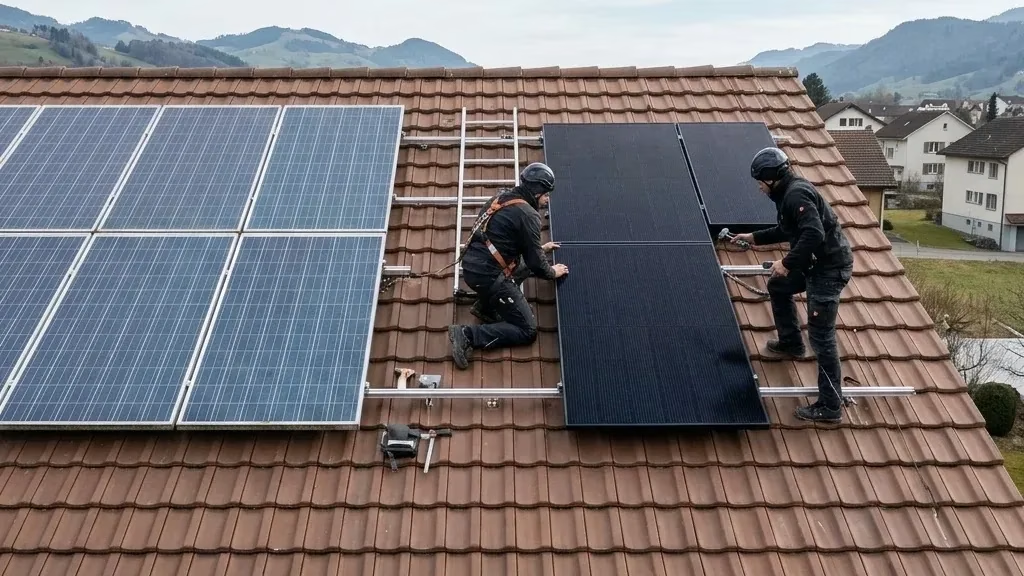
Expanding is especially worthwhile if new consumers are added – heat pump, e-car – and there is still free roof space available. Technically: new modules go into their own string, and often the inverter is the actual switch. And because scaffolding, electricians and registrations also apply for just a few modules, the rule is: if you expand, do it properly – not just two modules. (As of: July 2026)
Key points in brief
- The most common reason for expansion: the system was once optimised on a small scale for the consumption at the time – and today a heat pump or e-car is added.
- New and old modules do not belong in the same string: different performance classes slow each other down.
- The key question is the inverter: does it have reserve capacity, is a second one added – or is its already due replacement the best moment for everything together?
- Notification and connection request are due again; there can also be a one-off feed-in incentive (EIV) for expansions – clarify conditions before the start of construction.
- The fixed costs (scaffolding, electrician, administration) are distributed over a few modules – per kWp, the expansion is more expensive than the initial construction. Therefore: expand properly or not at all.
When is an expansion worth it?
The honest preliminary remark first: it would have been cheapest to plan the roof full right away – adding to it later costs more than dimensioning it correctly from the start. But this calculation does not help anyone whose system is already built. And there are good reasons why many existing systems are too small today: a few years ago, systems were widely designed tightly for the self-consumption at the time – smaller roof budget, different tariff world. The house has changed since then.
Three occasions typically make the expansion worthwhile:
New large consumers. A heat pump or an e-car increases the electricity demand by several thousand or a four-digit kWh amount per year – the once suitable system is suddenly small, and additional production finds a buyer in your own house.
Free, good roof space. The second half of the roof, the garage roof, the extension – space that was left out during the initial construction is the basic prerequisite. No expansion without space.
The already due inverter replacement. The inverter is typically replaced once in the life of the system – and this moment is the best opportunity in the entire history of the system: if a new device is coming anyway, it can be dimensioned straight away for the larger system (and a possible battery).
If you do not have any of these reasons, check the cheaper alternative first: often it is not production that is lacking, but utilisation – the self-consumption levers get out of the existing system what an expansion would not even have to deliver.
Does new match old? The technical questions
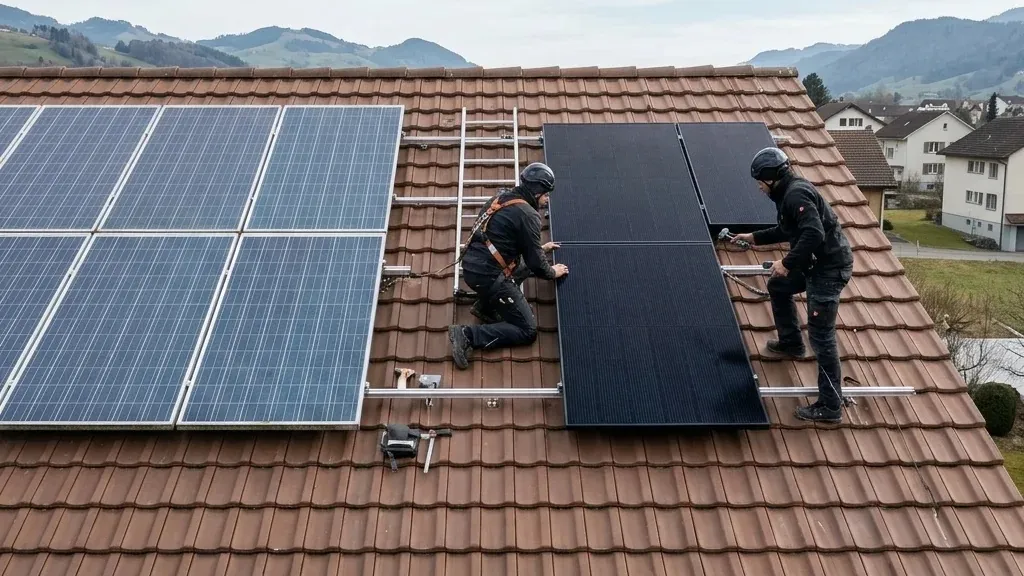
The modules: separate ways. Your modules from back then are no longer built – today's modules have different performance classes and dimensions. This is not a problem as long as you do not mix them: in a string, the weakest link slows down the chain, the same logic as with shading. New modules therefore go into their own string with their own operating point – cleanly planned, old and new work side by side without disturbing each other. Visually, a difference remains visible (different module size, different colour tone); on separate roof surfaces this is not noticeable, on the same surface it should be discussed beforehand.
The inverter: the actual switch. Three situations, three answers:
| Situation | Solution |
|---|---|
| Inverter has a free MPPT input and power reserve | connect new modules directly – the most favourable case |
| Inverter is fully utilised | second, small inverter for the expansion |
| Inverter is already old anyway (10+ years) | Replacement with a larger device – consider hybrid at the same time |
As of: July 2026. Which situation applies is shown by a look at the data sheet and system documentation – a matter of minutes for the specialist company.
Statics and mounting. The same checks apply for the new surface as for the initial construction – roof load and mounting are sometimes even the more critical question for additional surfaces (garage, extension) than for the main roof.
Administratively: start all over again – but on a small scale
Legally, an expansion is not an appendage, but a modification of the system – accordingly, the steps of the initial construction are repeated on a smaller scale: notification to the municipality (depending on the scope and municipal practice), connection request to the grid operator, adjustment of system data and guarantee of origin (GO), and finally the safety certificate (SiNa) for the new installations.
The point with monetary value: there can also be a one-off feed-in incentive (EIV) for capacity expansions – the current conditions of Pronovo are decisive, and just like with the initial construction, the iron rule applies: clarify and register before the start of construction, not afterwards. Those building in the City of Zurich should additionally check the municipal contributions for the expansion. Incidentally, your feed-in tariff does not change as a result of the expansion – it depends on the grid operator, not on the size of the system; only the amount fed in grows.
The cost structure: Why two modules are not an expansion
Without franc amounts, but with a clear structure: fixed items arise with every expansion that are almost independent of the number of modules – scaffolding or fall protection, electrician appointment, journeys, planning, registrations. These fixed costs are distributed over the new modules. With a proper expansion (such as the second half of the roof) they are well spent; with two or three modules they eat up the benefit – per kilowatt-peak, the mini-expansion becomes disproportionately expensive.
The simple decision rule follows from this: Expand properly or not at all. If you only have a little space left, you are often better off utilising the existing system better via control and behaviour – or waiting with the expansion until the inverter replacement is due anyway and the fixed costs can be shared.
The decision aid in four questions
1. Is there a new consumer or is one foreseeably coming? If no: first optimise self-consumption instead of expanding. 2. Is there enough contiguous, good space available? If only residual areas: beware of the fixed-cost trap. 3. What is the inverter doing? Use reserve, second device – or synchronise with the already due replacement. 4. Have incentives and notifications been clarified before the start of construction? The same sequence discipline as with the initial construction.
Whoever has answered all four questions cleanly expands with the same calm as the first time – only faster, because half the infrastructure is already in place.
The typical expansion consultation in the region today begins with an e-car or a heat pump – and with a system from the years when roofs were deliberately only half-covered because self-consumption was the measure of all things. Calculated correctly back then, too small today: this is not a planning error of yesterday, but a changed house. What we have learnt from these projects: the economically best expansion is almost always the one that waits for the inverter replacement or coincides with it – one device, one electrician appointment, one registration procedure for everything, often straight away with a battery connection for later. And the unluckiest is the two-module addition «because there was still space»: a lot of effort, little effect. Our advice therefore: think of the expansion as a small project with all the trimmings – or postpone it until it is allowed to be one.
Frequently asked questions
Can I simply attach two or three modules?
Technically often yes, economically rarely sensible: scaffolding, electricians and registrations also apply for a few modules and make the mini-expansion disproportionately expensive per kWp. Either expand properly – or wait until the effort can be shared with an already pending intervention (inverter replacement).
Do the new modules have to be the same brand as the old ones?
No – they can and will practically always be different, because your old modules are no longer built. The separate electrical routing is important: own string, own operating point. Visual differences remain visible and should be discussed prior to installation.
Will I get a one-off feed-in incentive (EIV) again for the expansion?
Possible – separate conditions from Pronovo apply to capacity expansions, which must be clarified and registered before the start of construction. Do not rely on promises from the sales talk, but on the current information; a reputable company will also take over the clarification.
Do I have to report the expansion to the municipality and the utility?
Yes – the expansion is a modification of the system: connection request to the grid operator, notification according to municipal practice, updated system data and safety certificate (SiNa). The effort is smaller than with the initial construction, but it is not zero – and it belongs in the quote.
Is a battery worth it instead of the expansion?
These are two different answers to two different questions: the expansion increases production, the battery shifts it. Anyone who produces too little (new large consumer) rather needs modules; anyone who feeds in a lot and buys more in the evening rather needs shifting. The sequence is often: first control, then modules or battery depending on the data.
Free initial consultation
Your roof can do more – let's calculate it.
We check the remaining space, inverter reserve and incentive eligibility of your expansion – and honestly say whether the project is worth it now or should wait for the inverter replacement. Even for systems that were not built by us.
Prefer to talk? +41 78 830 83 35
Your photovoltaic system from a specialist company →
Swissolar member and Solarprofi · ESTI installation authorisation (Art. 14 NIV) · in Zurich since 2017 · over 150 systems completed · a personal answer from the specialist company, no call centre
Further guides
 Wechselrichter ersetzen: Wann und wie
 Eigenverbrauch optimieren: Die sechs Hebel
 Wie viele Solarmodule brauche ich?
 Speicher nachrüsten
 The one-off feed-in incentive explained
Sources: Pronovo AG (conditions for one-off feed-in incentive (EIV), each current); empirical values from the project and expansion practice of ecoEn GmbH, Zurich region.
Last updated: 9 July 2026 · Author: ecoEn editorial team