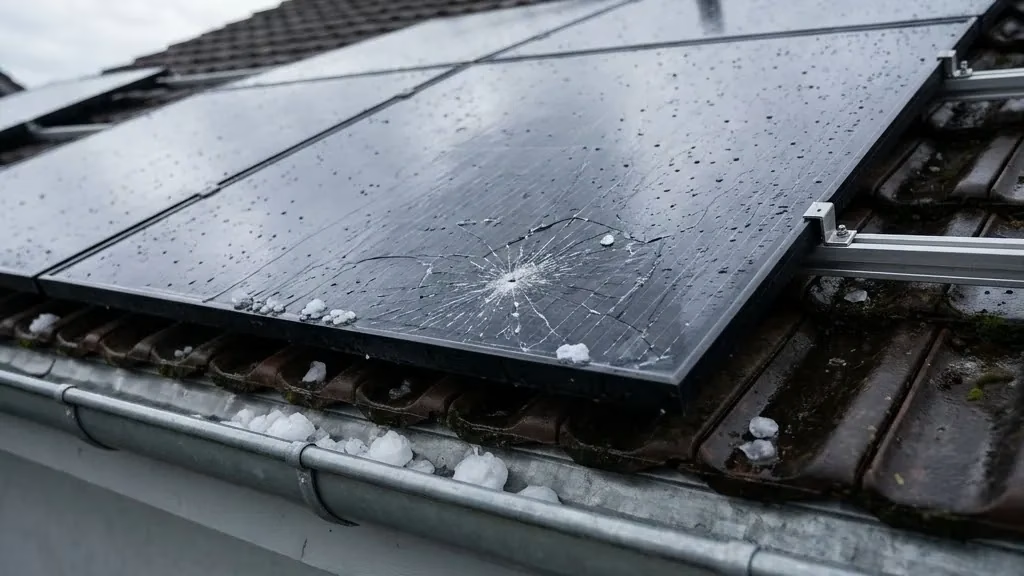
After a severe hailstorm, you first check from a safe distance and via the monitoring whether the system is noticeably delivering less. You document visible damage and the weather conditions with photos, then you report the case to your building insurance. The actual inspection on the roof is taken over by the specialist company – not you yourself. Sequence: document, report, have professionally inspected. (As of: July 2026)
Key points in brief
- Modern modules are robust against hail – they usually survive smaller hailstones without consequences.
- Not every damage is visible: Micro-cracks sometimes only show up later in the yield.
- The first step is documentation: Photos of the damage and the weather report of the event.
- Natural hazard damage caused by hail is usually covered by building insurance.
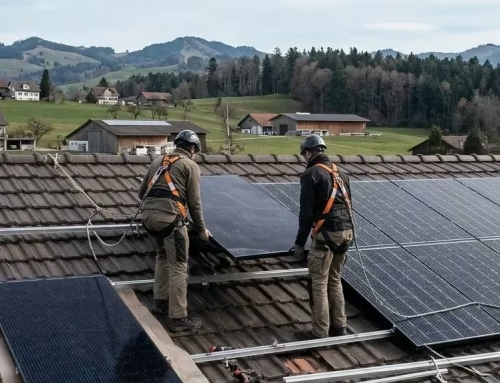
- The specialist company goes onto the roof, not the owner – for safety and evidence reasons.
How do I recognise hail damage at all?
Not every hailstorm leaves visible traces – and not every damage is recognisable to the naked eye. Therefore, after a severe event, a systematic look is worthwhile before falling into alarm.
The first and safest check is via the monitoring. If the system delivers noticeably and permanently less in the following days than usual at the same time of year, this is a warning signal. How to distinguish normal fluctuations from real failures is explained in the article on monitoring – the comparison with the previous year is also the right benchmark here.
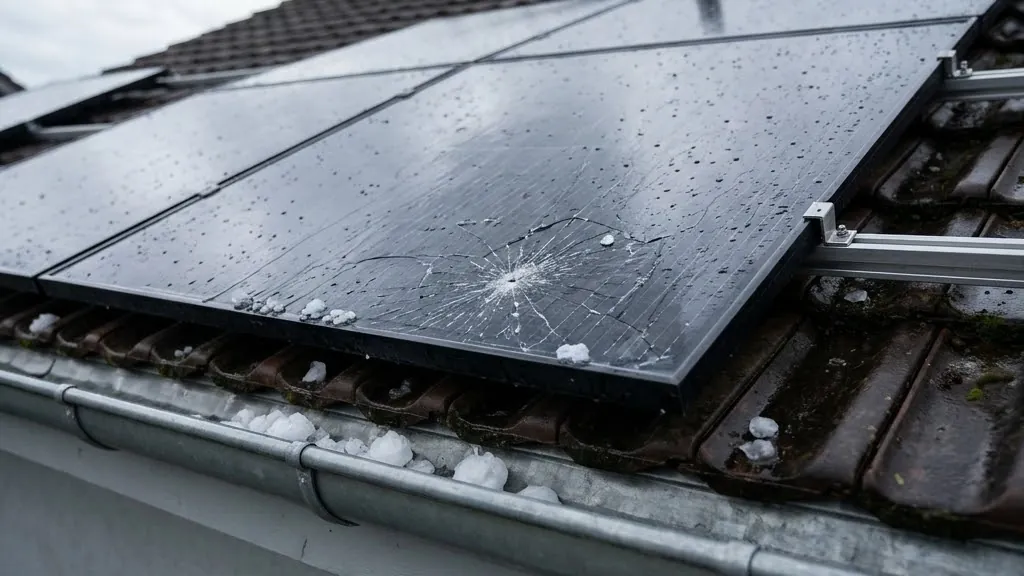
The second look is from below onto the roof, with binoculars or a camera. Visible impacts, cracked glass or dented frames are unambiguous. More treacherous are micro-cracks: fine cracks in the cells that you can hardly see from the outside and that often only slowly depress the yield. They are the reason why a specialist company inspects after a heavy hailstorm even if the glass looks intact. How resilient modules are built and what hail classes mean is categorised in the article on solar modules and hail.
What is the first thing I do after the hail?
Documenting – namely before anyone goes onto the roof or changes anything. The evidence in the first moment is decisive for the insurance report.
In concrete terms, this means:
1. Take photos. Of everything that is visible from a safe location: damaged modules, cracked glass, lying around parts. Plus pictures of the surroundings that show the extent of the hail – dents in cars, smashed plants, hailstones. 2. Prove the event. Record the date, time and, if possible, an official weather report or severe weather warning for your location. This supports later that the damage originates from this event. 3. Secure monitoring values. A screenshot of the yield curve before and after the hail documents any performance drop.
What you should not do: climb onto the roof yourself to «have a look». A wet, hail-damaged roof is dangerous, and improper access can worsen damage or alter the evidence. This inspection belongs to the specialist company.
How does the report to the insurance company work?
Hail counts as natural hazard damage and is thus usually covered by the building insurance. How solar systems are insured is explained in detail in the article on insurance; for a claim, the process is what counts most.
Report the damage to your building insurer with the collected documentation. The insurer decides on the further procedure and the assessment. In many cases, the specialist company – or an expert from the insurer – will inspect the system on the roof and quantify the damage. Only then will damaged components be replaced.
| Step | Who | Purpose |
|---|---|---|
| Documenting | You | Secure evidence (photos, weather, yield) |
| Reporting | You | Register damage with the building insurer |
| Checking | Specialist company / expert | Professionally determine damage on the roof |
| Quantifying | Specialist company / insurer | Determine scope and repair |
| Repairing | Specialist company | replace damaged modules/parts |
Orientation, as of: July 2026. Your policy and the guidelines of your insurer are binding.
Two points are decided long before the damage case, however – and they are regularly overlooked:
- The system must be registered with the insurance company. Hail damage to solar systems is usually covered by the building insurance or a private property or technical equipment insurance – but only if the system is actually registered there.
- The components should be listed in the hail register – or have been at the time of construction. The hail register of the cantonal building insurances shows the hail resistance class for each tested component; what the classes mean and which fits your location is in solar modules and hail.
According to Swissolar, fact sheet «Hail damage to solar systems»; as of: September 2026. Your policy and the information from your insurer are binding.
The sequence is important: first document and report, then repair. Anyone who has the damage repaired prematurely before it is documented and reported makes the settlement more difficult.
Hailstorm of 28 August 2026 in the Canton of Zurich: how to proceed
On 28 August 2026, a hail storm with hailstones of 4 to 6 centimetres moved over the north of the Canton of Zurich – the areas around Bülach, Rorbas, Freienstein, Embrach, Dättlikon, Neftenbach, Seuzach, Dinhard and Rickenbach as well as the city of Winterthur were particularly affected. The Building Insurance of the Canton of Zurich (GVZ) expects around 200 million francs in building damage; photovoltaic systems explicitly belong to the reported damage patterns. For those affected, the procedure above applies – with these Zurich specialities:
- Reporting to the GVZ: via the online damage form at gvz.ch or the free damage hotline 0800 442 442; documents to schaden@gvz.ch. Hail is natural hazard damage and is included in the GVZ cover.
- Quote instead of expertise: For PV damage, the GVZ requires a quote from the trade business of your trust with photo documentation – it claims to pay out damage of up to CHF 50,000 on the basis of these documents without a site visit (as of: 10 September 2026).
- Not only the glass counts: Even with externally intact modules, the yield check in the monitoring is worthwhile – micro-cracks first show up in the curve, not in the photo.
- Winterthur and surroundings: For systems in our operational area, we check the roof and yield data, create the quote with photo documentation in the GVZ format and take over the replacement of damaged modules – Solar system Winterthur.
- Roof is being repaired, but no system on it yet? If scaffolding is set up for the repair anyway, this is the cheapest moment for a solar system. What the insurance pays for this and what not, and why you should get in touch before the roofer appointment: Roof renovation and photovoltaics.
How to recognise a reputable company after the hail – the GVZ explicitly warns against providers without a Swiss address who build up time pressure or demand cash or advance payment:
- Swiss company headquarters with commercial register entry and reachable landline number.
- Its own ESTI installation authorisation – verifiable in the directory of installation authorisations (ecoEn: Art. 14 NIV, No. SOB-284349-1).
- Swissolar membership or Solarprofi entry.
- No cash payment, no payment in full before the work, no signature under time pressure – reputable companies work with a written payment schedule based on construction progress.
- Written quote with photo documentation – exactly the document that the GVZ requires.
- First report, then repair: A reputable company does not push for immediate replacement before the damage report.
Sources: GVZ, «Severe weather in the Canton of Zurich on 28.08.2026», as of 10 September 2026; Tages-Anzeiger, 31 August 2026.
After severe hailstorms, calls pile up with us – and the first question is almost always: «Should I have a look up there?» Our answer is clear: please do not. The roof is wet and slippery, and even more importantly: What counts are photos and the yield curve, not a hectic walk onto the roof. We see systems in the Zurich region again and again that look externally intact after a hail but still take a hit in the monitoring – the classic micro-cracks. That is why we check even when the glass looks intact. And we advise reporting the case before anyone touches anything.
Frequently asked questions
Do I have to report every hail to the insurance company?
No. A light hail shower, after which the system continues to run normally and nothing is visibly damaged, is usually not a case for the insurance. It becomes relevant in the event of a severe incident with visible damage or a clear drop in yield. In case of doubt, a look at the monitoring and consultation with the specialist company will help.
My glass is intact – can there still be damage?
Yes. Hail can cause micro-cracks in the cells, which are hardly visible from the outside and only reduce the yield over time. Therefore, a specialist company checks after a strong hailstorm even if the glass is intact. A persistent reduction in yield in the monitoring is the clearest signal.
Who pays for the repair after hail damage?
In the event of covered natural hazard damage, the building insurance usually covers the repair – minus any excess. The prerequisite is correct notification and documentation. The exact conditions depend on your policy.
How do I better protect my system from hail in the future?
The most important protection is the choice of module during planning: modules with a high hail resistance class withstand more. Damage from extreme hail can never be completely prevented. What the classes mean and what to look out for when choosing them can be found in the article on solar modules and hail.
Does the GVZ pay for the hail damage to my solar system?
Yes – hail is natural hazard damage and is covered by the building insurance of the Canton of Zurich, provided the system belongs to the insured building. Following the severe weather on 28 August 2026, the GVZ requires a quote from the specialist company with photo documentation; according to their information, damage up to CHF 50,000 is paid out without a site visit. Report first, repair later – and do not let yourself be pressured by doorstep providers.
Free initial consultation
Hail damage on the roof? We inspect professionally.
We inspect your system after severe weather, document the damage for the insurance company and repair damaged components – safely and transparently.
Prefer to talk? +41 78 830 83 35
Your photovoltaic system from a specialist company →
Swissolar member and Solarprofi · ESTI installation authorisation (Art. 14 NIV) · in Zurich since 2017 · over 150 systems completed · a personal answer from the specialist company, no call centre
Further guides
 Solarmodule & Hagel: was Hagelklassen bedeuten
 Solaranlage versichern
 Ertrags-Monitoring richtig nutzen
 Solaranlage im Betrieb
 Brandgefahr im Betrieb
Sources: General principles on natural hazard insurance and hail resistance of solar modules; experience from the service and testing practice of ecoEn GmbH, Zurich region. Your policy and the guidelines of your insurer are binding.
Last updated: 9 July 2026 · Author: ecoEn editorial team